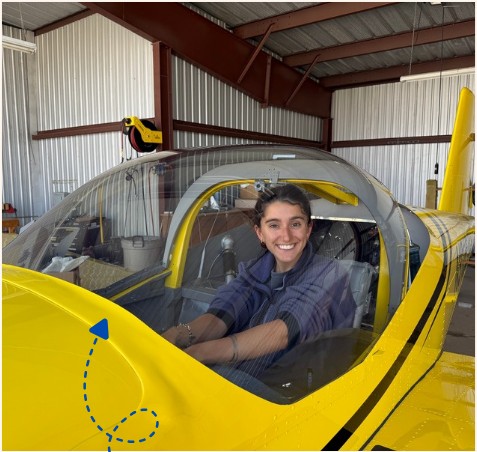
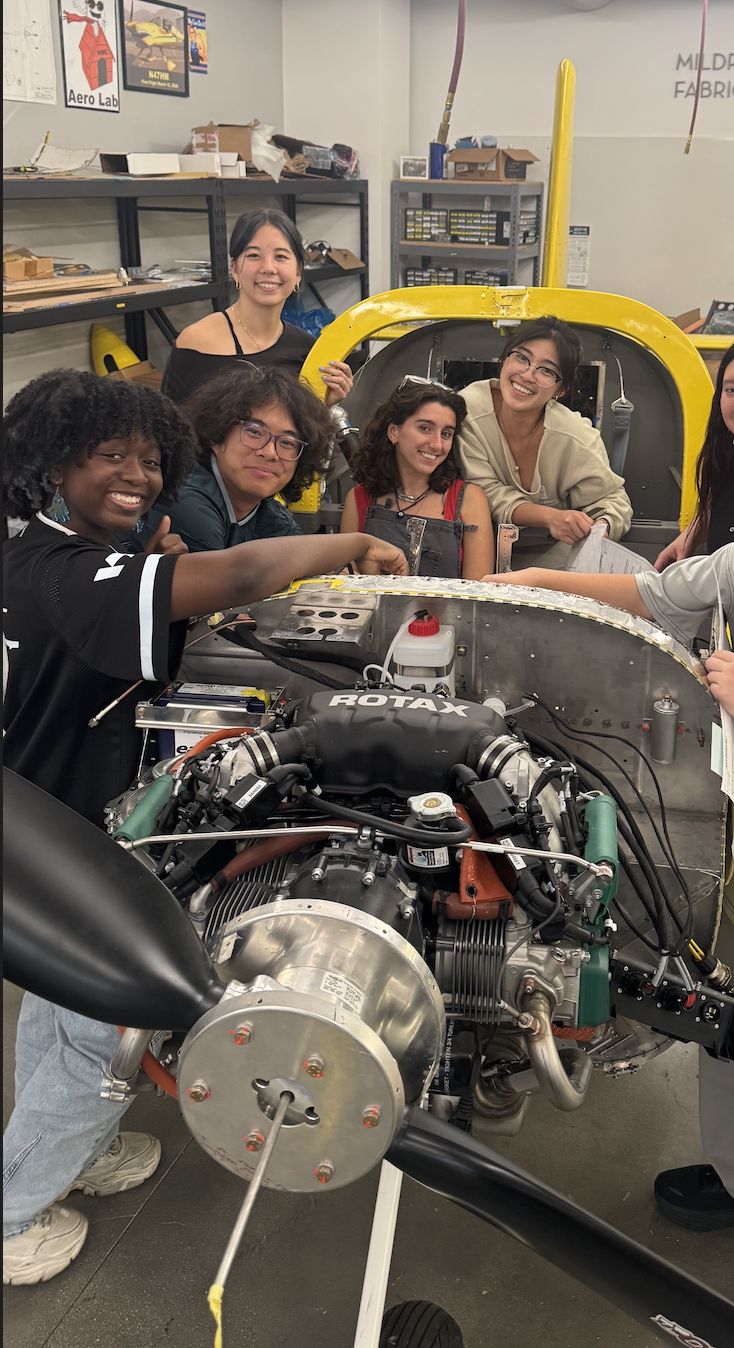
Celebrating the successful FAA inspection of the airplane I built.
Hi, I'm Leilani! Welcome to my portfolio! I am an engineer who loves to combine deep technical expertise with design thinking and creative problem solving. My greatest strength is my ability to adapt and learn quickly, diving in head first to build upon my experience and rise to the task at hand. I've honed this across a broad range of projects, from robotic systems for bioreactors and a hand-held monitor that records how insects feed, to 3D-printed ceramics and running a summer camp at sea. The throughline is design thinking: spotting the real issue, then making it better one iteration at a time. I'm a dedicated teammate who loves to read the team and the design space, then step in where I'm needed most.
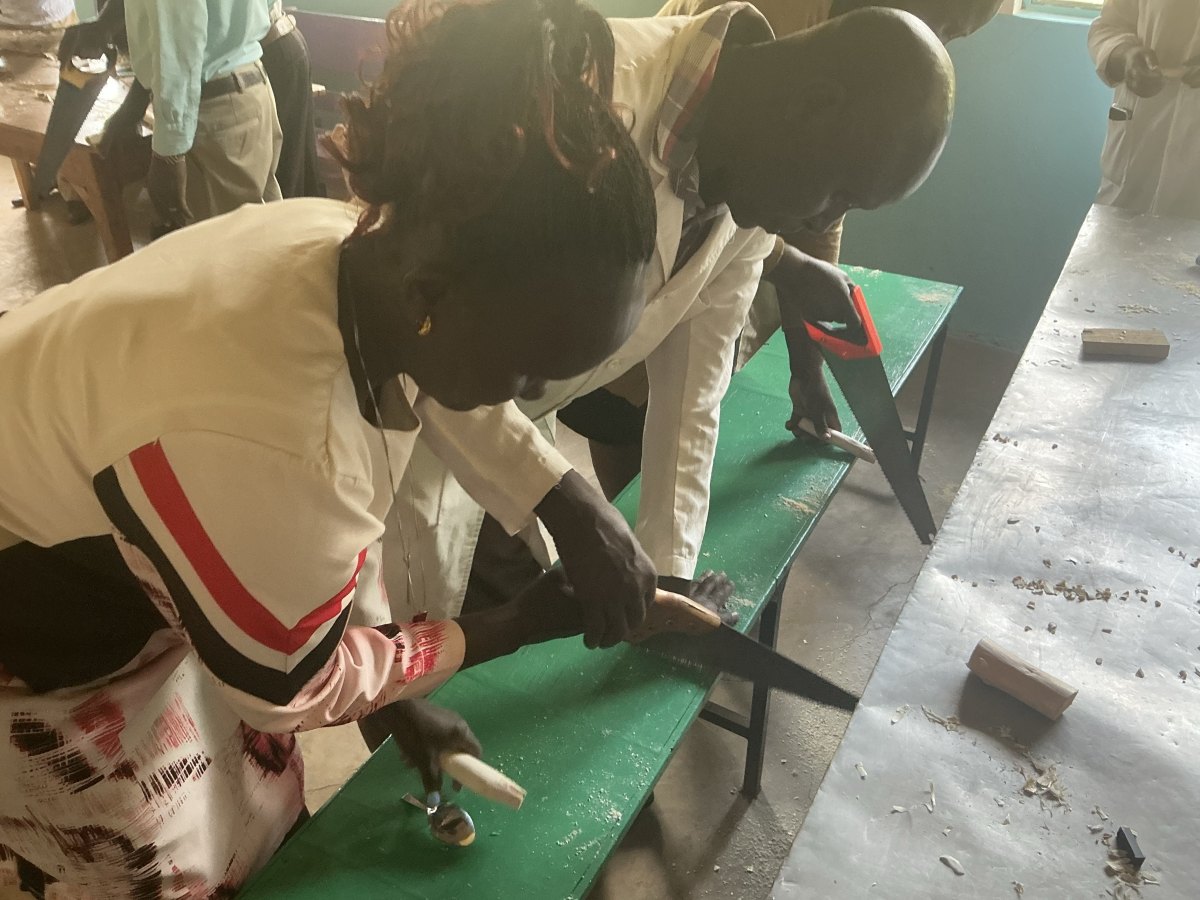
Currently you can find me running an adaptive design workshop in rural Kenya, where I am training teachers to fabricate assistive tech for their learners. With boots on the ground at school, I've been chewing on how to design for simple fabrication and extreme affordability, so that design can help overcome the challenges of complex disabilities.
I'm excited to keep growing with curiosity and enthusiasm, and I'm ready for my next challenge. If your team or program has one, I'd love to take it on!
OutdoorDivemaster, AAUS scientific diver, expedition research, Wilderness First Aid
Education
Harvey Mudd CollegeBachelor of Science in Engineering
Emphasis: Environmental Analysis
GPA: 3.5
Graduated with Distinction
Honors in Engineering
Honors in Humanities, Social Sciences, and the Arts
Currently
Watson Fellowship Recipient
I'm honored to have been awarded the Thomas J. Watson Fellowship — a one-year grant for purposeful, independent exploration outside the United States, awarded to 39 graduating seniors nationwide with unusual promise.
Project
Designing Inclusion
Argentina · Brazil · Kenya · Egypt · Thailand
What does it mean to be disabled? How can small adaptations help people with disabilities thrive? Collaborating with people with disabilities and communities that support them, my year uses the medium of Adaptive Design to find answers to these questions.
Back to School Looks a Little Different This Year
DesignAccessibilityLeadershipSustainability
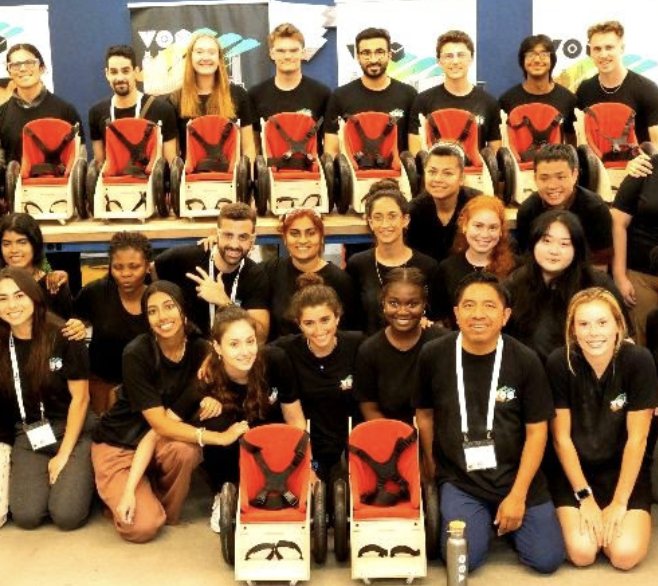
Learn about my time with Kabarnet School for the DeafBlind — starting a workshop and training the teachers in adaptive design so that we can improve how we support learners' wellbeing.
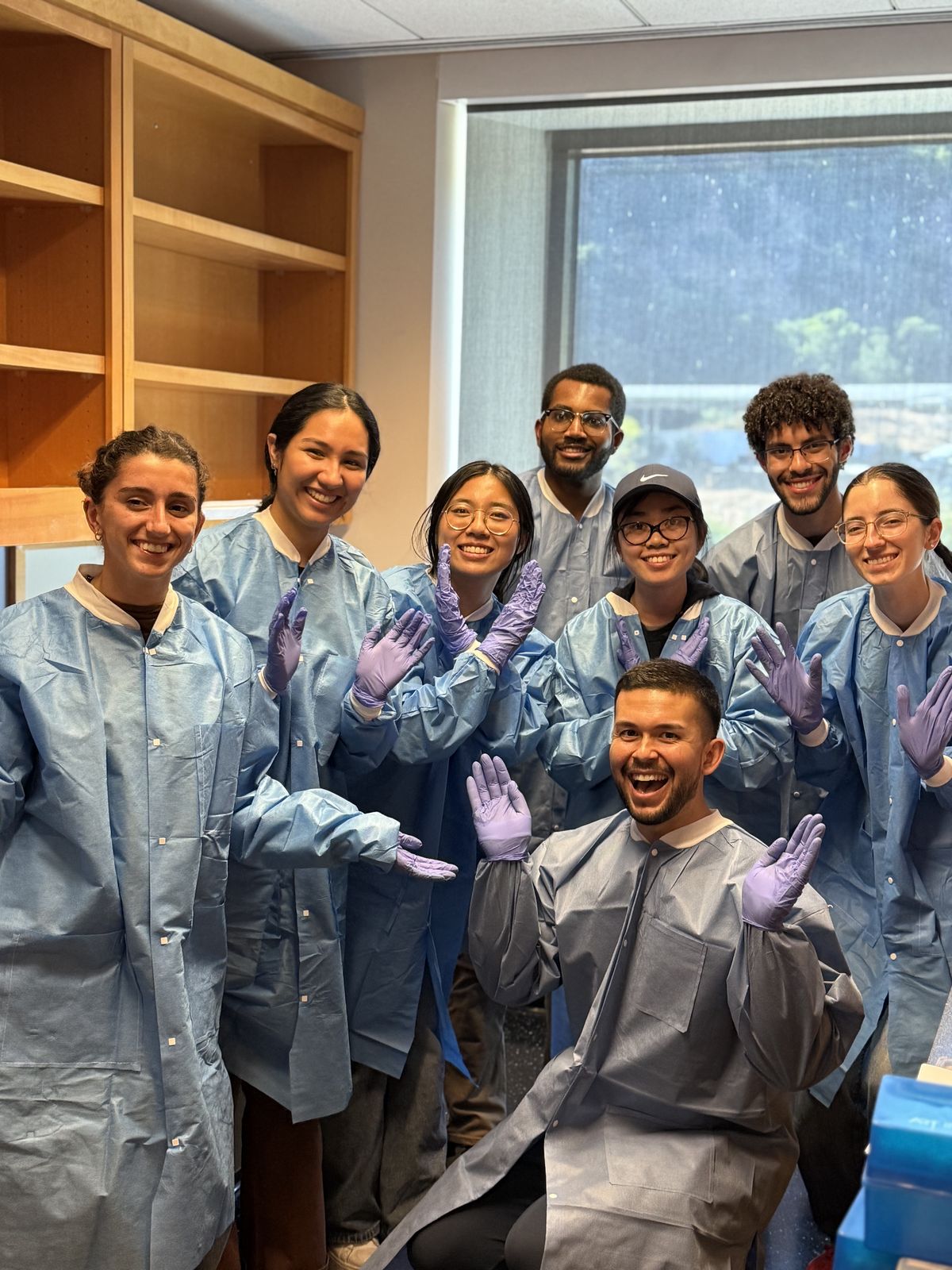
Leading a team of 7 peers in robotic automation of a new class of bioreactors in the cell and gene therapy space. The company will deploy this in server-farm-like clean rooms for mass production of life-saving biologics.
Worked in the experience design center as a product designer and sustainability consultant to different instrument teams and business units as part of a multidisciplinary tiger team.
Hardware Engineer · USDA
Electrical EngineeringDesignSustainability
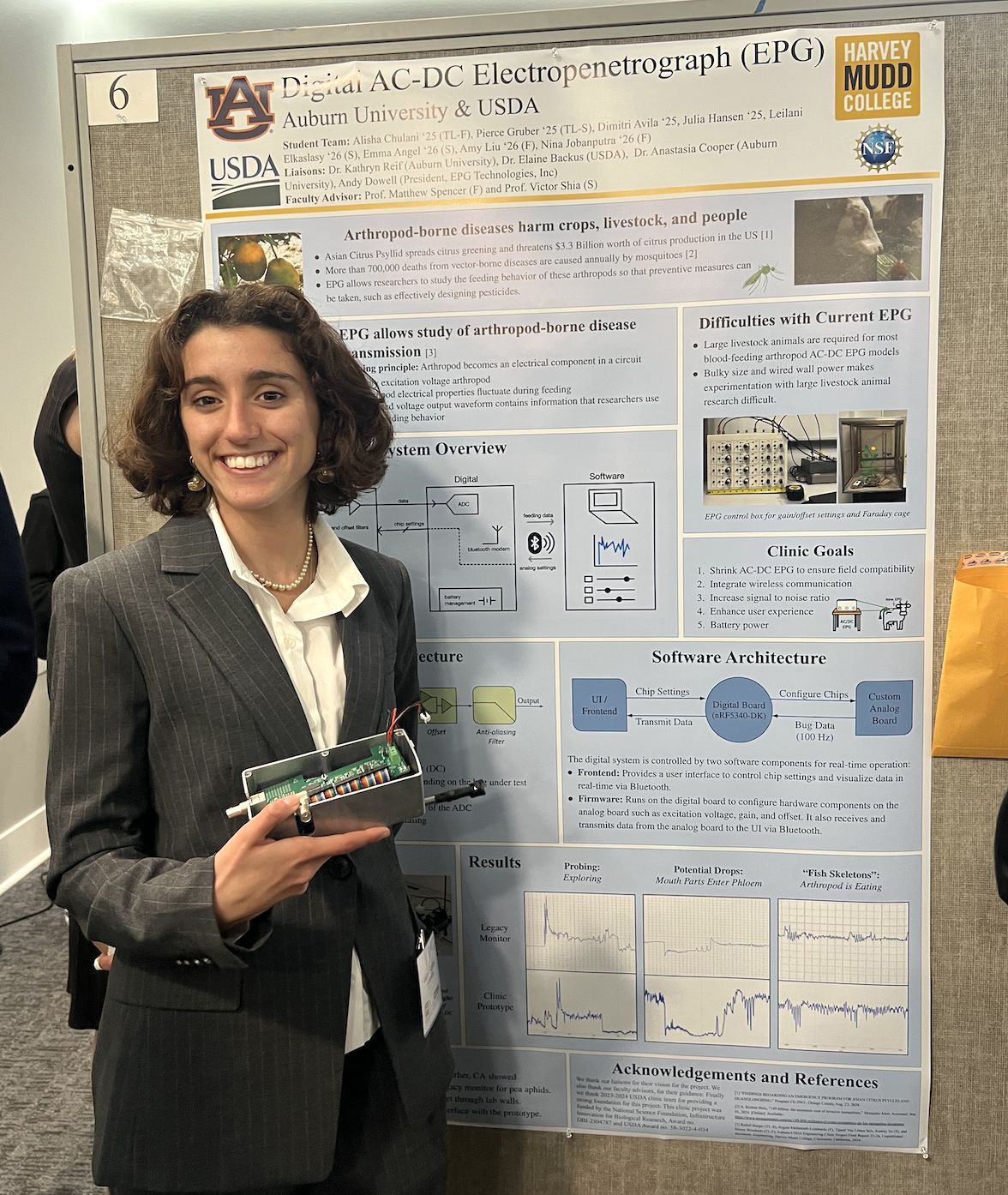
Collaborated with peers, USDA, and Auburn University to digitize an entomology research tool (electropenetrography) used to study insect feeding behavior, designing and verifying a hand-held Bluetooth-enabled system to replace the legacy instrument, which previously required 8x4 feet of bench space.
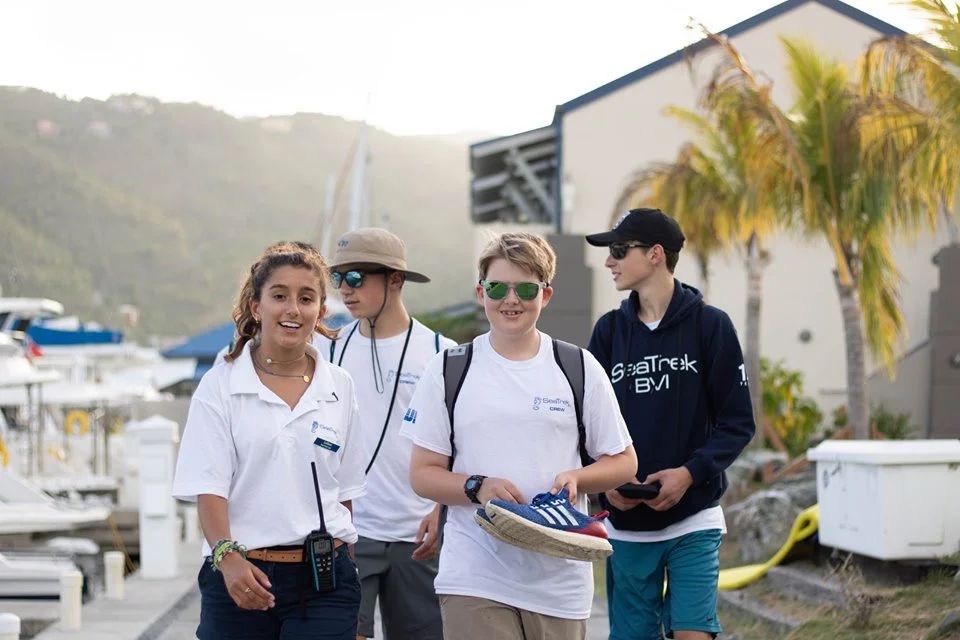
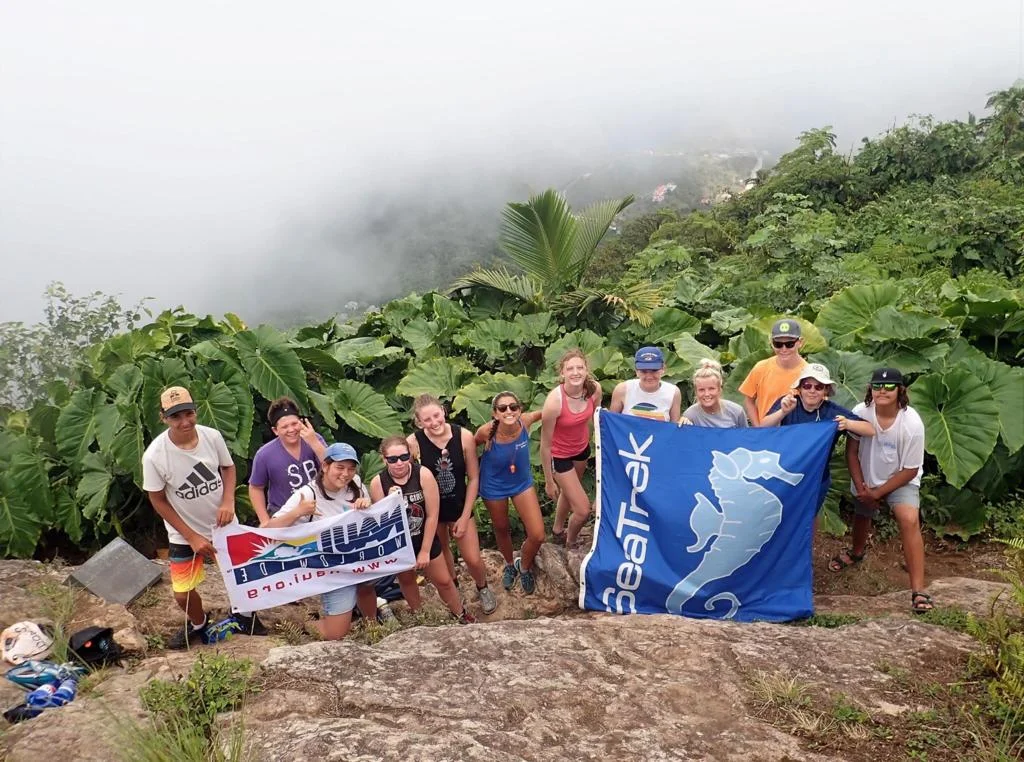
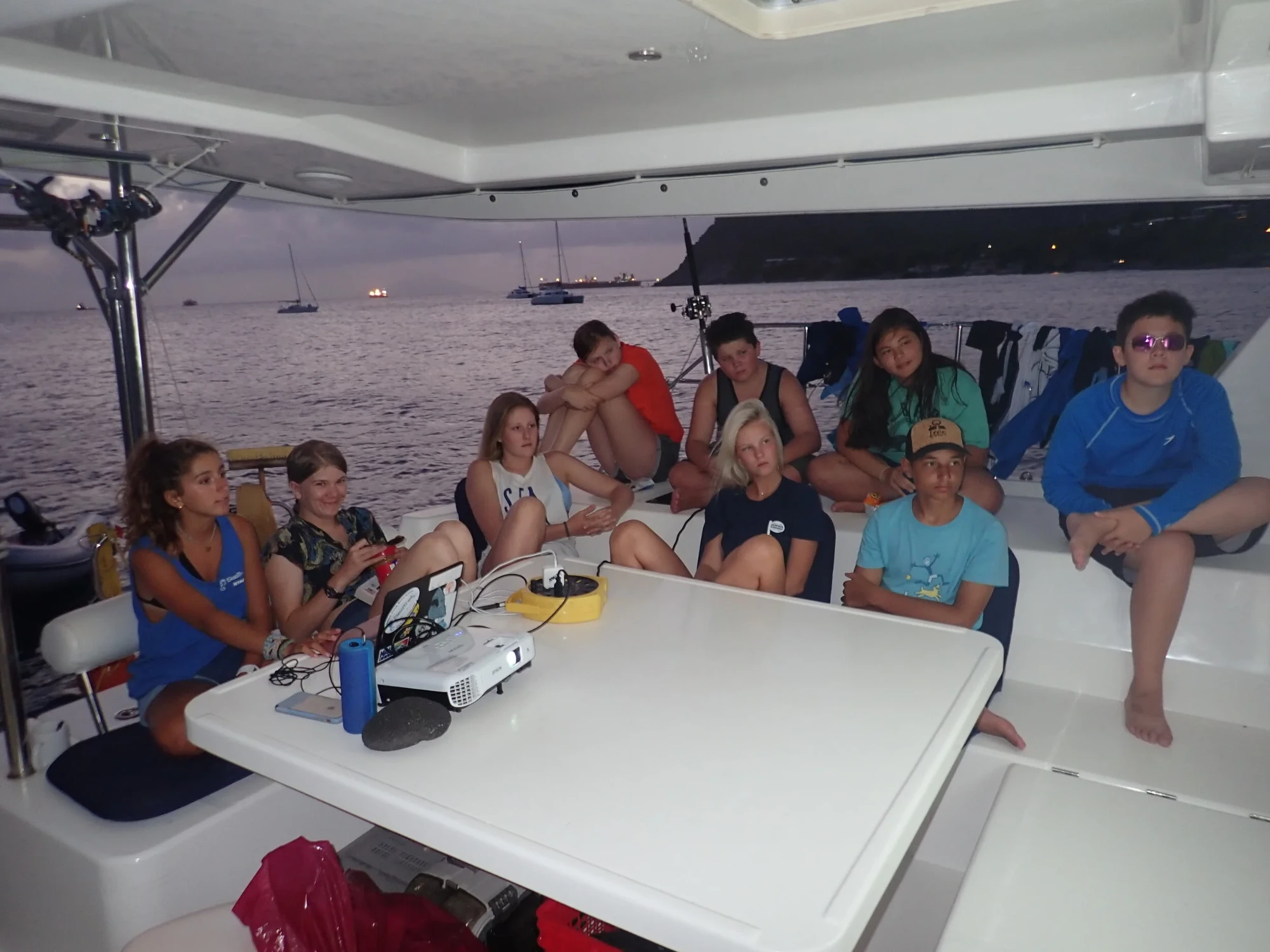
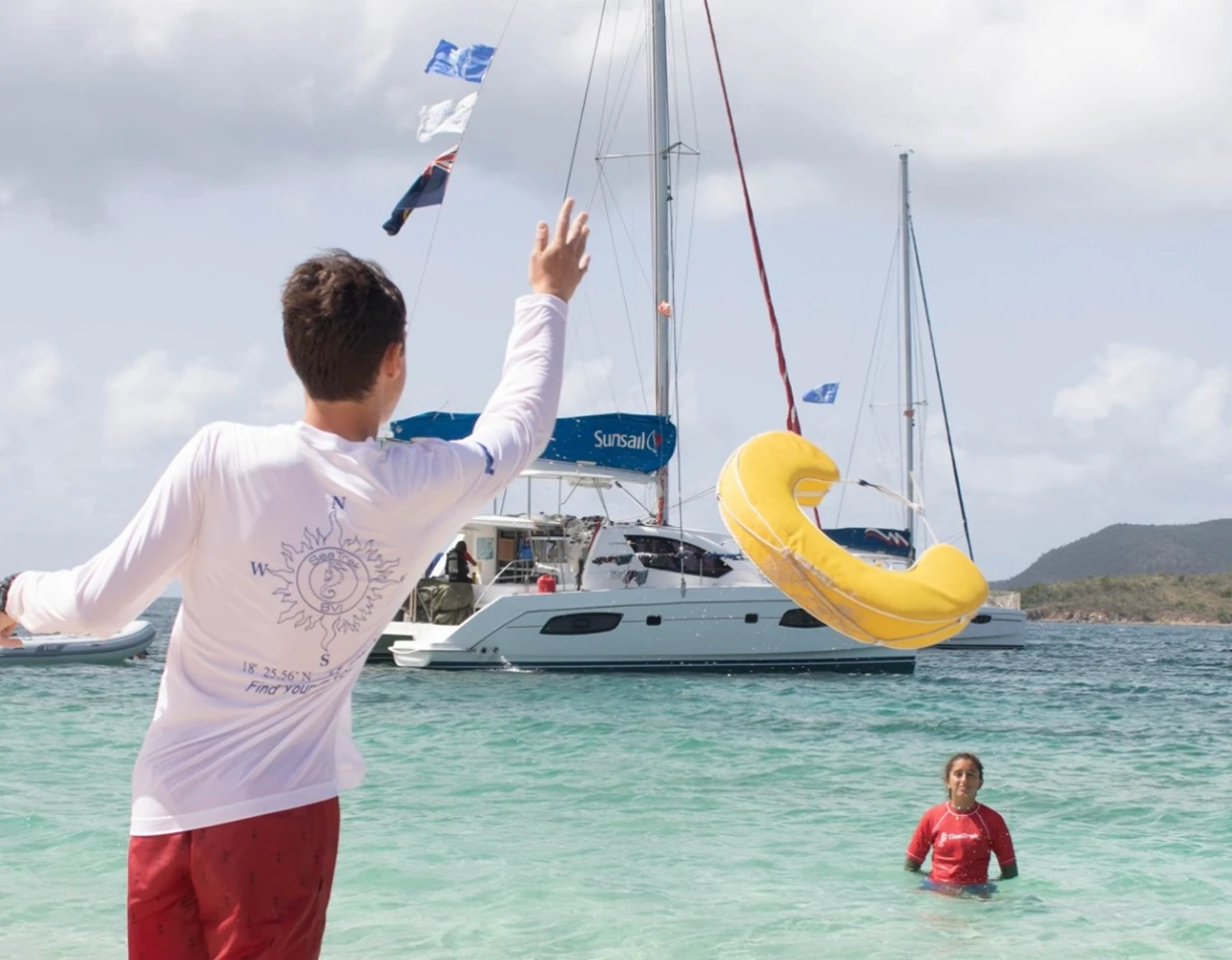
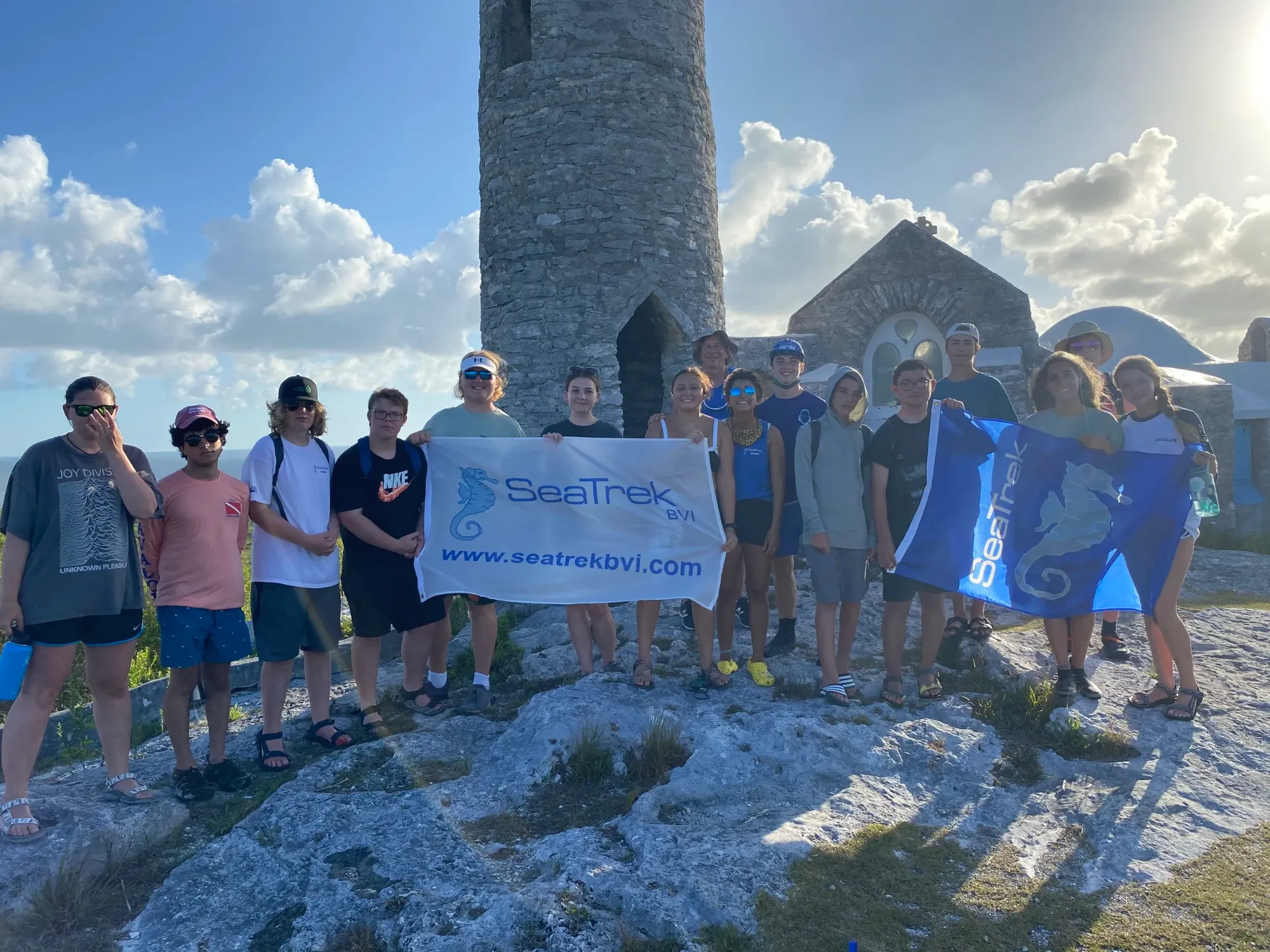
Progressed from intern to marine ecology instructor and scuba diving guide, to leading the Bahamas program — overseeing a 60' sailboat, 5 crew members, and 20 students for Summer 2021. Created a new place-based science curriculum, and worked as a Divemaster (3 years, taught and led 200 divers) and Program Director (1 year) while maintaining and operating yachts and overseeing young adults ages 12–22.
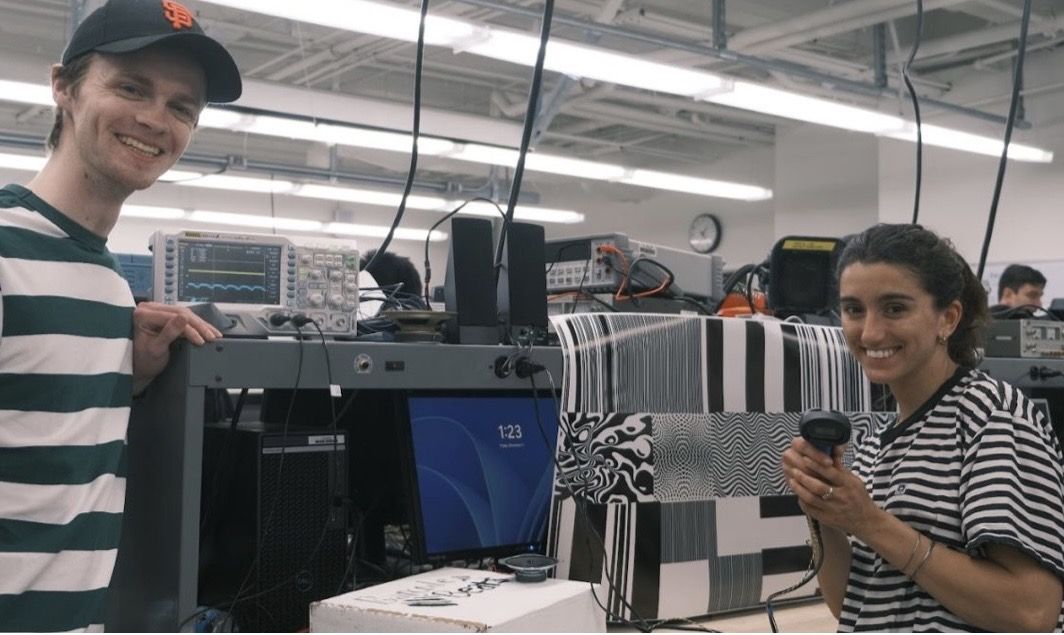
Built a digital synthesizer out of a barcode scanner by implementing a digital signal processing pipeline on an FPGA and MCU that manipulates a square-wave input from a barcode scanner to output an audible frequency-modulated sine wave in response to scanning a barcode pattern.
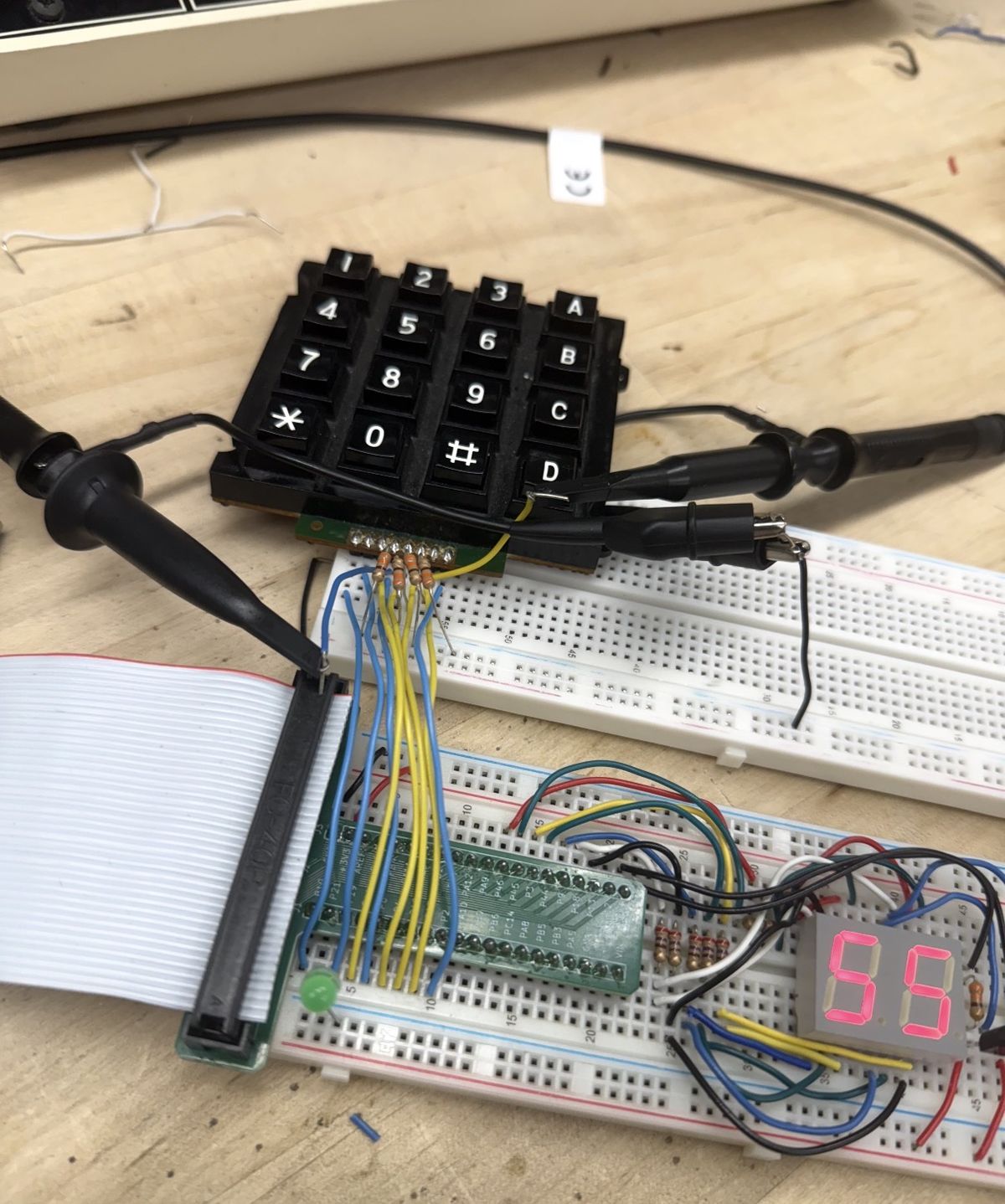
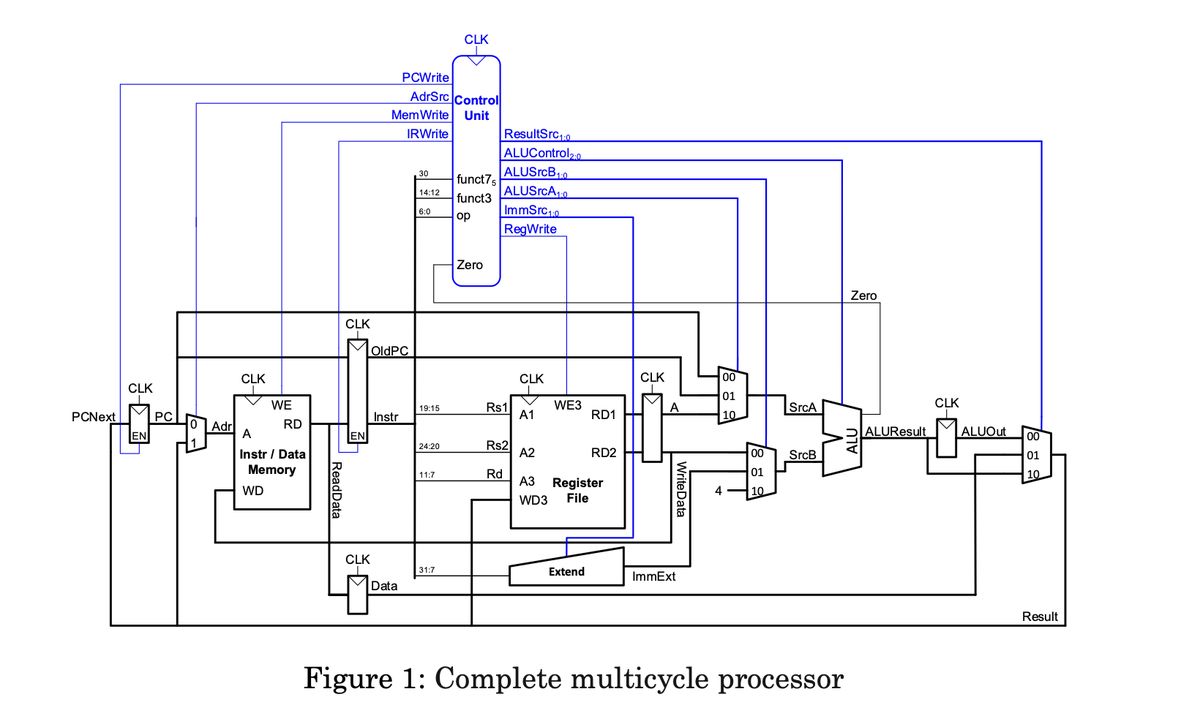
Designed and implemented a multicycle RISC-V processor in SystemVerilog with unified memory and modified control signals. Simulated and verified functionality on Intel Quartus, achieving full test coverage and adapting single-cycle components developed in previous coursework.
Four-Stage BJT Amplifier
Electrical EngineeringDesign
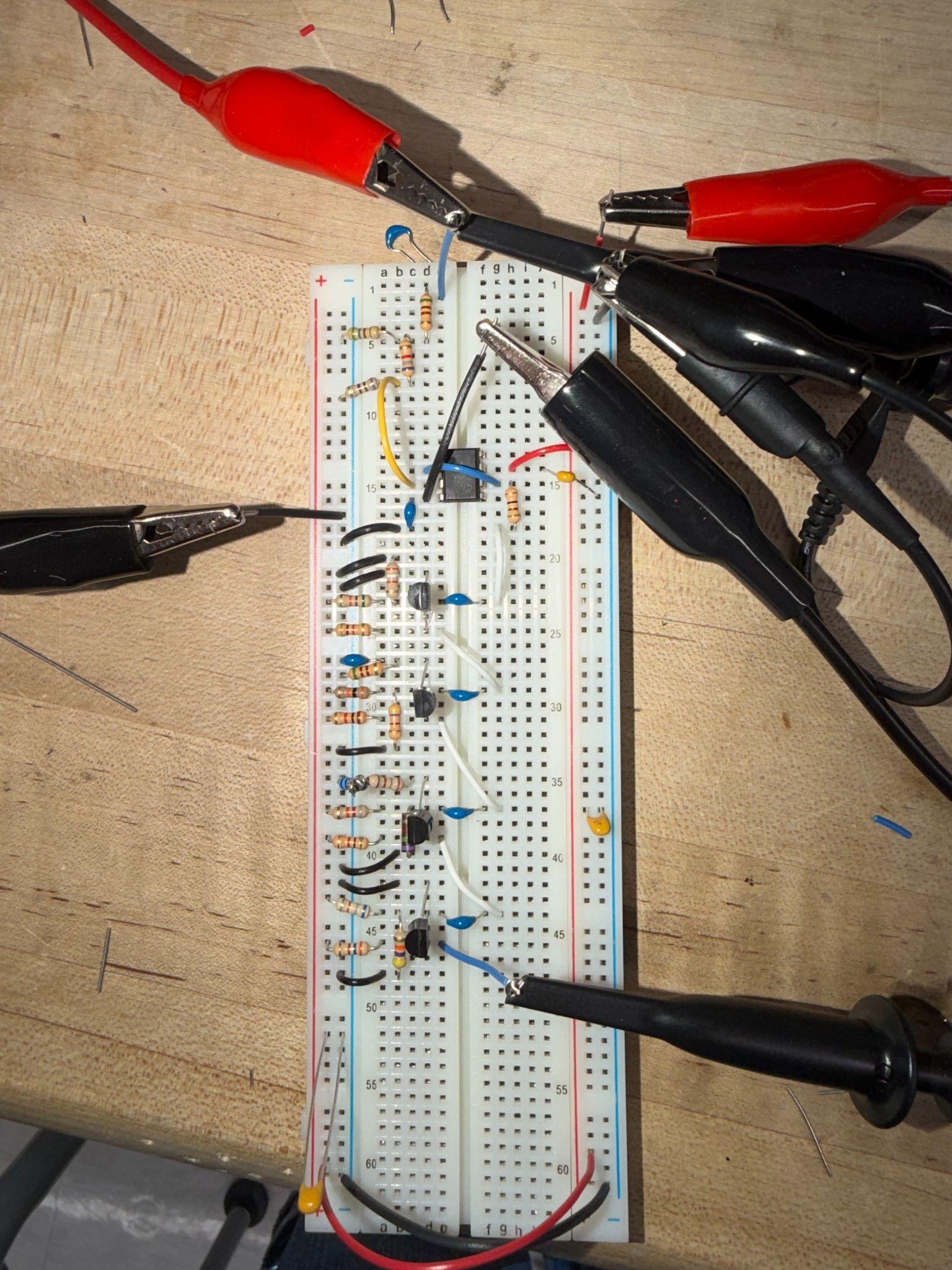
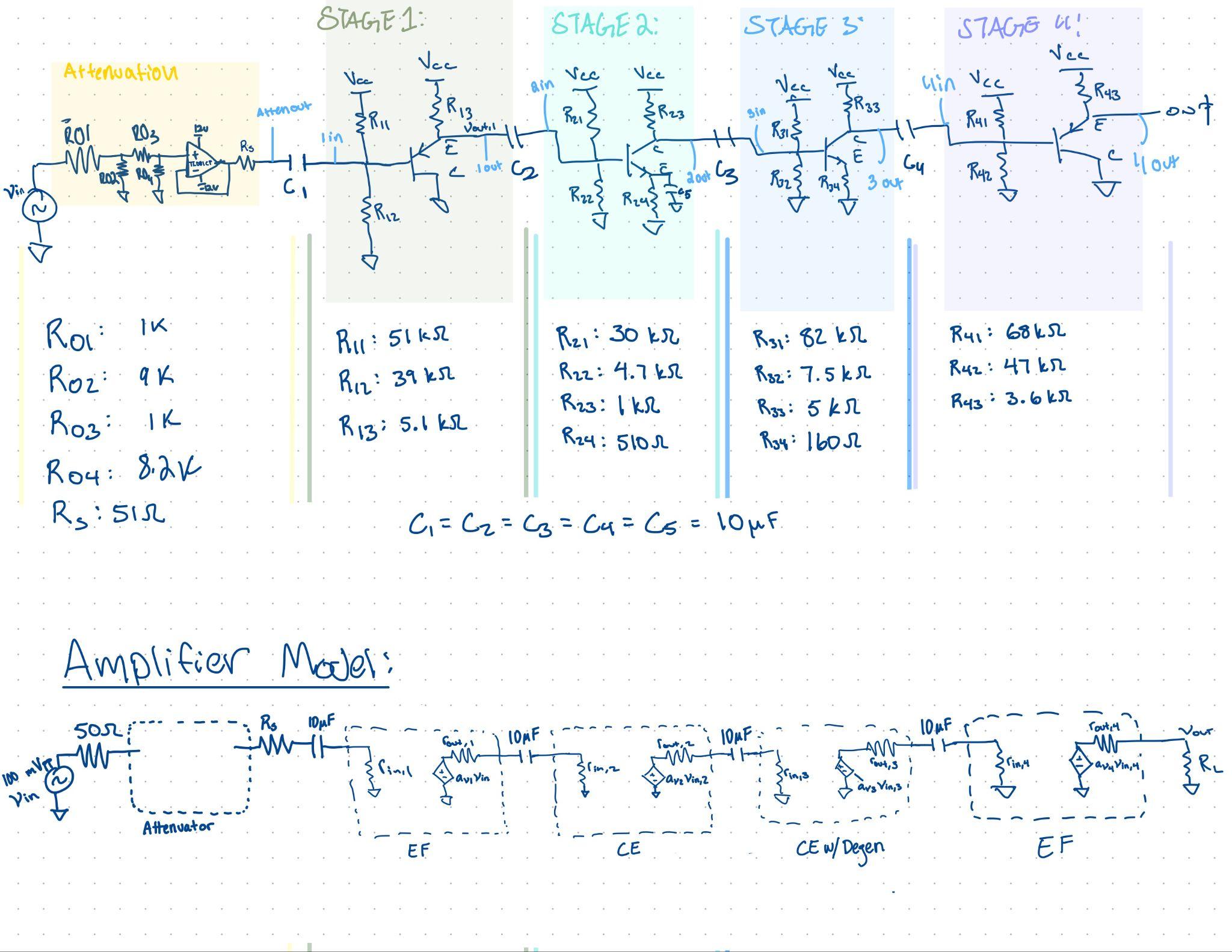
Designed, simulated in LTspice, and built a four-stage BJT amplifier on a single 10 V supply, with emitter-follower stages at both ends and two common-emitter gain stages in between. It measured a gain of 1,050, 20.8 kΩ input resistance, 22 Ω output resistance, an 8.8 V output swing, and 1.2% distortion at a 5 V swing, meeting every spec.
Built a Van's RV-12iS two-seat light sport aircraft fabricated primarily from sheet metal and pop rivets, with a 100 horsepower Rotax engine and Garmin VFR avionics. Aircraft completed FAA inspections. Helped assemble the plane body and installed all avionics.
Autonomous Surface Vehicle Design
DesignElectrical Engineering
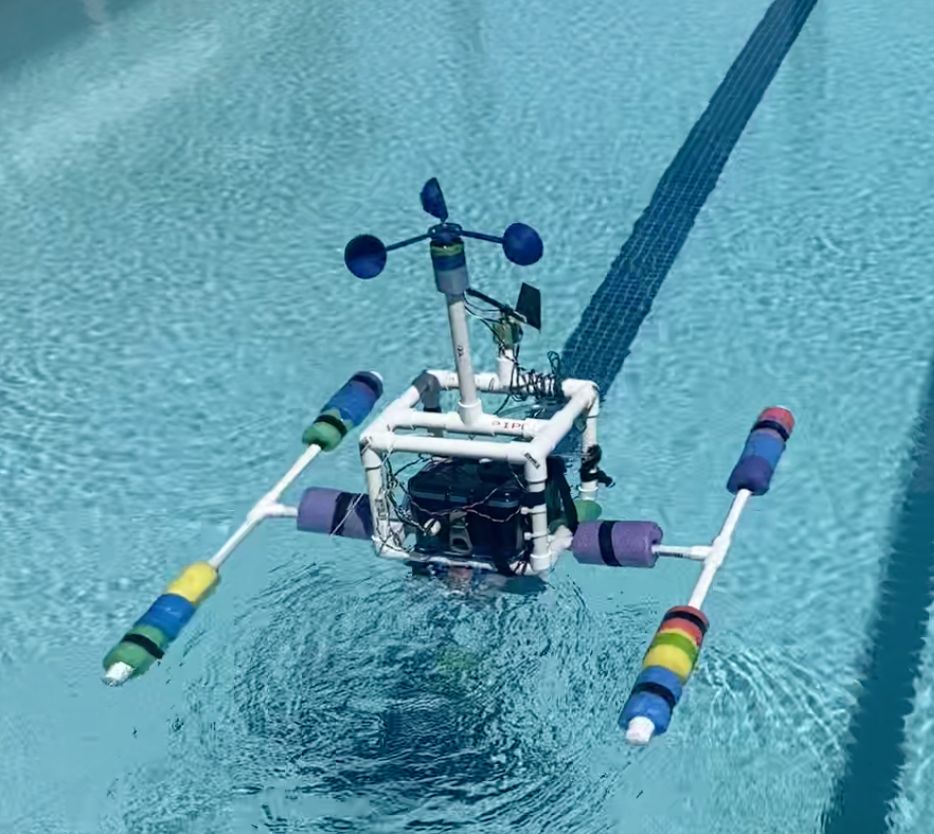
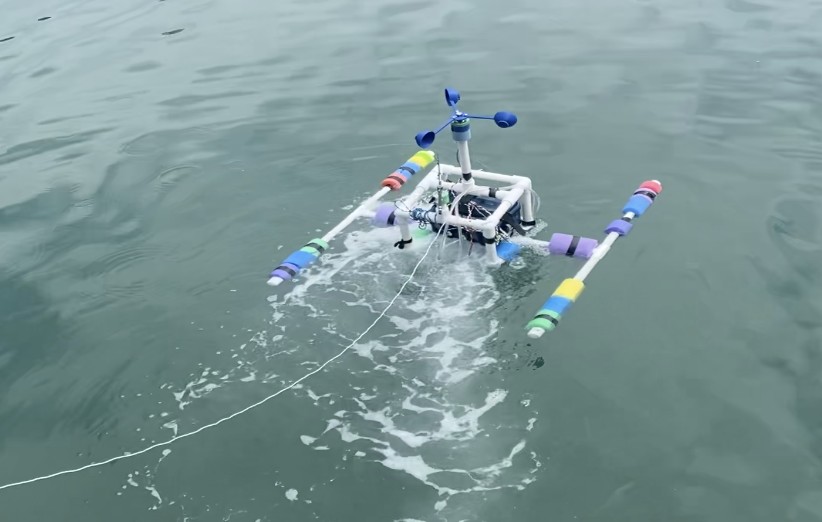
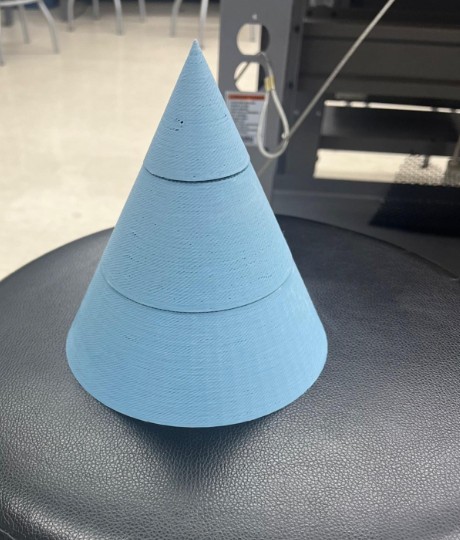
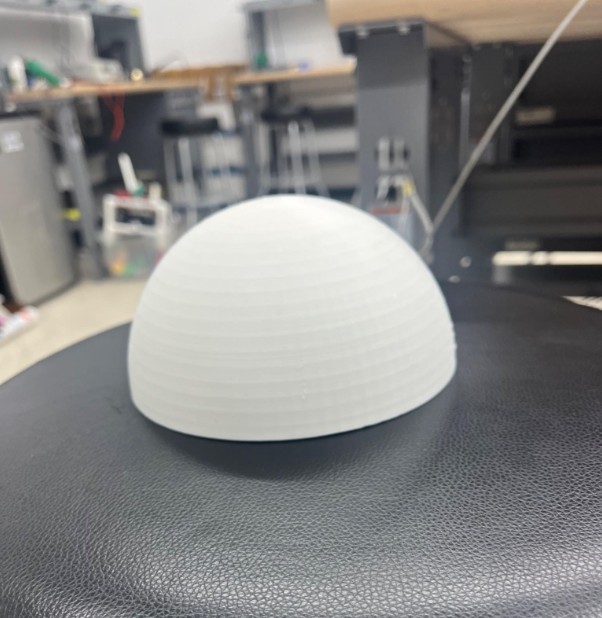
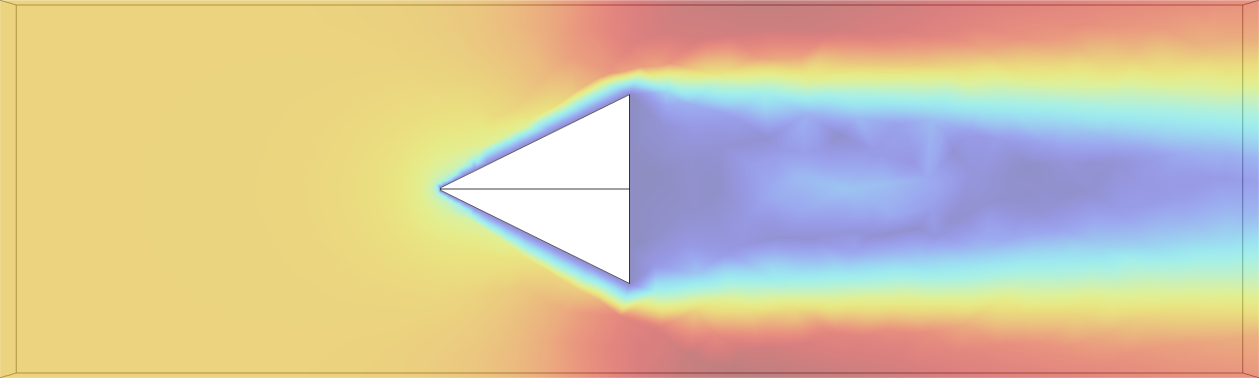
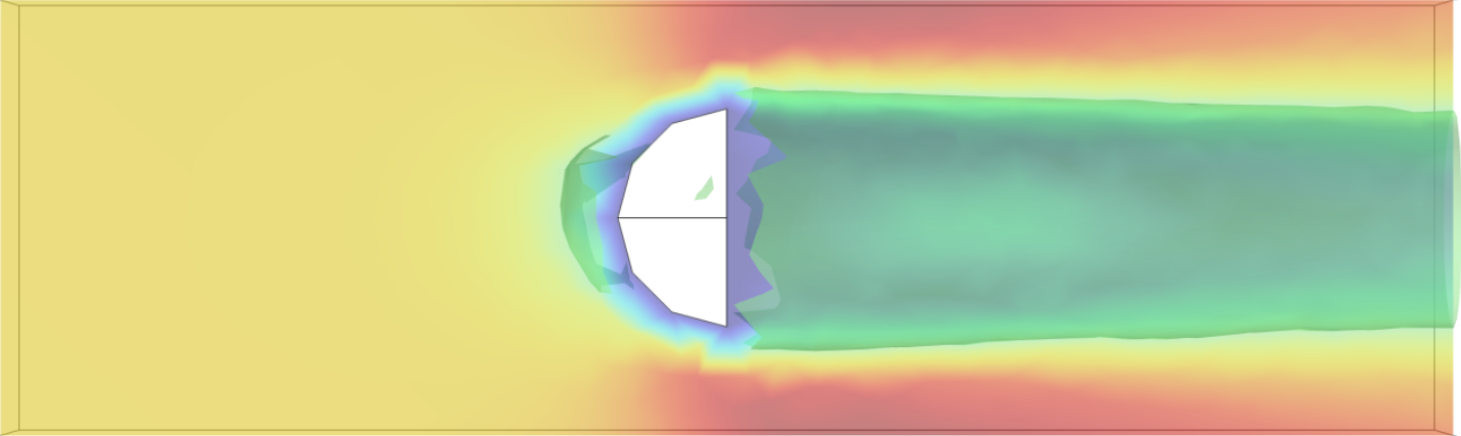
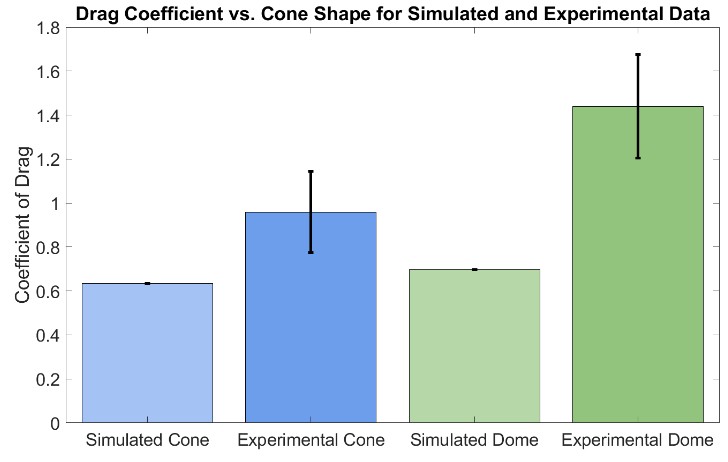
Designed and deployed an Autonomous Surface Vehicle to compare different hydrodynamics of cone and dome shaped nose cones in the ocean, comparing simulation to reality in a non-ideal environment. The robot measured its own velocity and applied drag force while autonomously navigating a predetermined route using an embedded GPS.
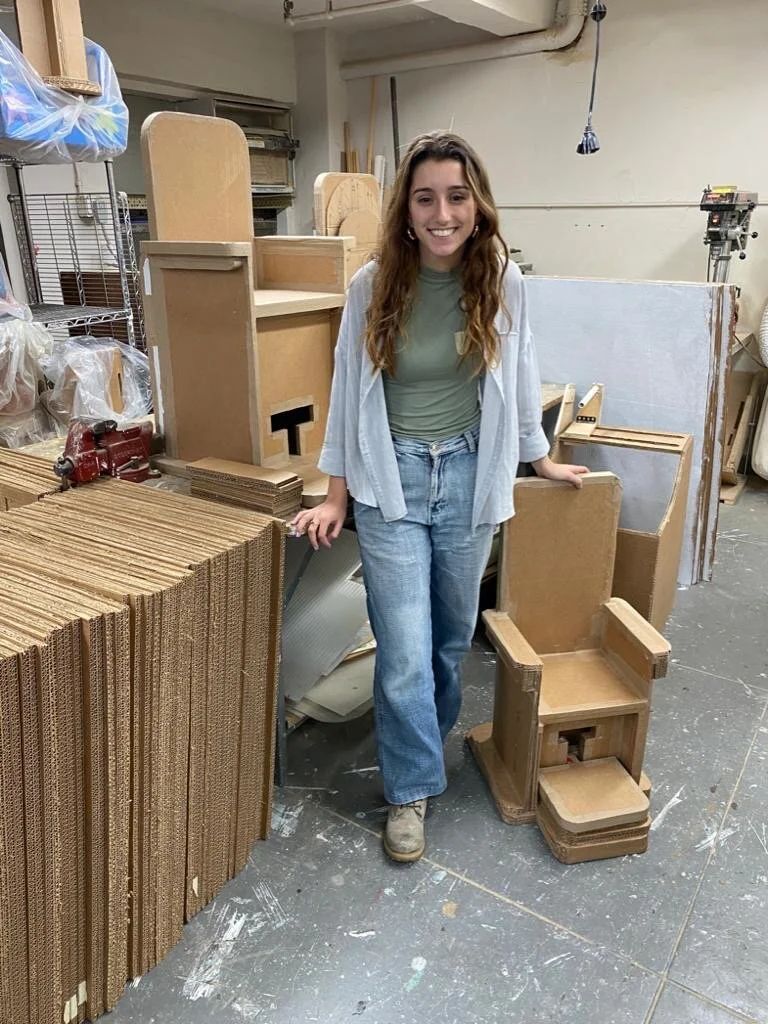
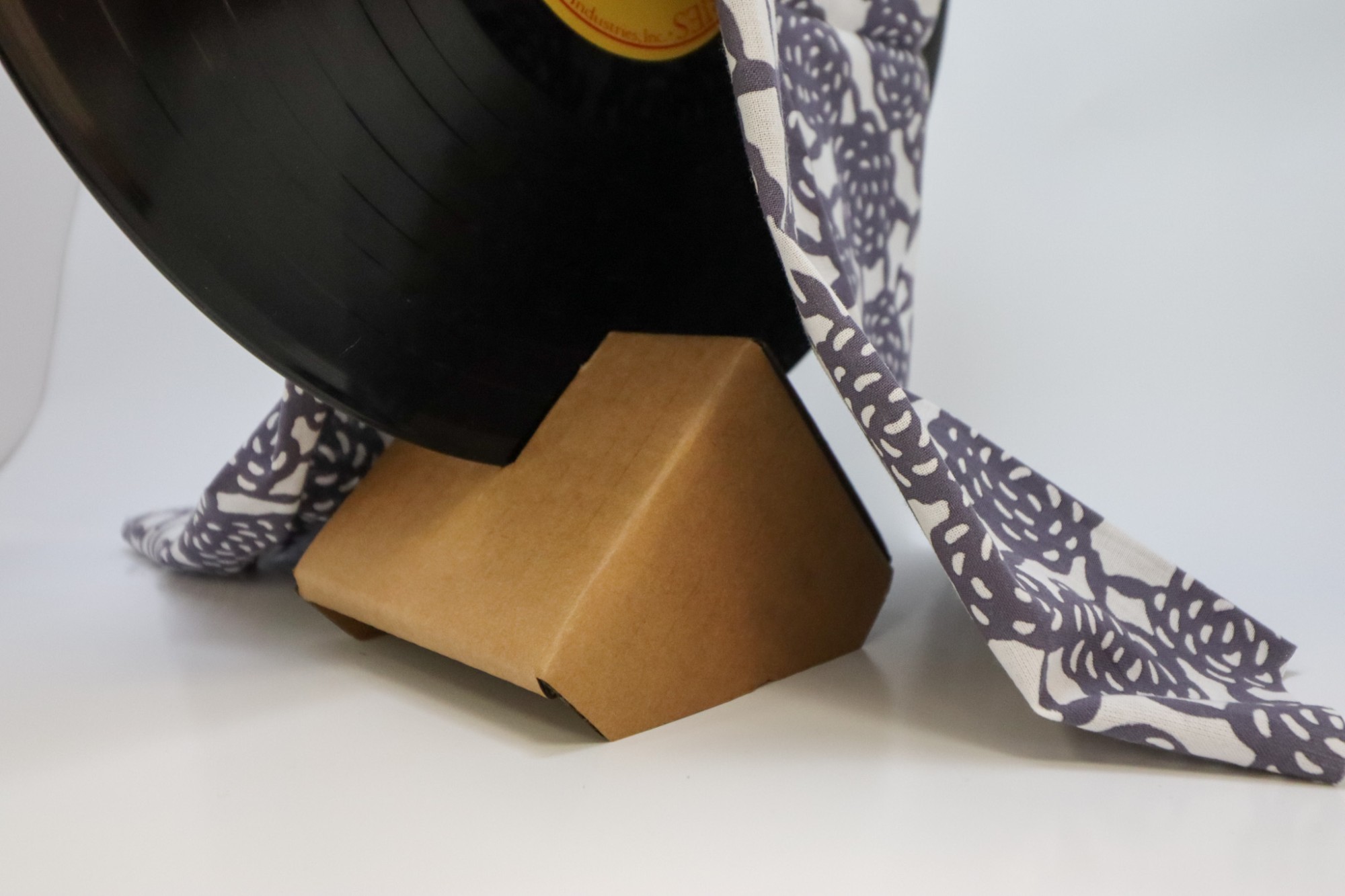
With a team of four, redesigned Audio-Technica's turntable packaging to replace Styrofoam with engineered cardboard: kirigami-inspired folded corners, layered corrugated barriers, and a woven cardboard mesh. After unboxing, the corners become vinyl record stands, and a Japanese tenugui cloth replaces the plastic cover to honor the brand's heritage.
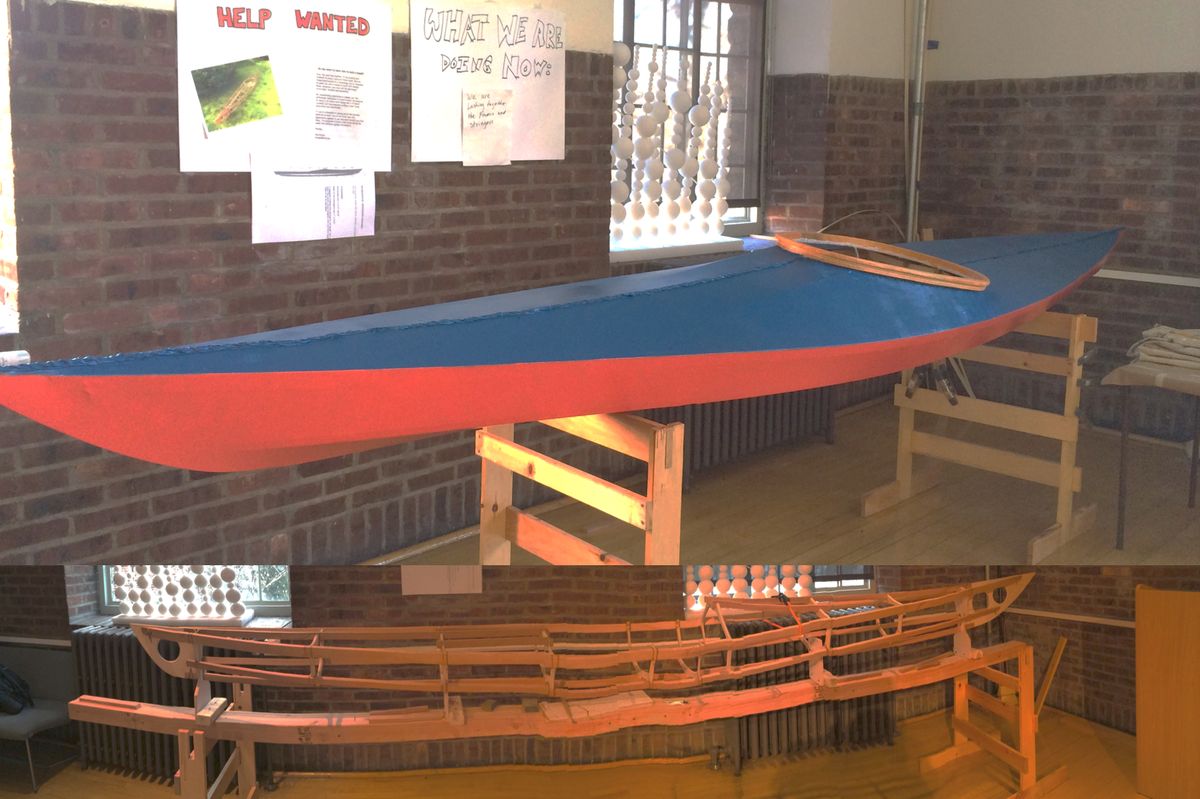
Designed and built a skin-on-frame kayak out of wood and treated canvas.
Adaptive Design Assistive Devices
AccessibilityDesign
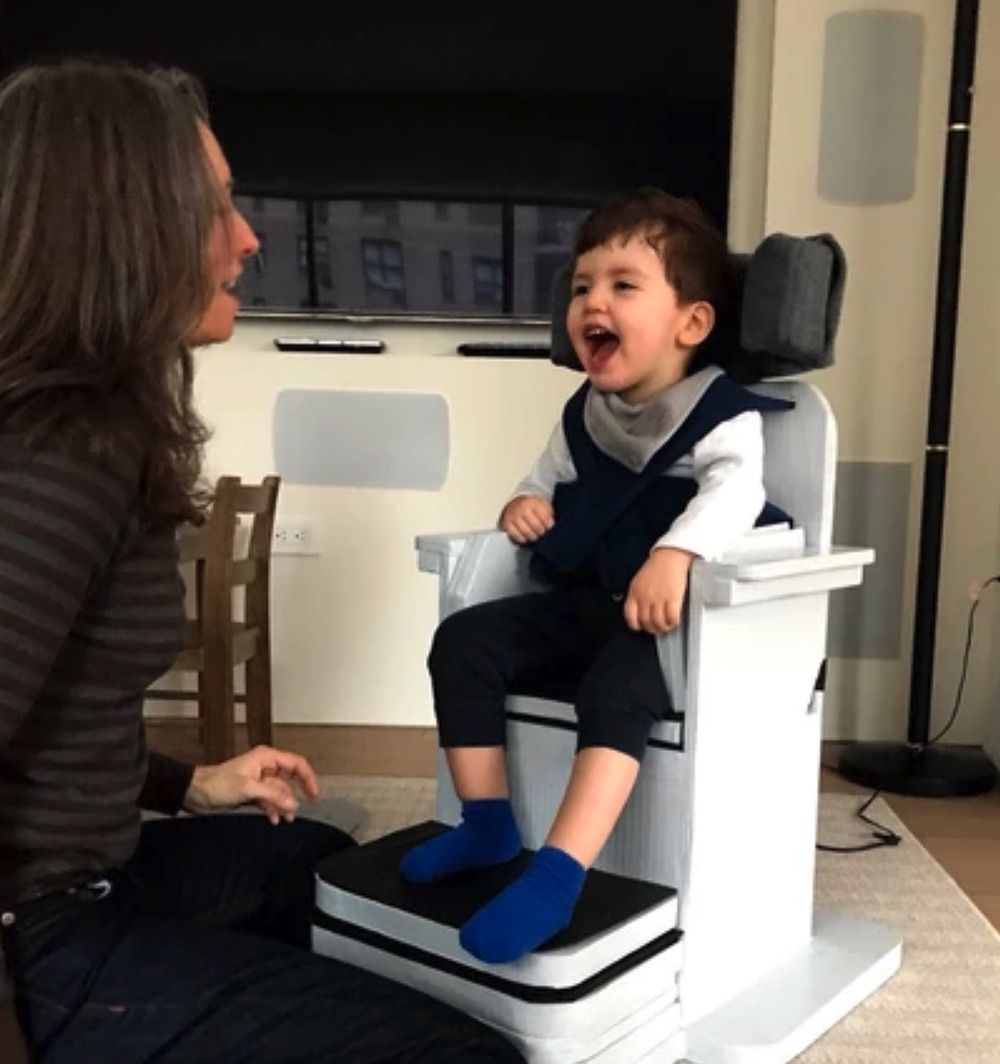
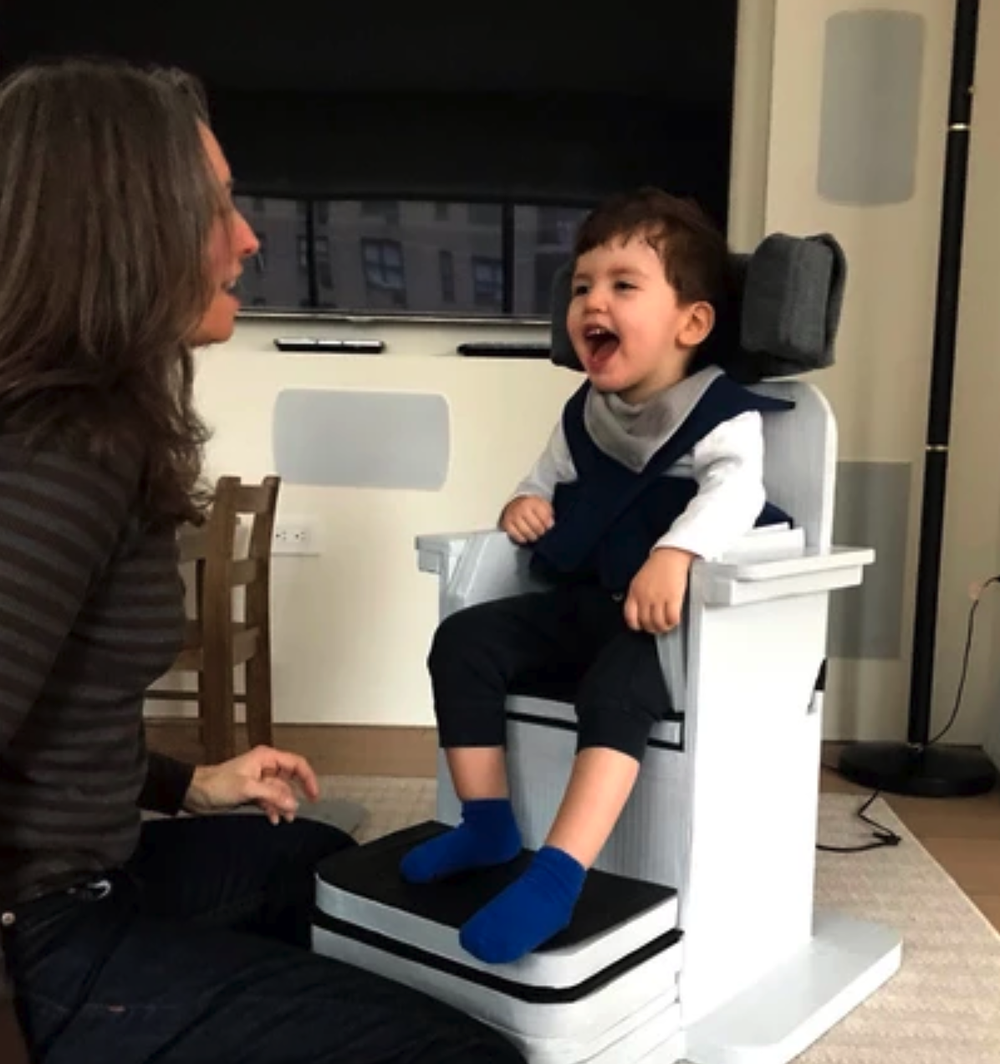
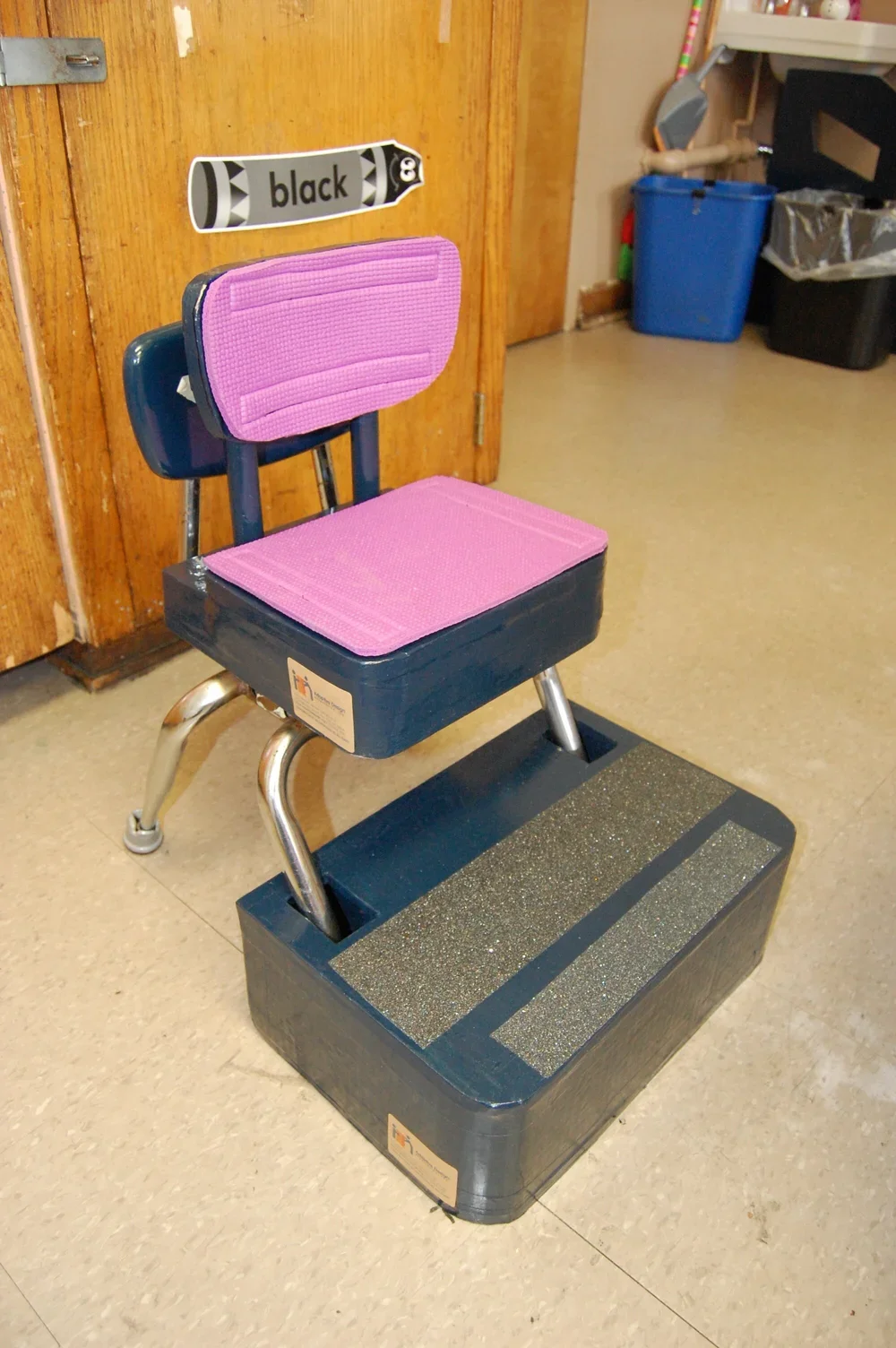
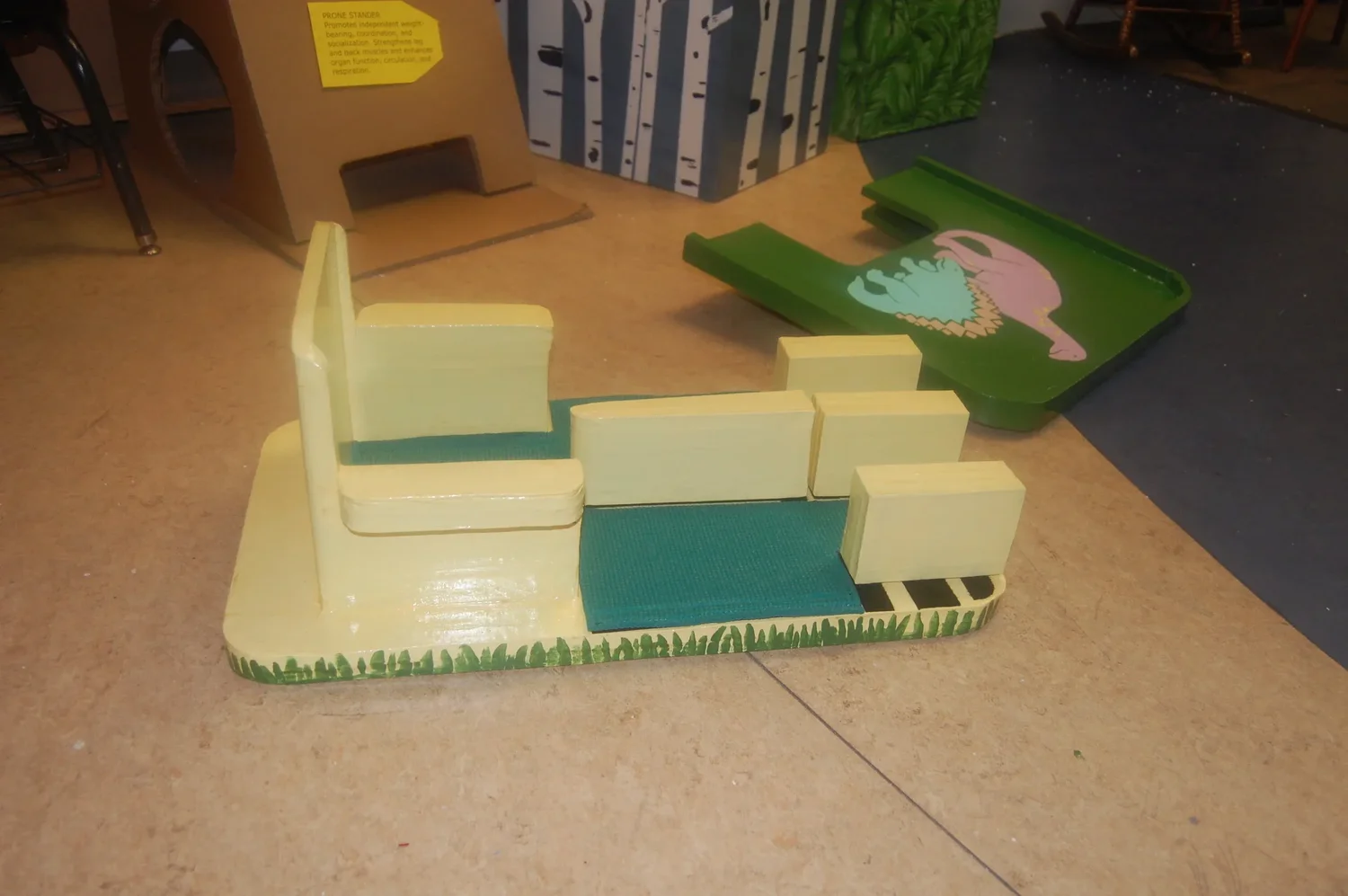
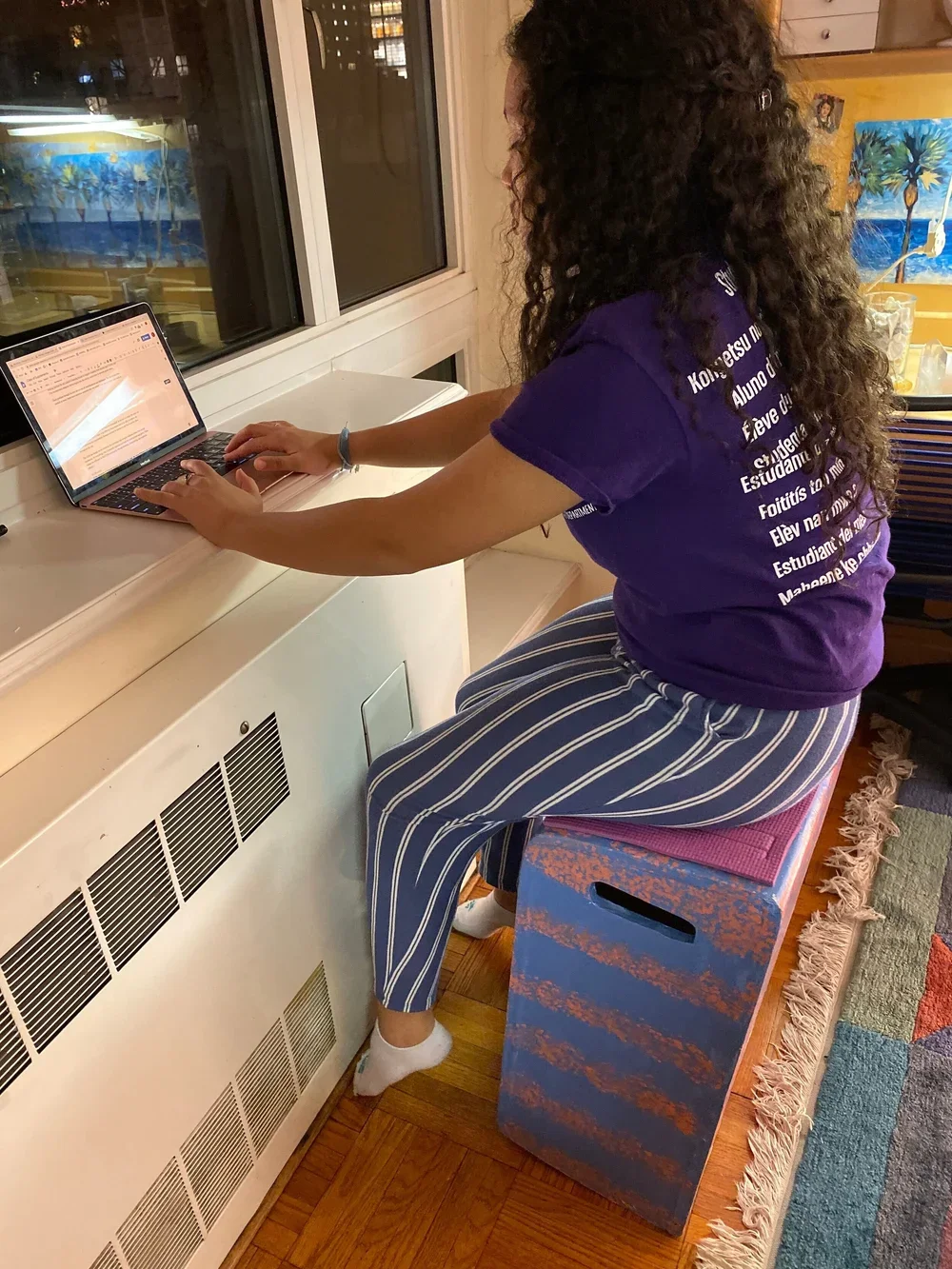
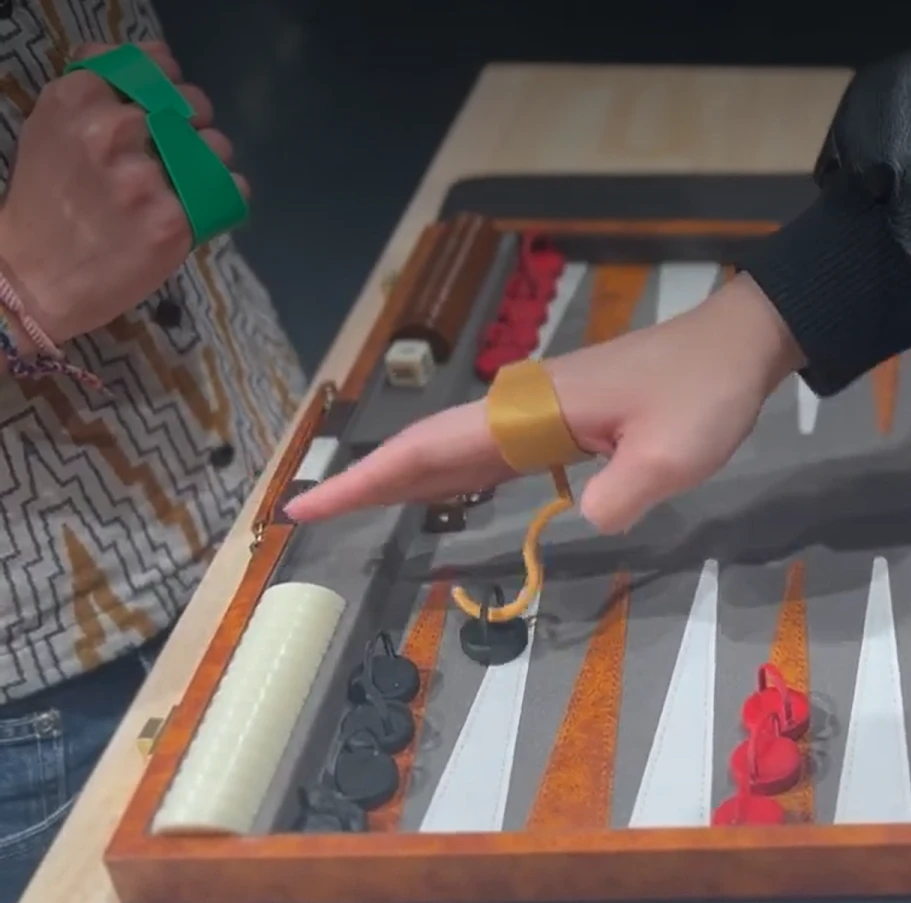
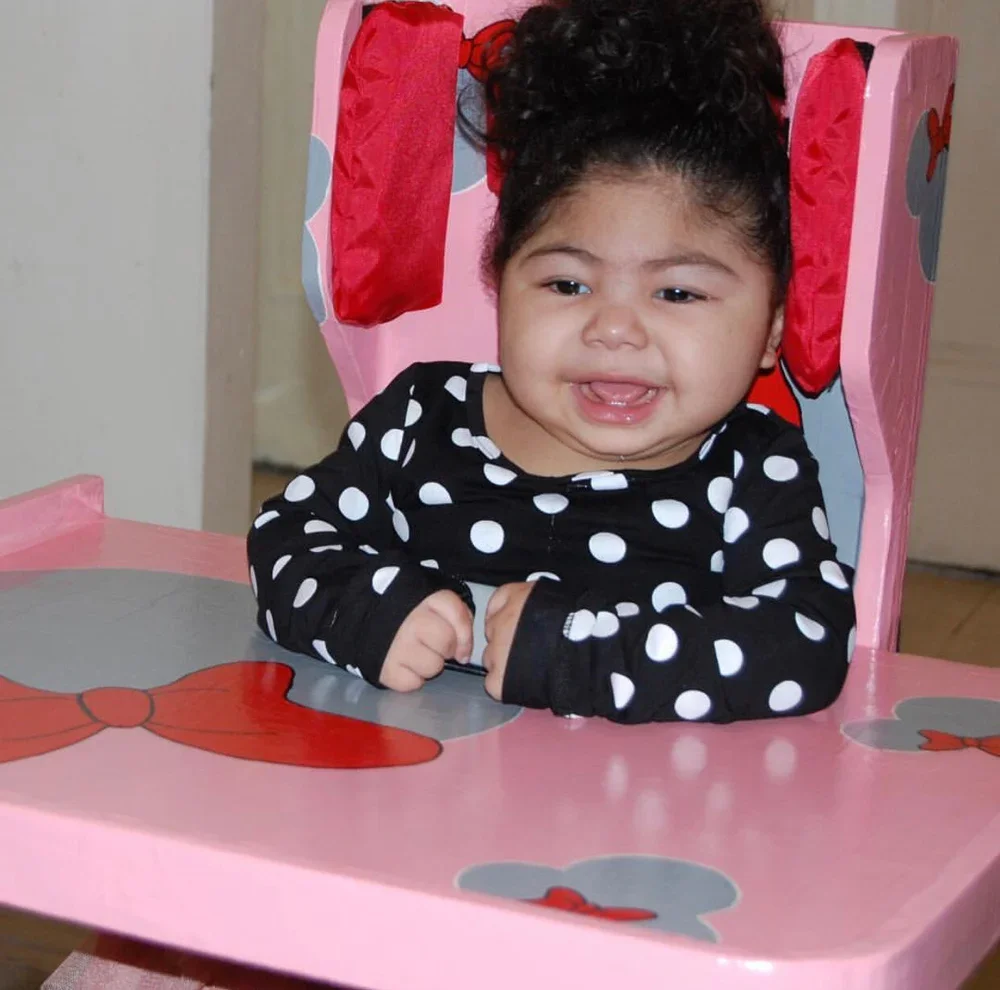
Designed and built 43 assistive devices at the Adaptive Design Association, Adaptive Design at Mudd and my Kabarnet workshop: custom seating, wheelchair fittings, mobility aids, braces and splints, daily living tools, communication aids and sensory boards, mostly from low-cost materials like cardboard, PVC pipe and wood.
Beach Furniture Made from Reclaimed Materials for the Cape Eleuthera Research Institute
DesignAccessibilitySustainability
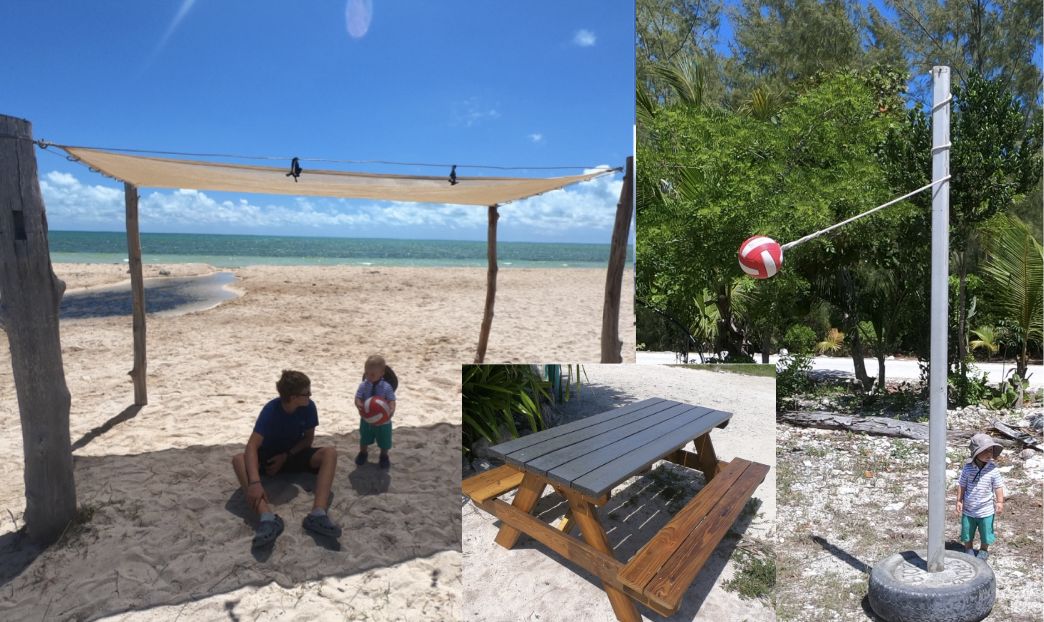
After talking to the Cape Eleuthera community and discovering what infrastructure could increase beach accessibility and recreation, I built a tetherball net out of a reclaimed sailboat mast, tire and concrete; built and installed a retractable shade structure out of self-milled invasive casuarina pine; and built a picnic table out of junkyard wood and rubber lumber.
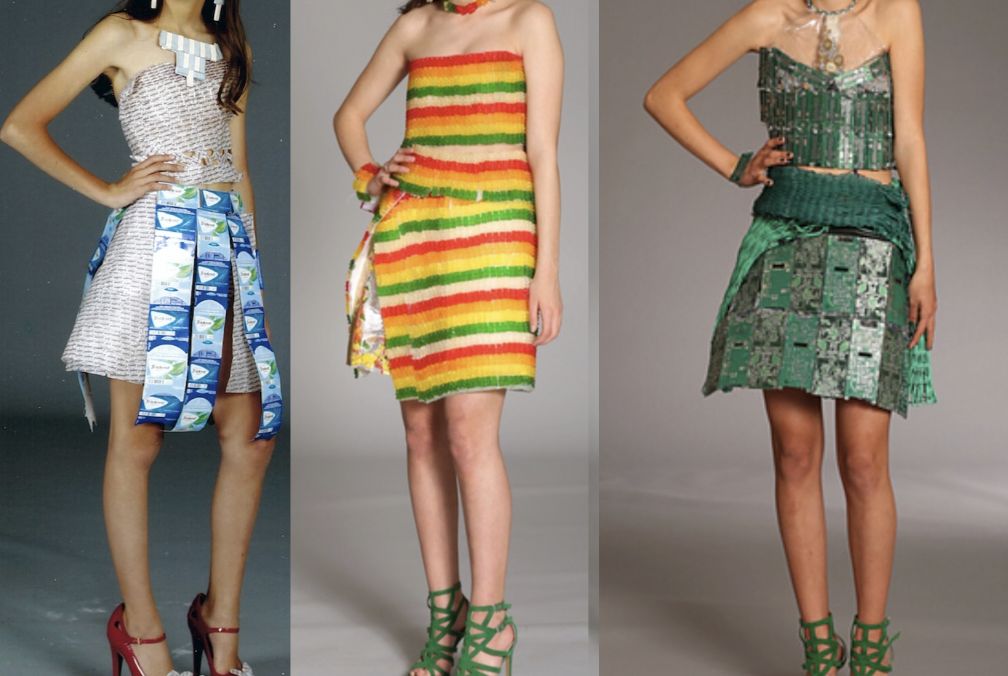
Wearable Sculptures Made from Recycled PCBs, Gummy Bears, Gum Wrappers
Design
Built wearable sculptures out of recycled e-waste, gummy bears and gum wrappers. All pieces involved attaching components to each other without the use of a base.
Student Garden Ceramic Infrastructure
DesignLeadership
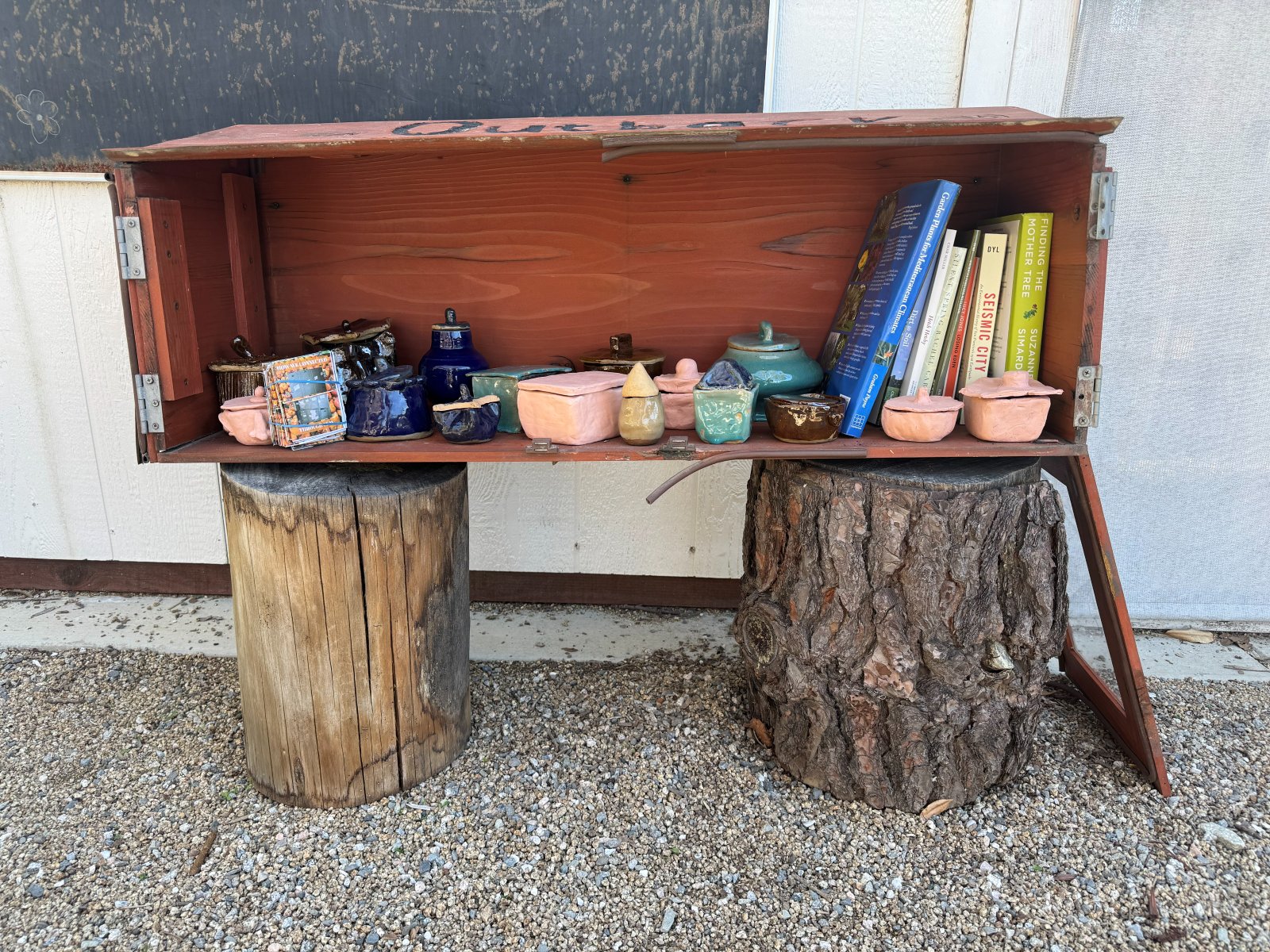
Created a passive watering system by making and installing ollas, a traditional indigenous way of watering plants through porous clay; an adobe native wildflower seed bomb pollinator garden to support native species; chicken furniture to support enrichment for the chickens; restored a neglected pomelo tree with new tree supports; and created fruit bowls placed throughout campus for students to eat fruit grown in the garden. A collaborative effort with the garden steward and a group of artists.
Research
Harvey Mudd College
Tribology Lab
DesignSustainability
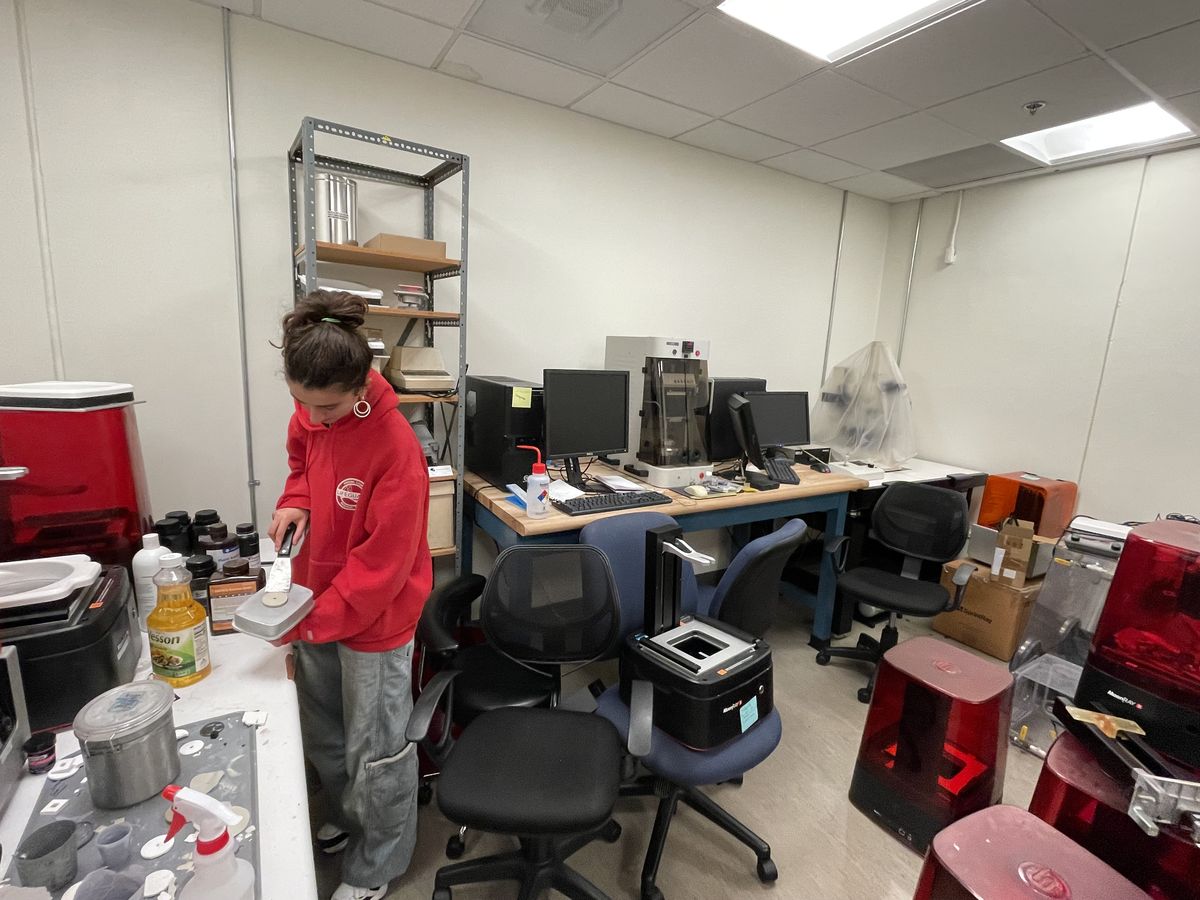
Developed a novel ceramic resin and calculated the average abrasiveness of available commercial resins for stereolithography 3D printing. Co-authored 3 abstracts and 2 posters presented and published through the Society of Tribologists and Lubrication Engineers 2025 conference.
Volunteered for the Clay-Wolkin Fellowship at Harvey Mudd designing Wally, a CORE-V RISC-V microprocessor in collaboration with the Open Hardware Group. Involved in design and verification of the processor, and co-developed a Python script that automates a daily run of all test benches, updating the team on bugs daily.
Harvey Mudd College
Bahena Water Research Lab
Sustainability
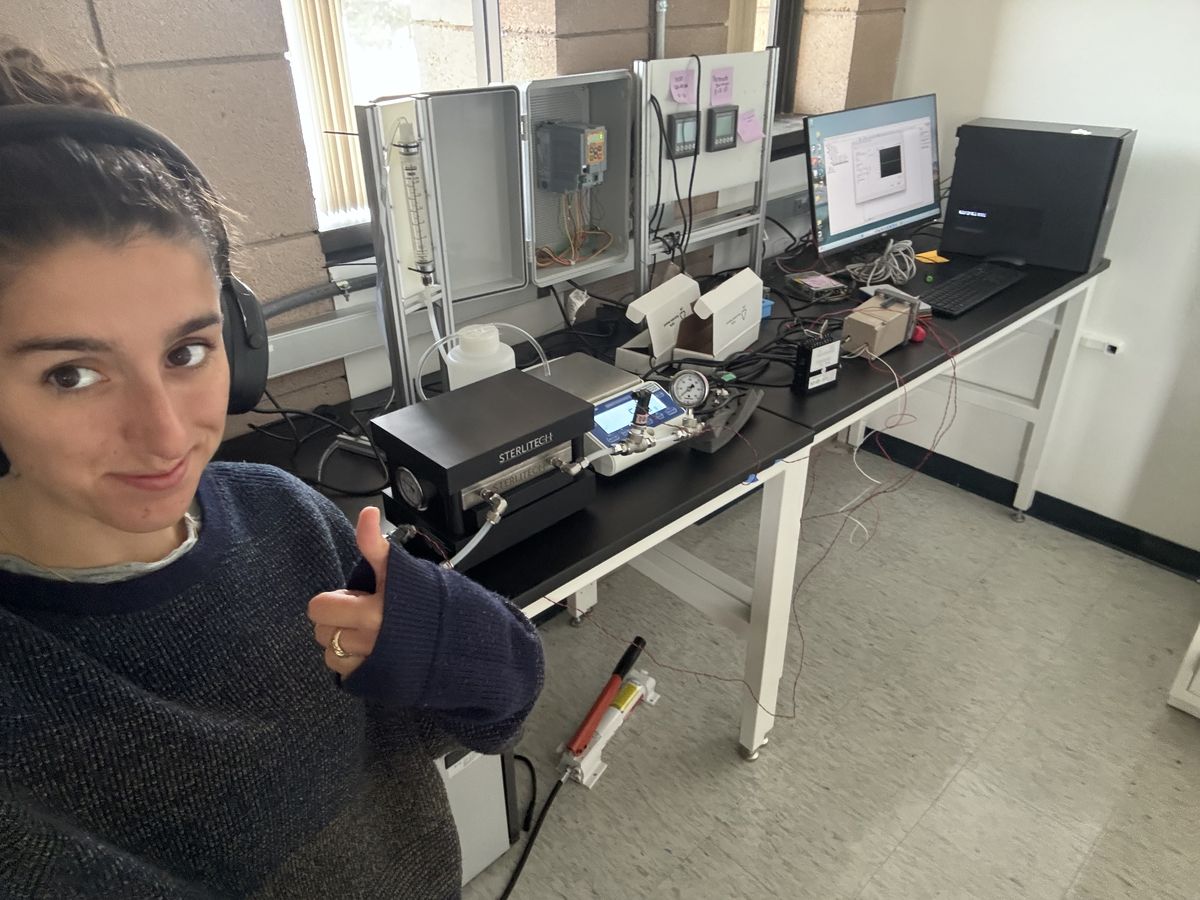
Built a fully automated bench-scale reverse osmosis system using LabVIEW to reduce manual testing time by 90%, enabling multi-day continuous operation. Research supports optimization of power plant water reuse.
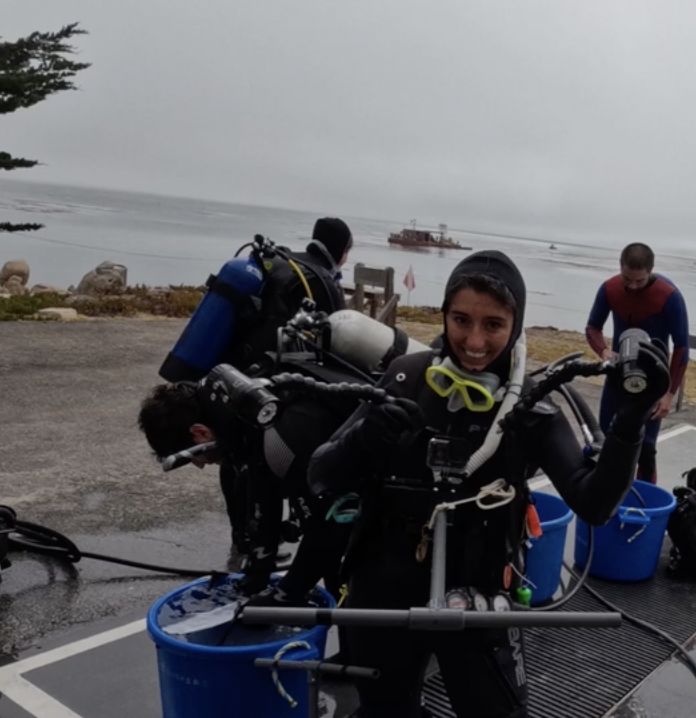
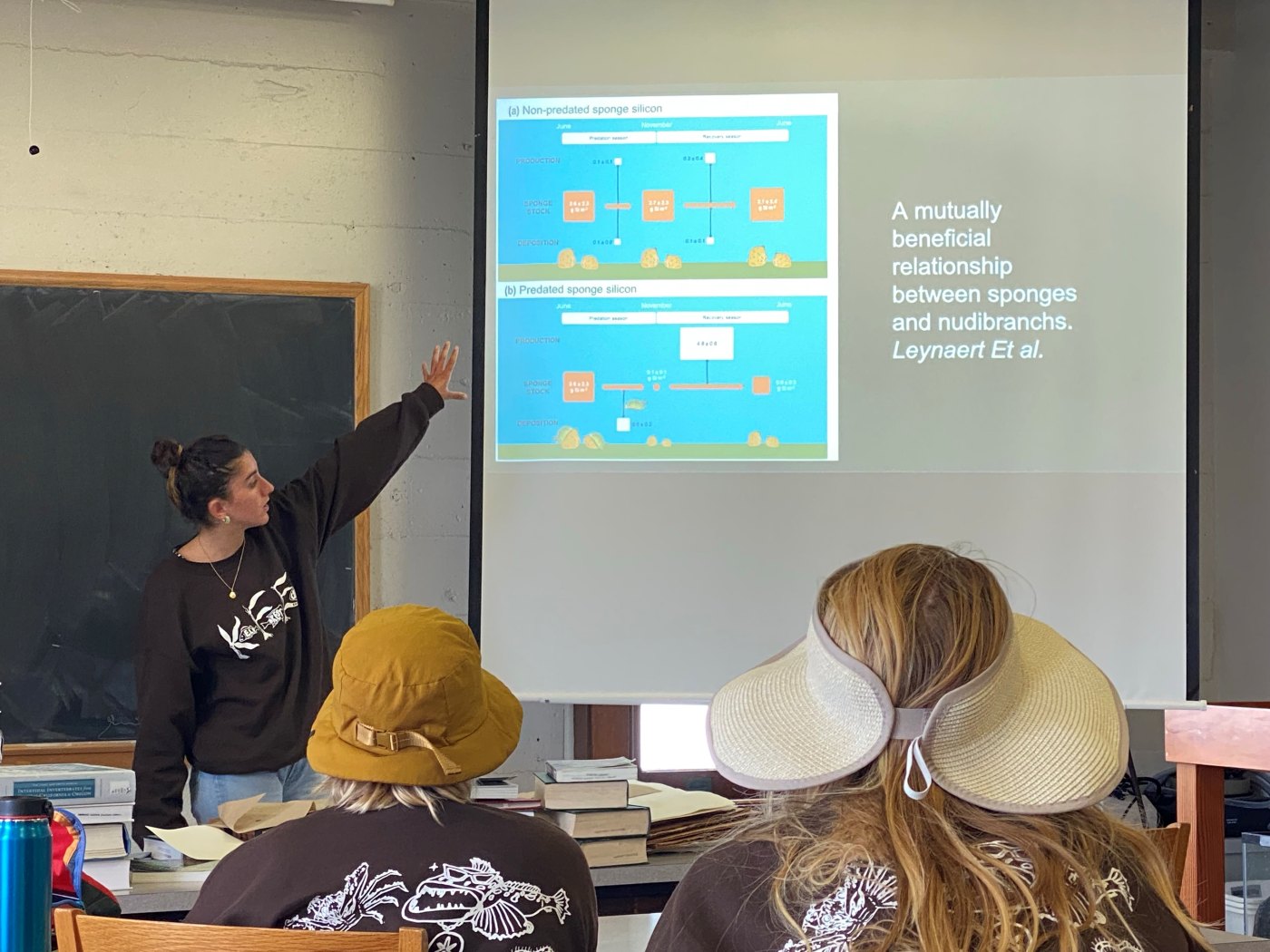
Conducted underwater diving surveys of local giant kelp forests, continuing the longest running kelp dataset (30 years). Co-created an open-source database of benthic and ocean floor survey videos for national research efforts, and designed and conducted an original research project investigating nudibranch and sea sponge interdependence.
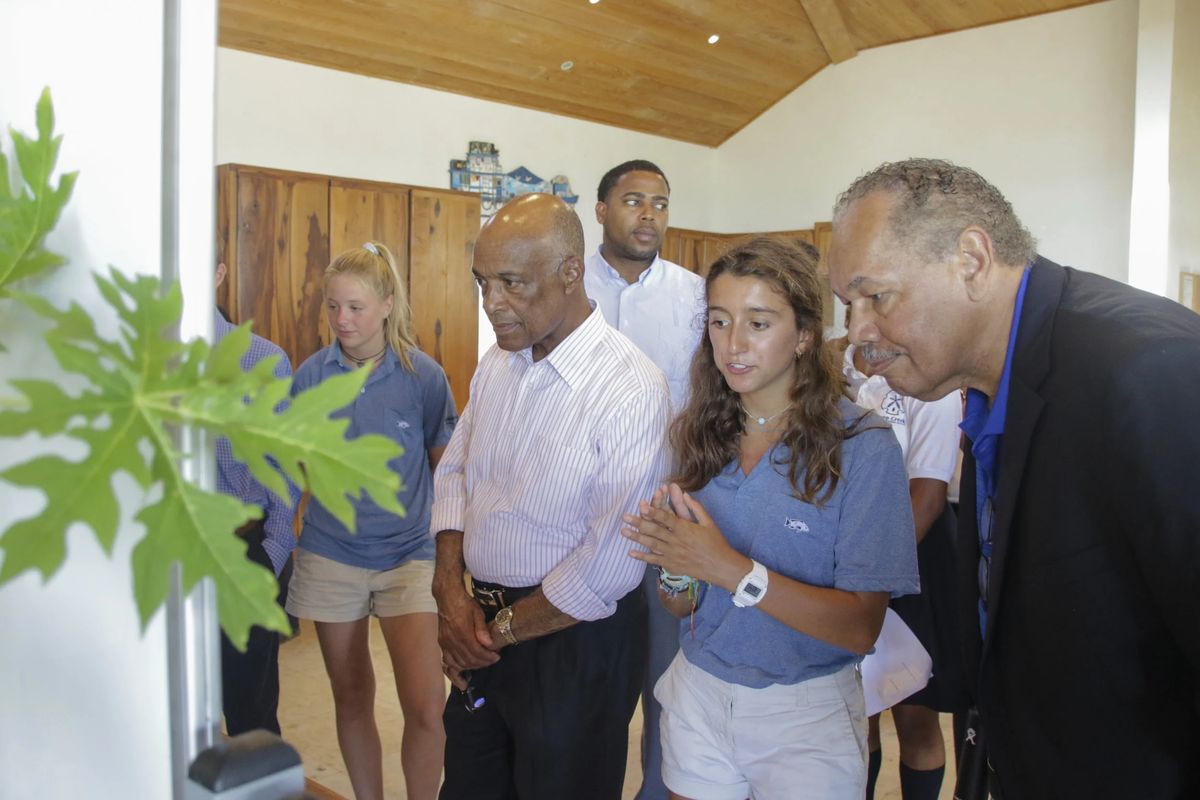
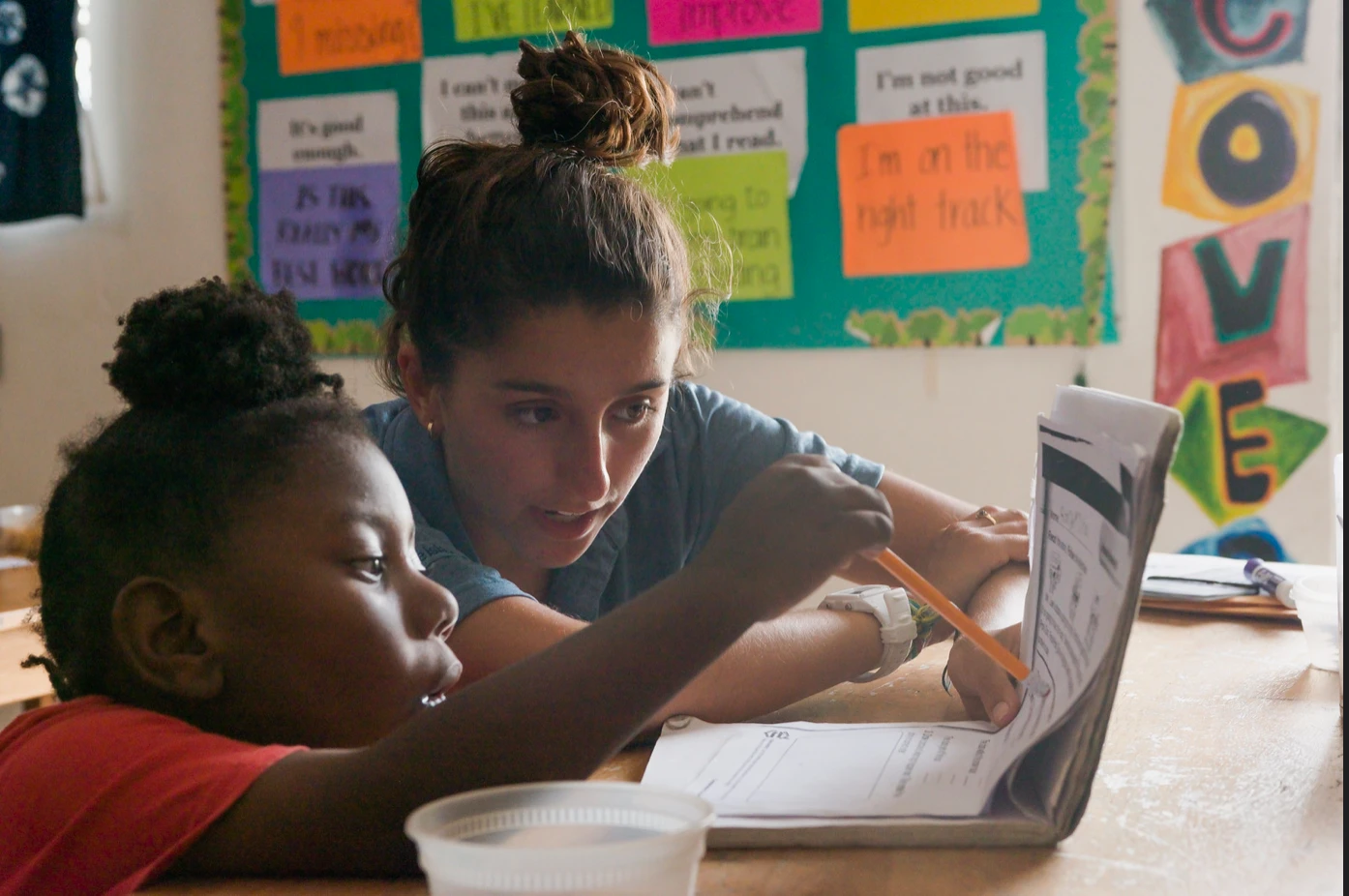
Part of a team of 8 students who worked with the local primary school to tutor struggling readers and lead a weekly library hour for students grades 2 through 5. We designed a reading outreach model and data collection methods to research the impact of student tutoring — students improved by an average of nearly two reading levels over a semester, 2x the average rate — and presented results to the Bahamian Minister of Education.
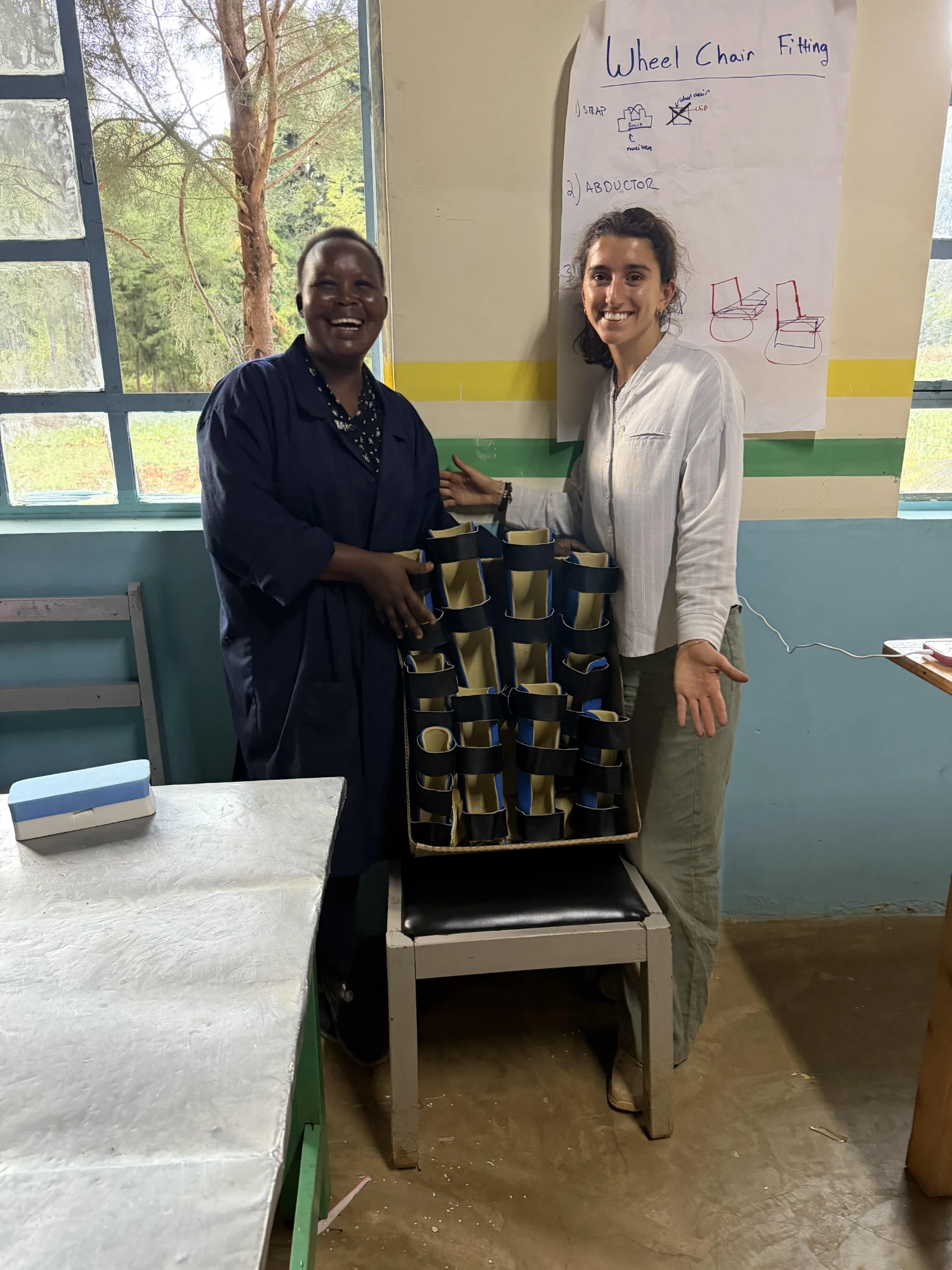
Watson Fellowship · Kabarnet School for the DeafBlind · Kabarnet, Kenya
Back to School Looks a Little Different This Year
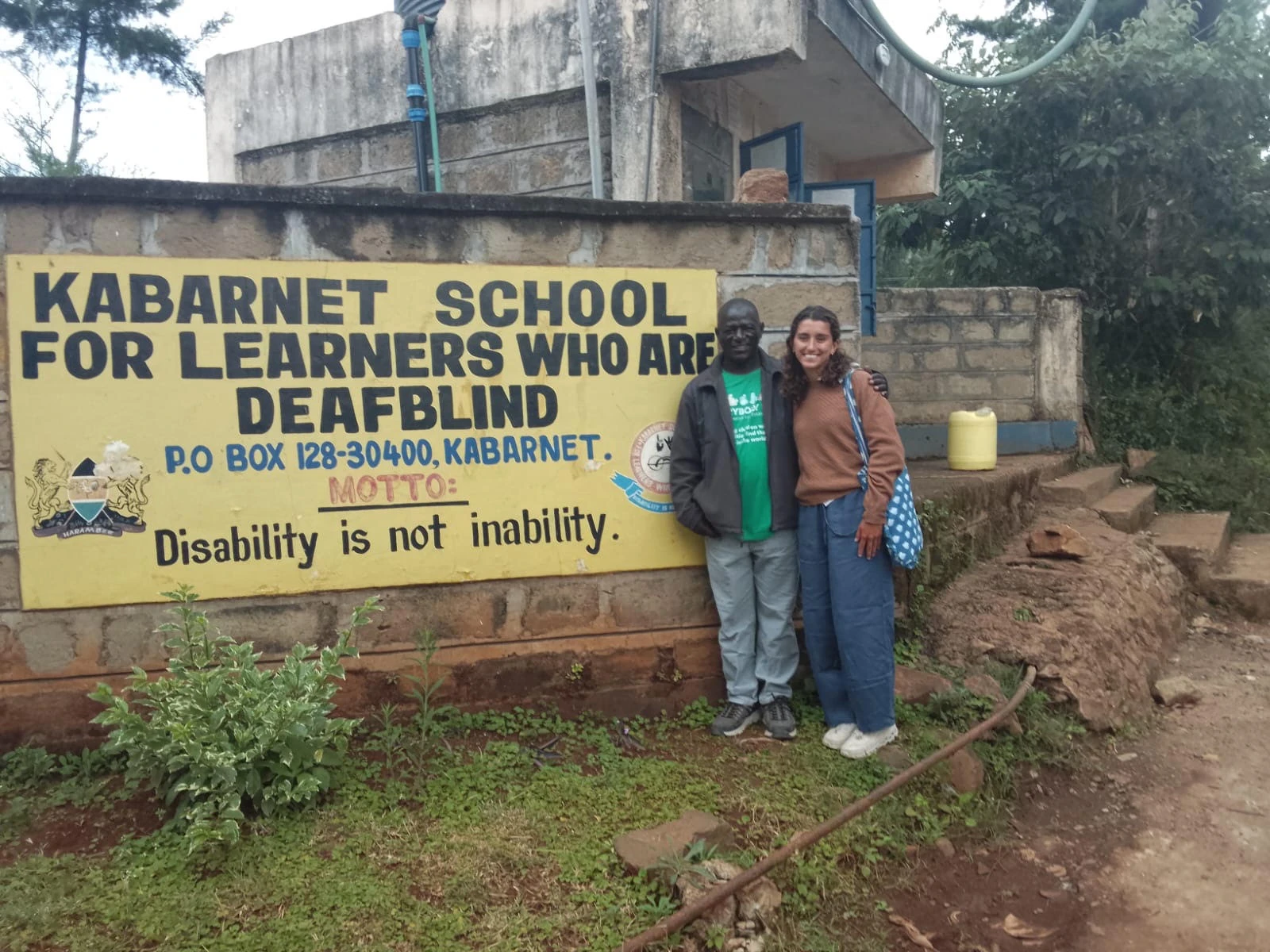
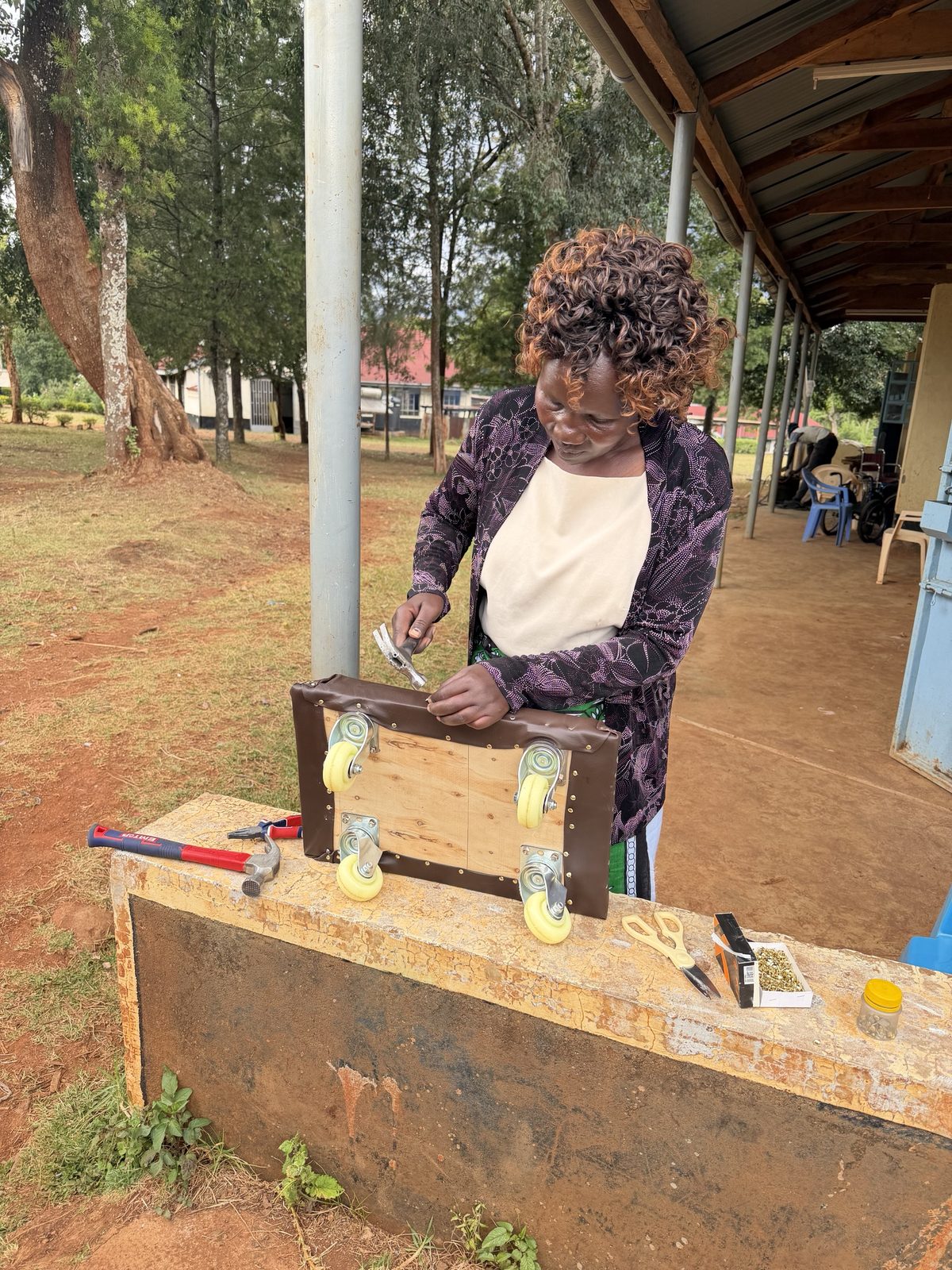
This fall I began a residency at Kabarnet School for the DeafBlind, where I'm starting a workshop to build assistive devices for learners with disabilities, and running a curriculum with the teachers so they can keep adapting to their learners' challenges through design after I leave.
Arriving
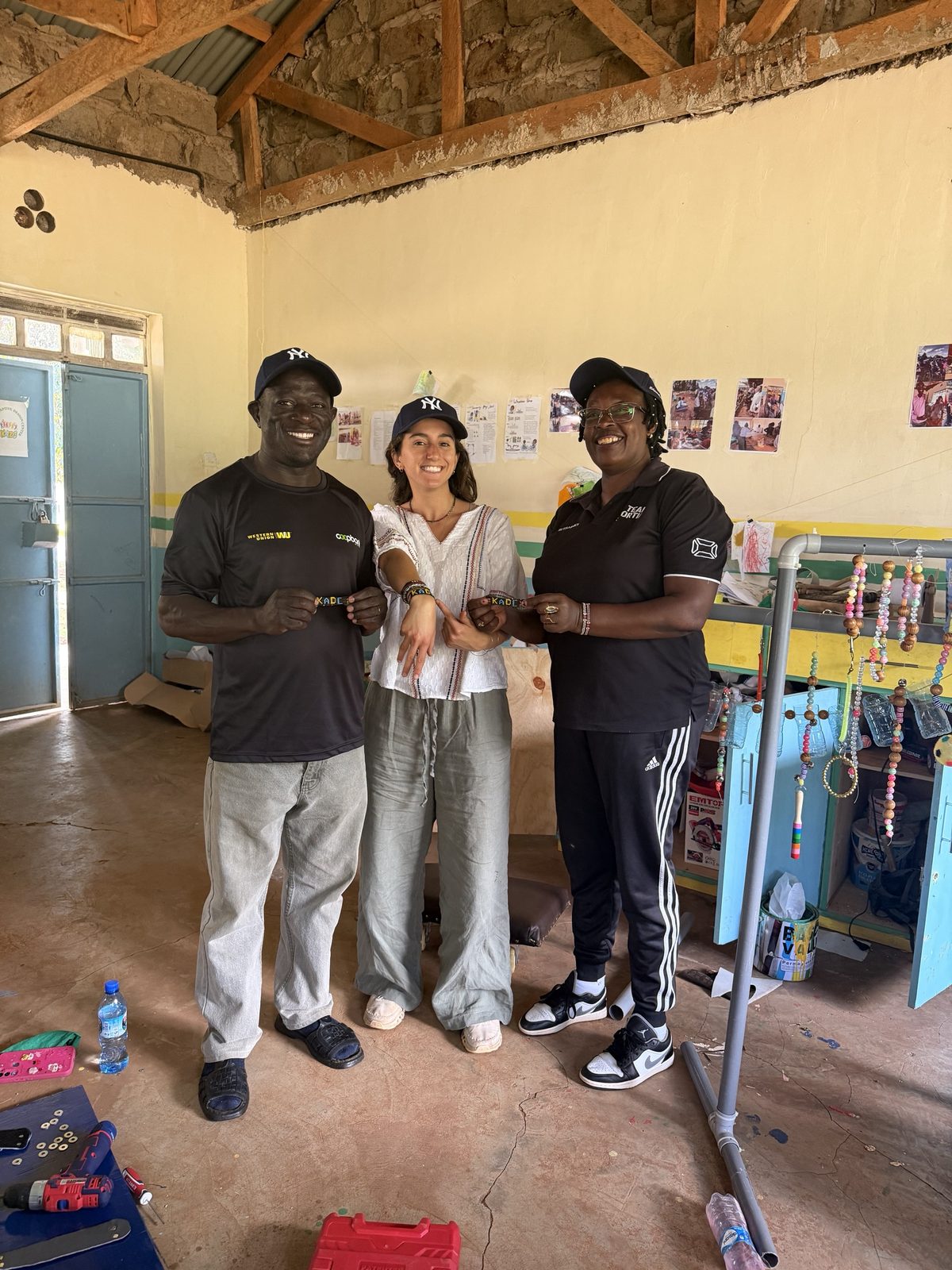
Arriving at school for the first time and meeting my project partner, teacher Jared Rakiro.
I arrived in mid-August, a week before the school term began. The learners here are children with complex disabilities: some have combined deafblindness, some use wheelchairs, and many live with more than one.
What I Noticed
The learners' challenges were plentiful, and most came back to resources. The school operates at the edge of making ends meet; there have even been terms when teachers volunteered without pay. Much of what's considered basic support for learners with disabilities simply wasn't there.
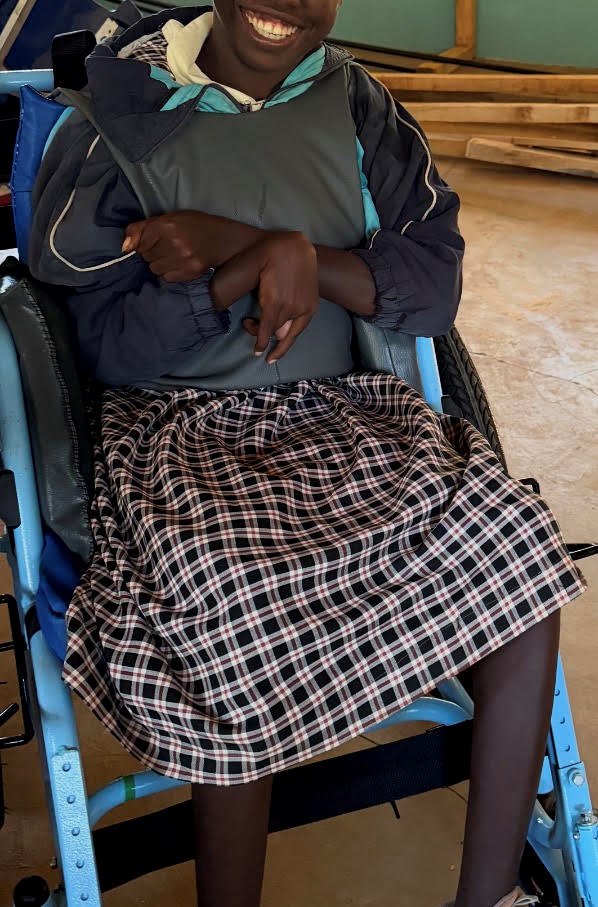
Wheelchairs were poorly fitted, with no safe way to secure learners in them.
Communication was a huge challenge. Most learners don't communicate verbally, and while some use sign language, most don't.
Medical and developmental needs, like stiffness in joints and limbs, were beyond my scope as an engineer, so I knew right away I wanted to work closely with the county's occupational therapists to see what was possible.
Getting Approval
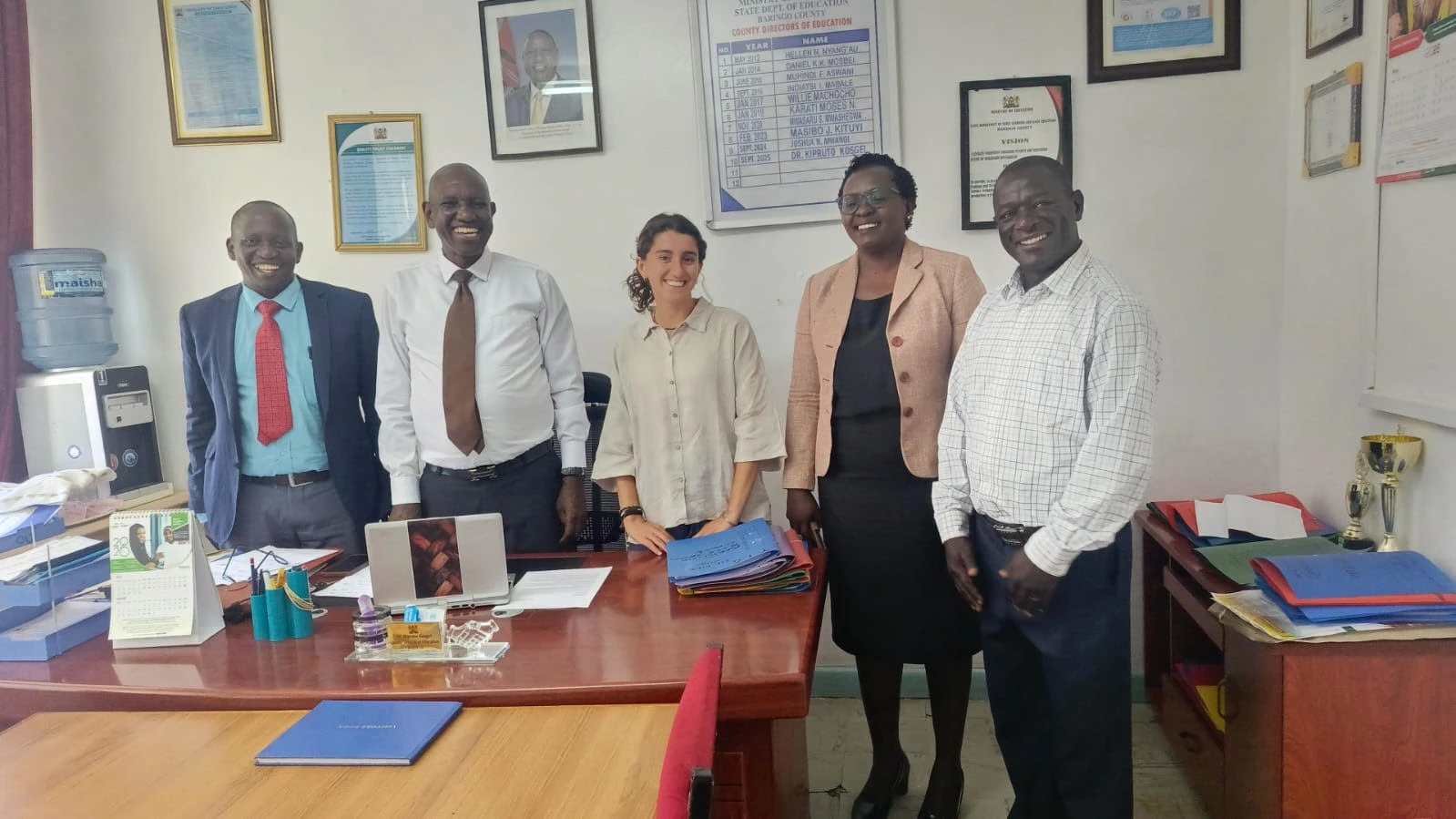
After I arrived, it turned out the project needed the endorsement of Baringo County's Board of Education and Teachers Service Commission, since it was an activity involving their students and teachers. Working with local authorities to earn that endorsement became the first step of the project.
Meeting with Dr. Kosgei, Baringo County's Minister of Education, and other officials.
The Curriculum, Week by Week
After I met with the school's board of directors and principal, they were excited about the project and asked the teachers to commit three afternoons a week to the workshop. I wanted to get them making things for their learners right away, so I started with clear, step-by-step plans anyone could follow, whatever their experience with fabrication, and scaled up our activities and materials week by week.
Week 1
Setting up
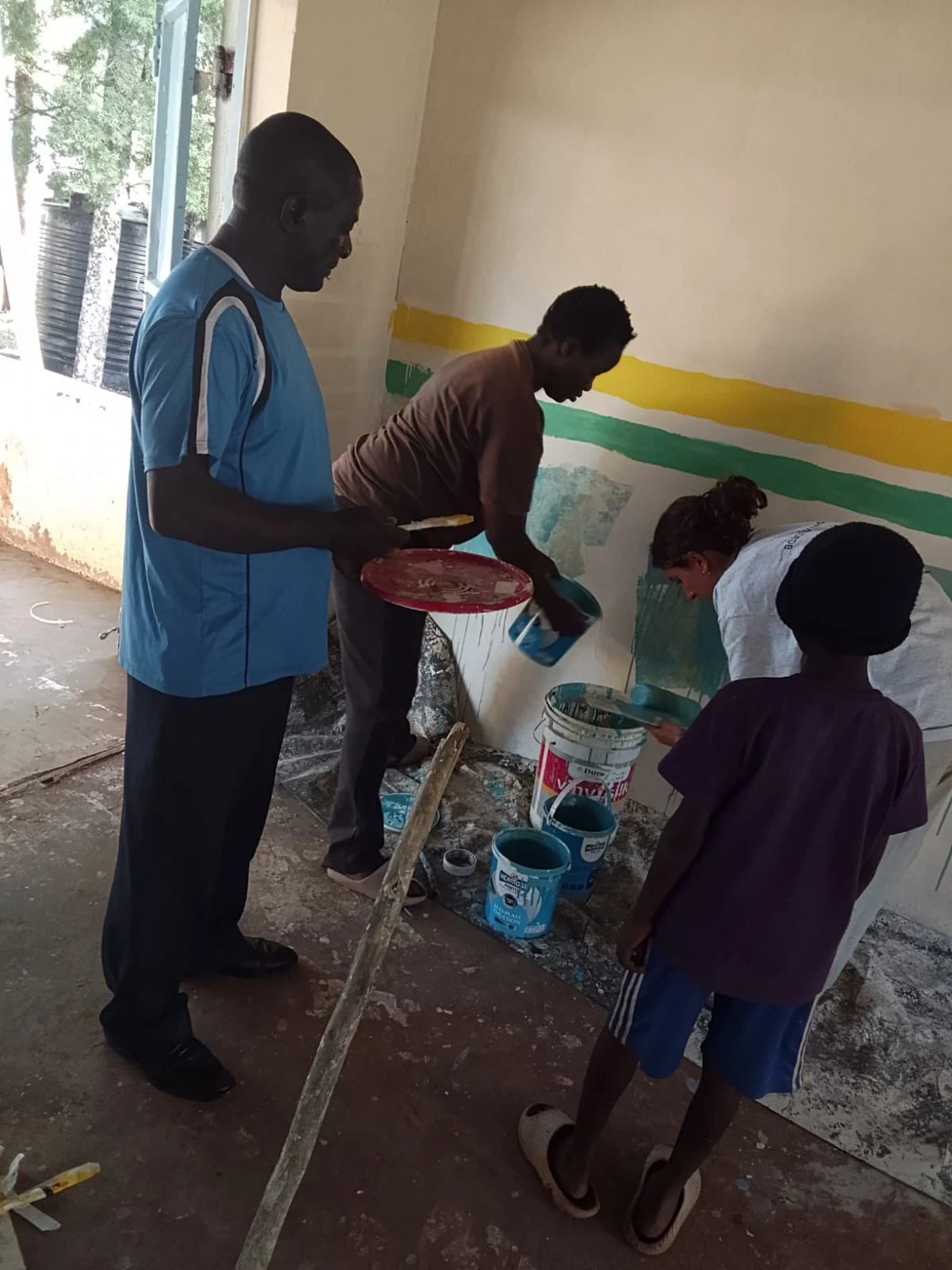
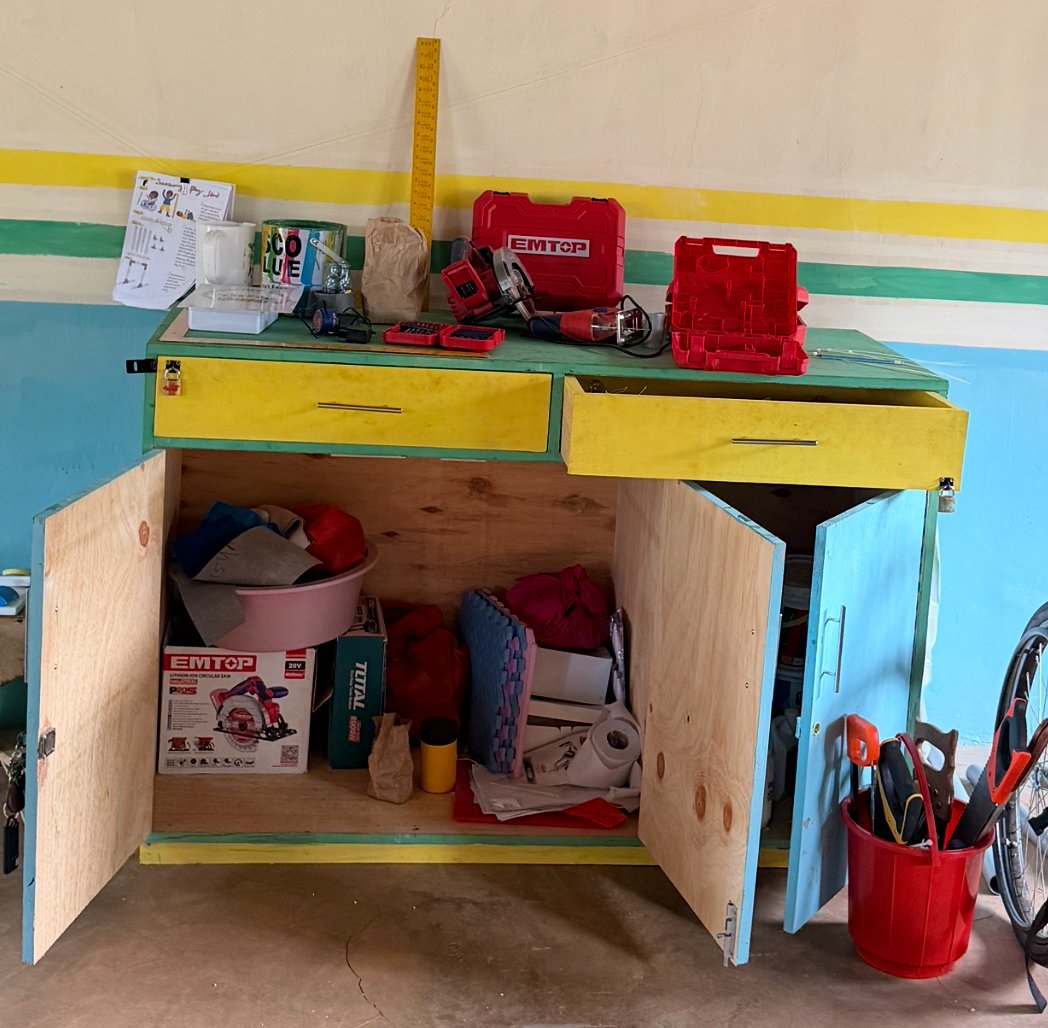
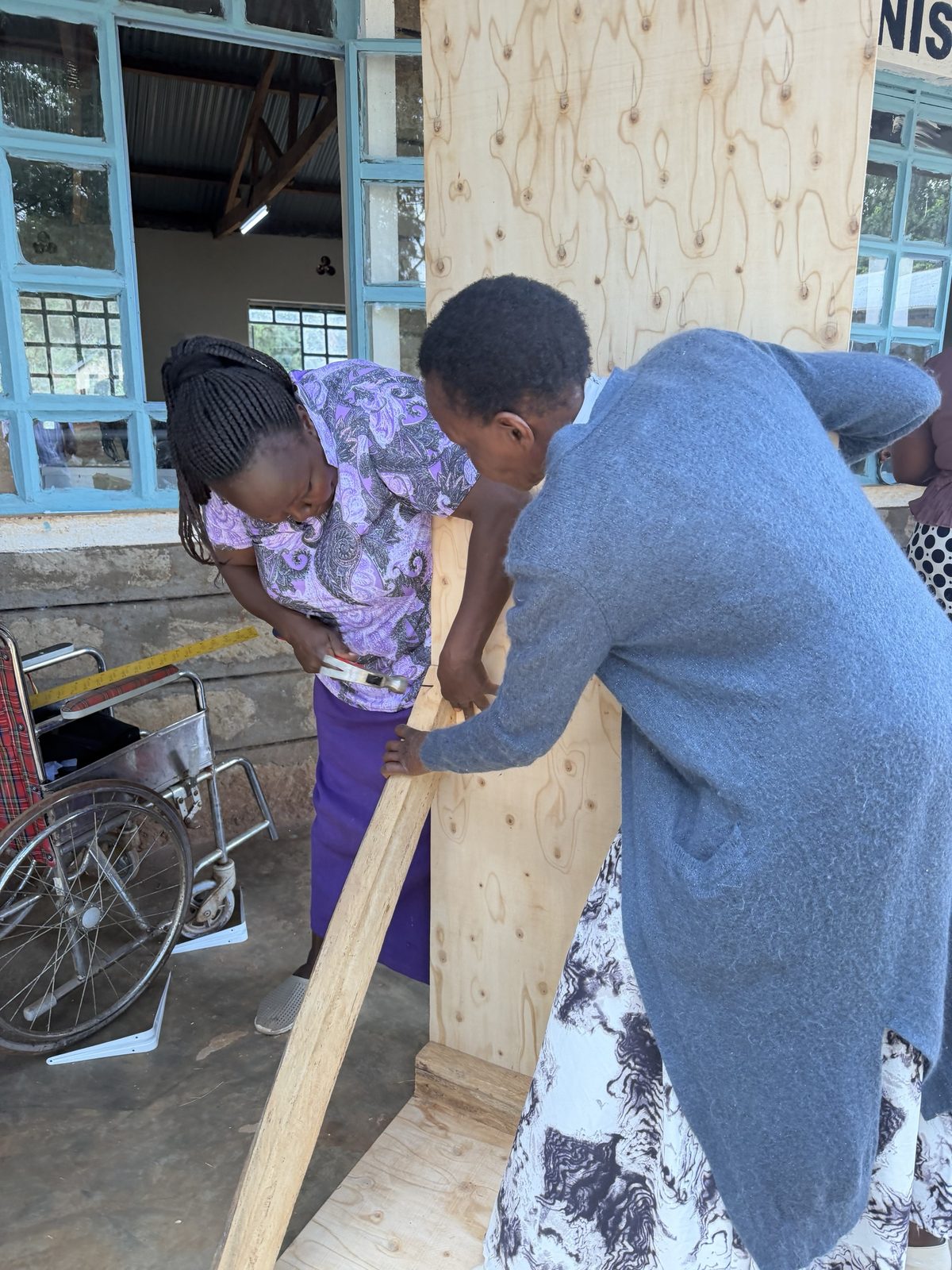
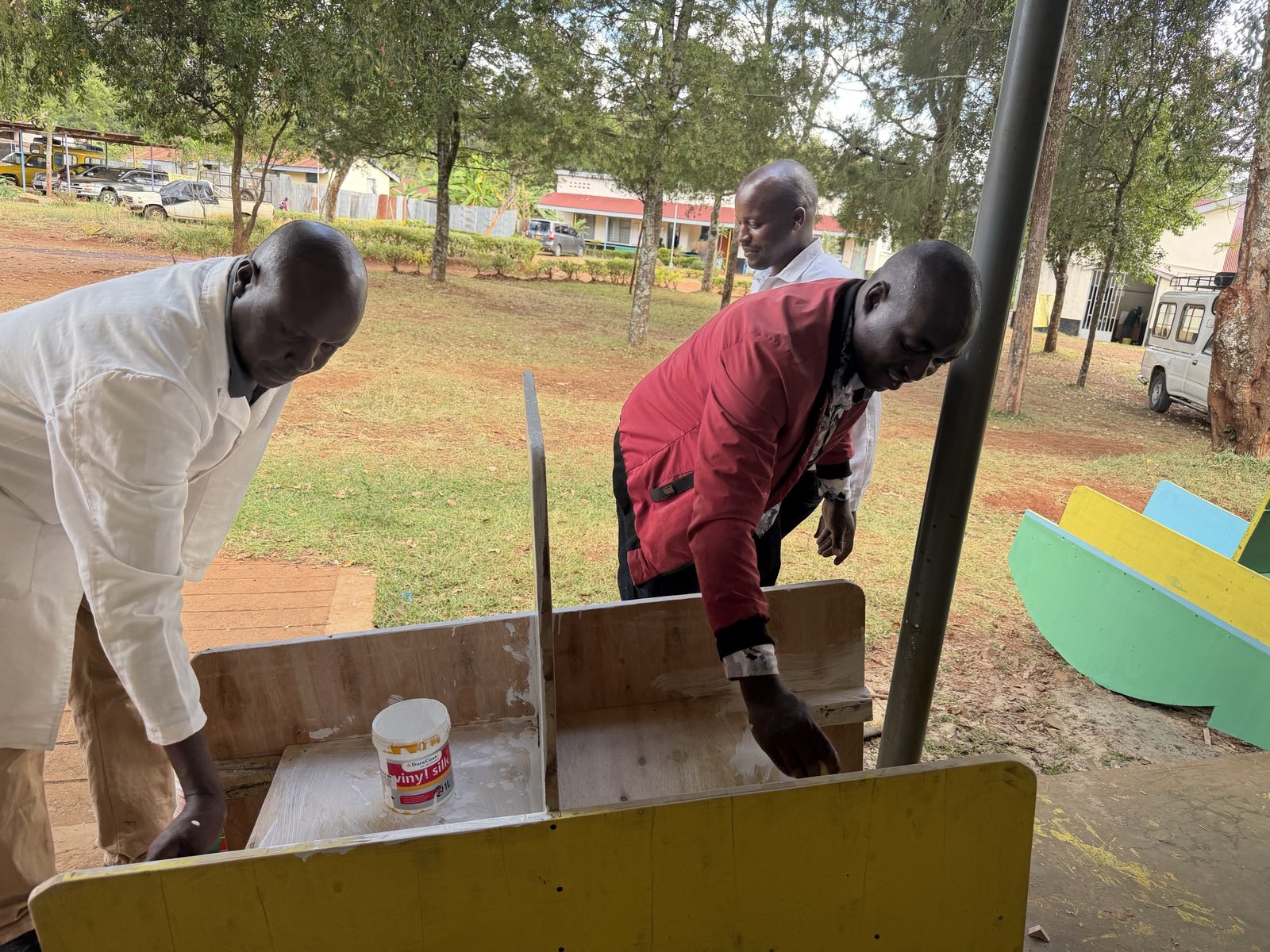
Set up the workshop, got to know the school, and obtained endorsement from the local government. In Nairobi I shopped for the basic power tools I expected to need, and when I arrived the school gave me an empty room. I built a cabinet, ordered tables, and painted the room to turn it into a workshop.
Painting the workshop.Tool cabinet built for the workshop.
Week 2
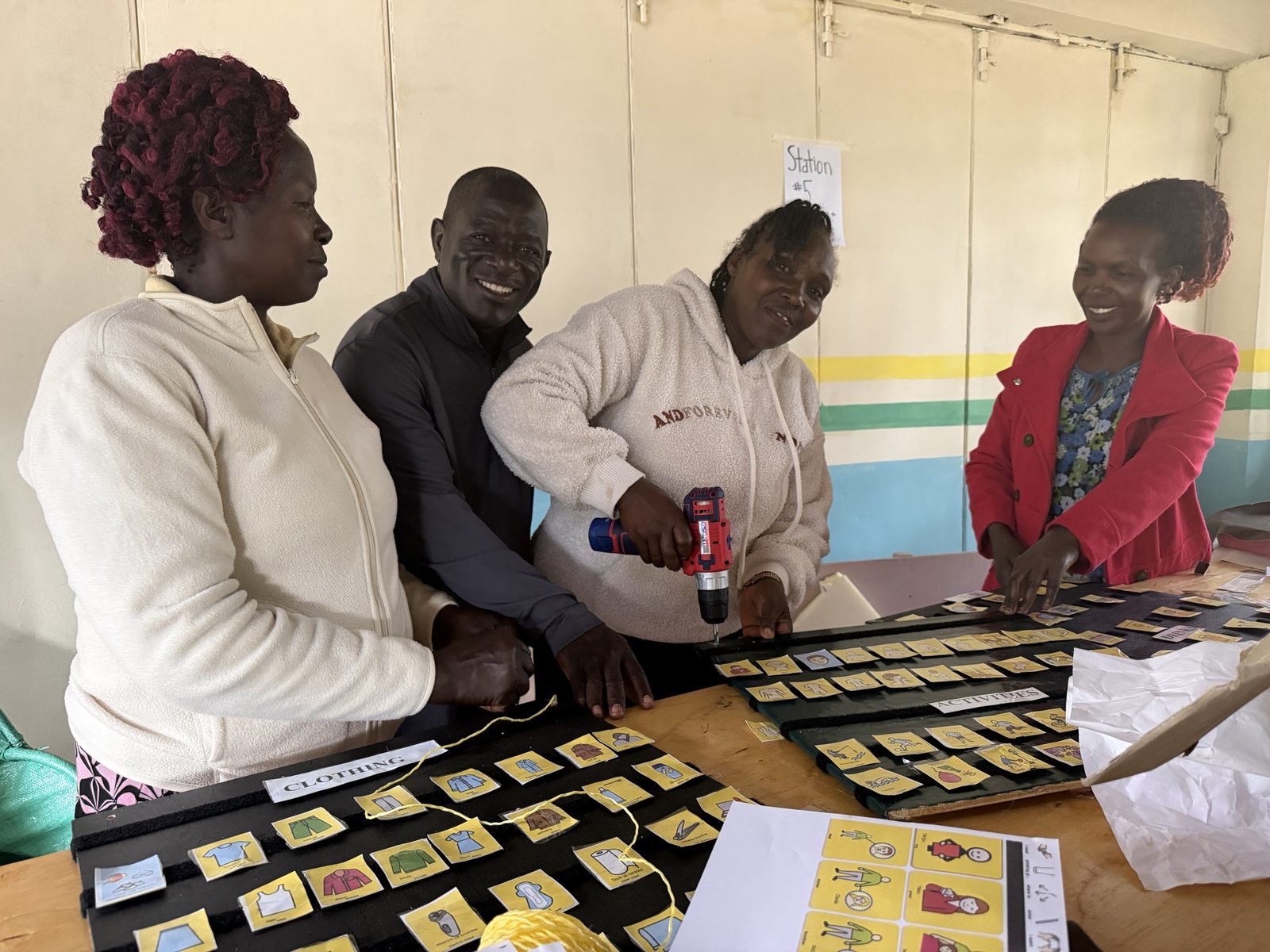
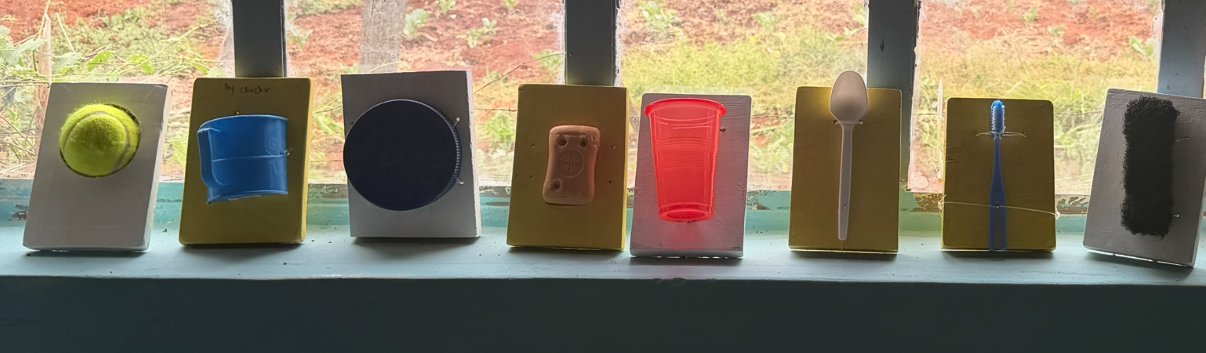
Communication cards
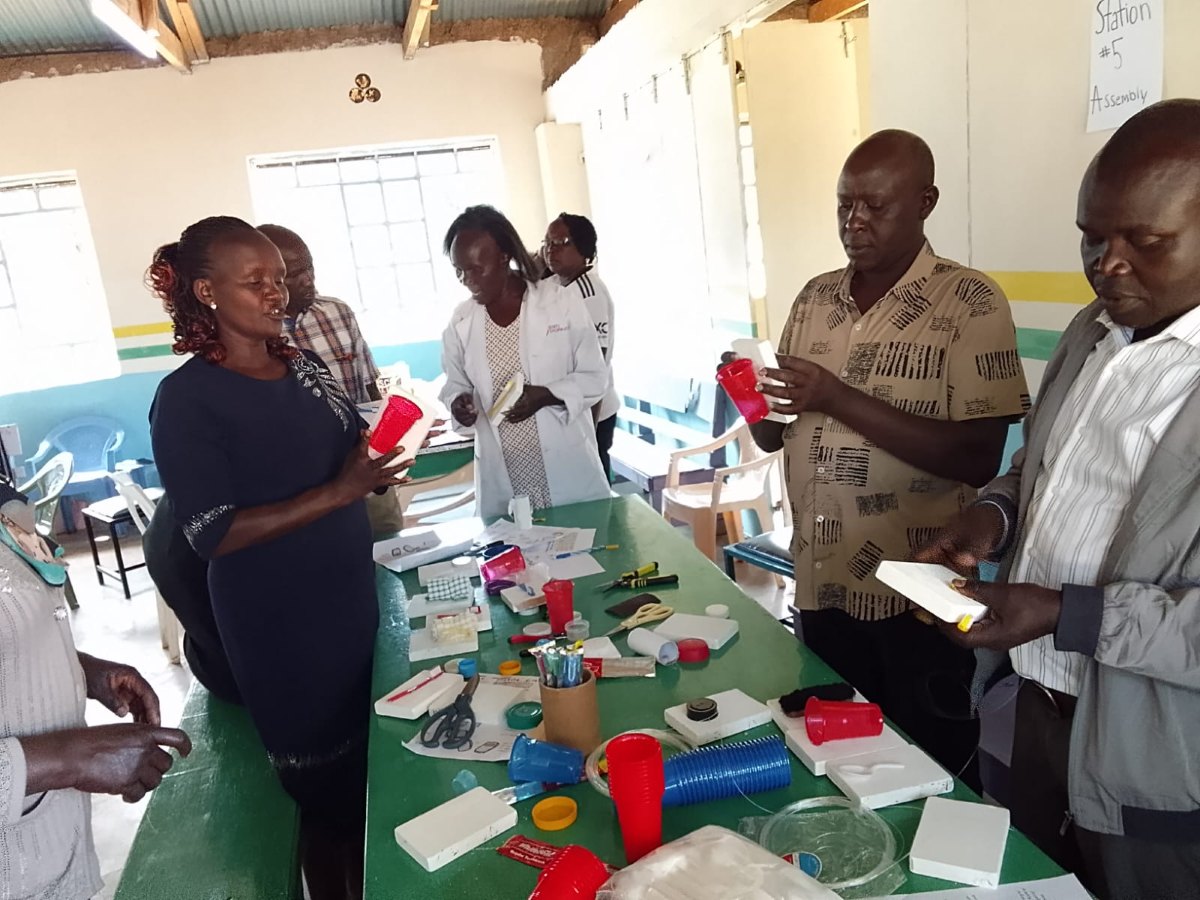
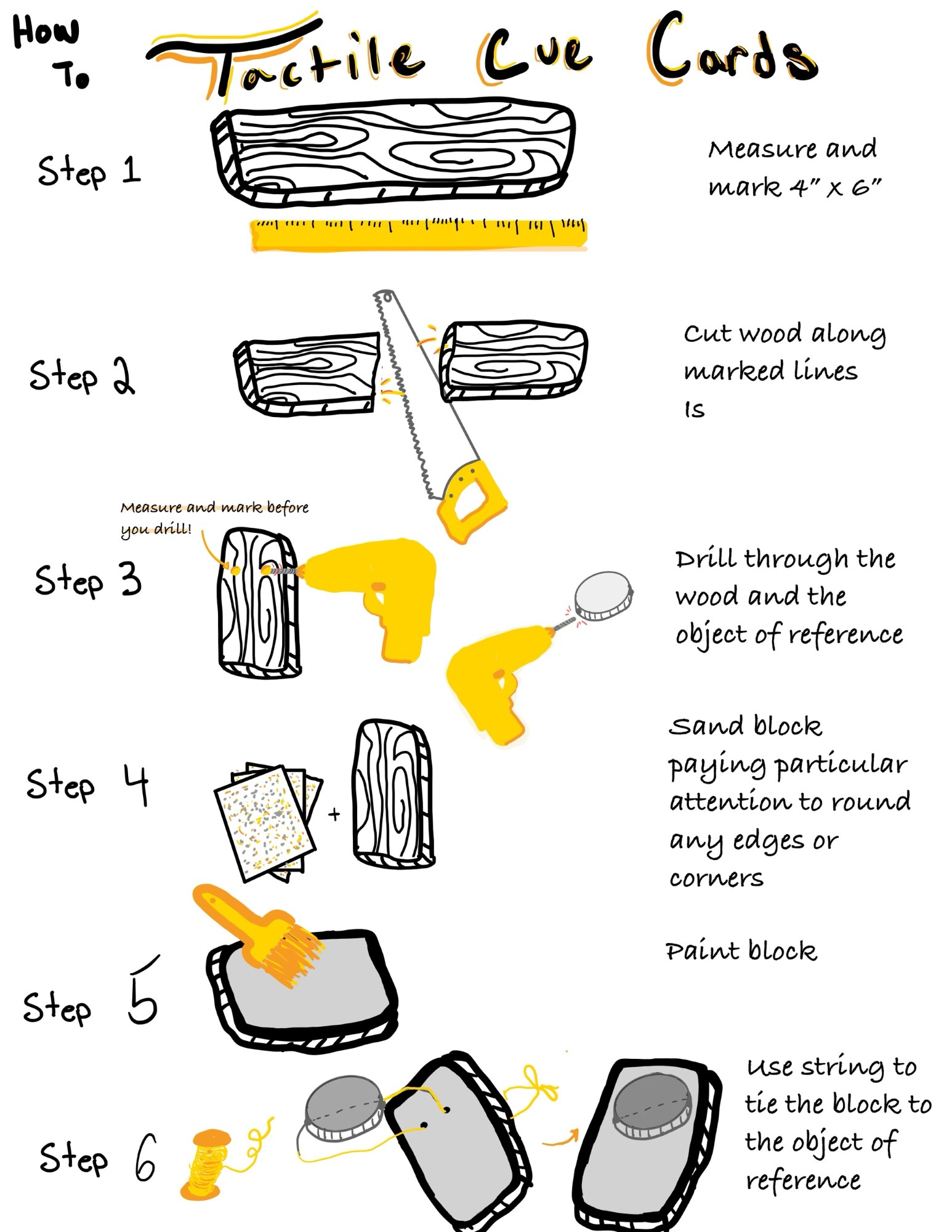
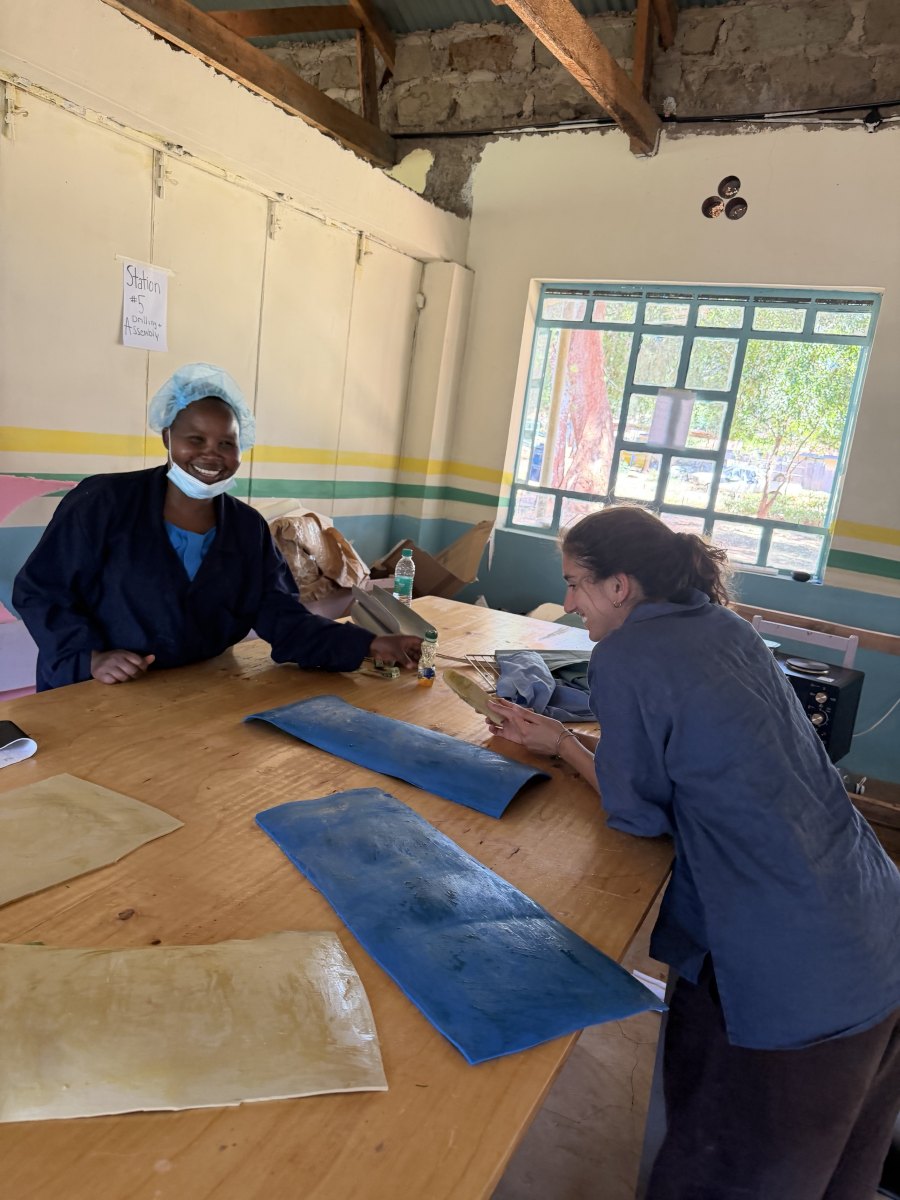
Our first build: stations that every teacher rotated through, each with printed instructions.
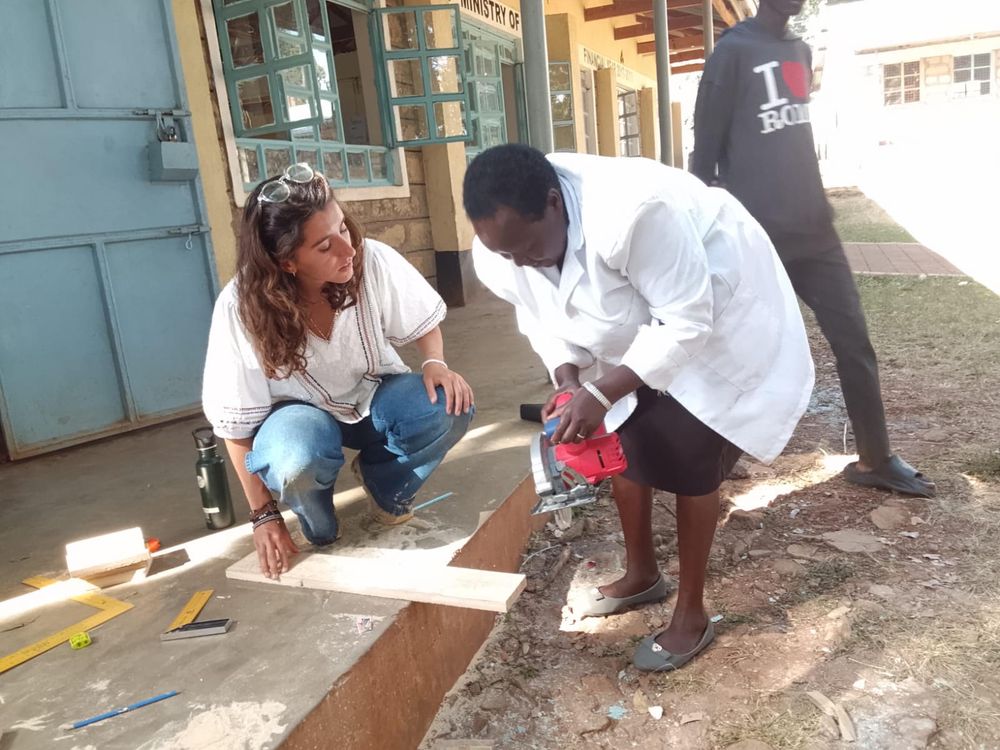
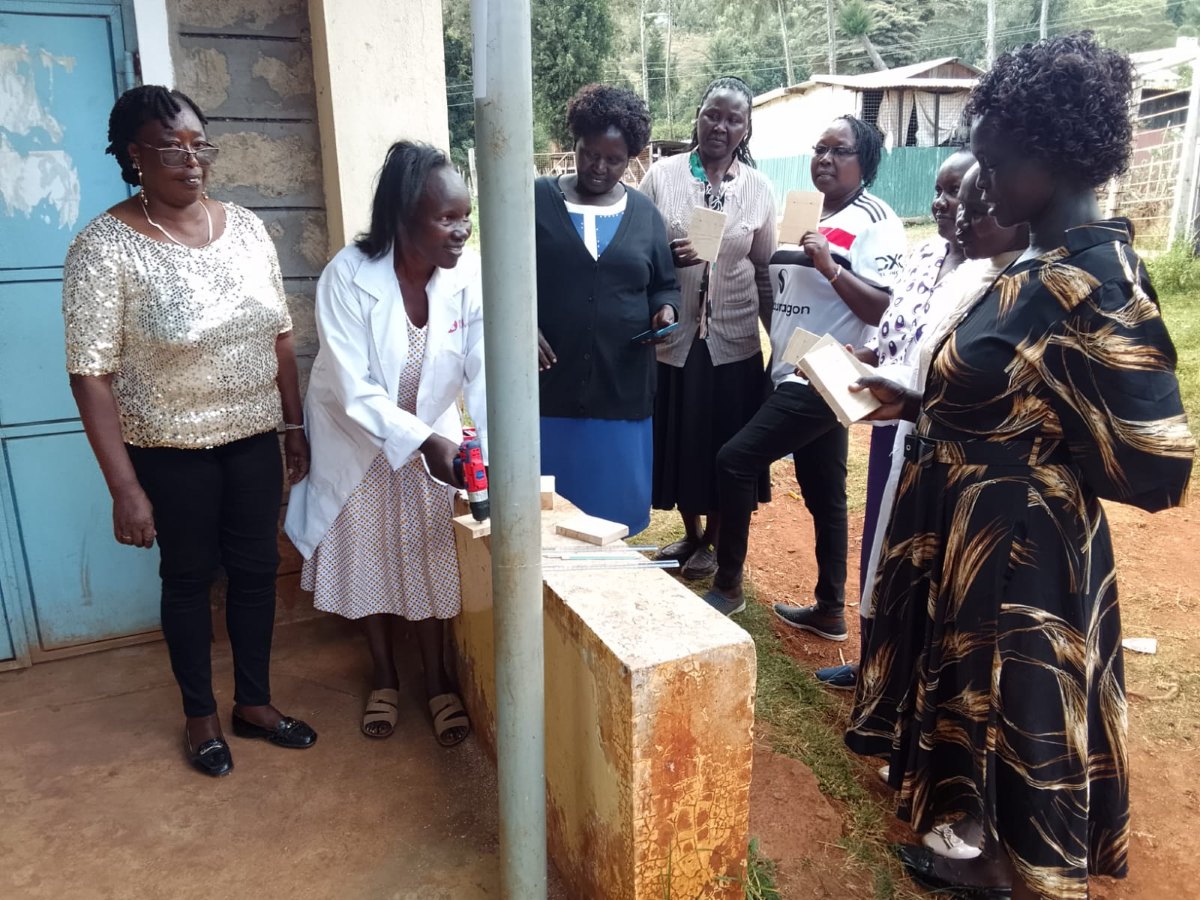
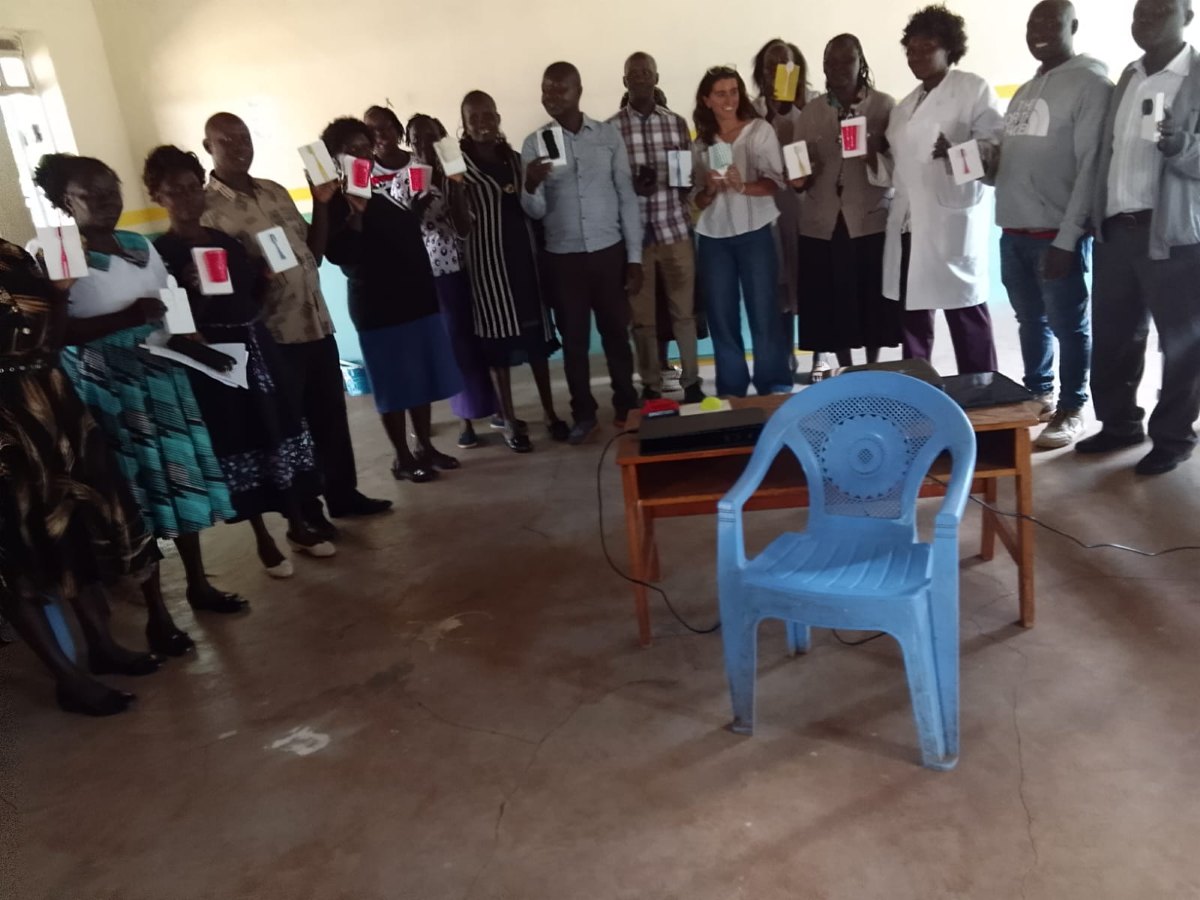
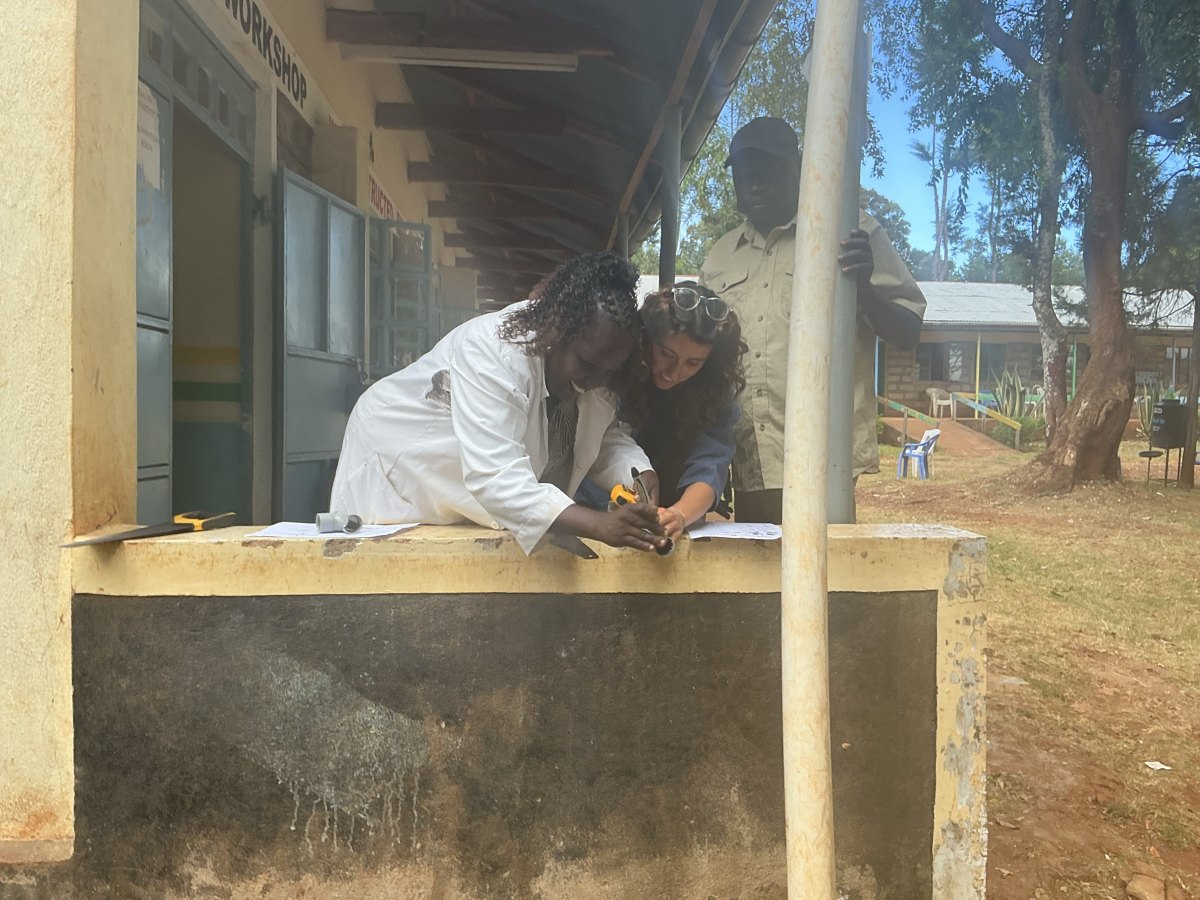
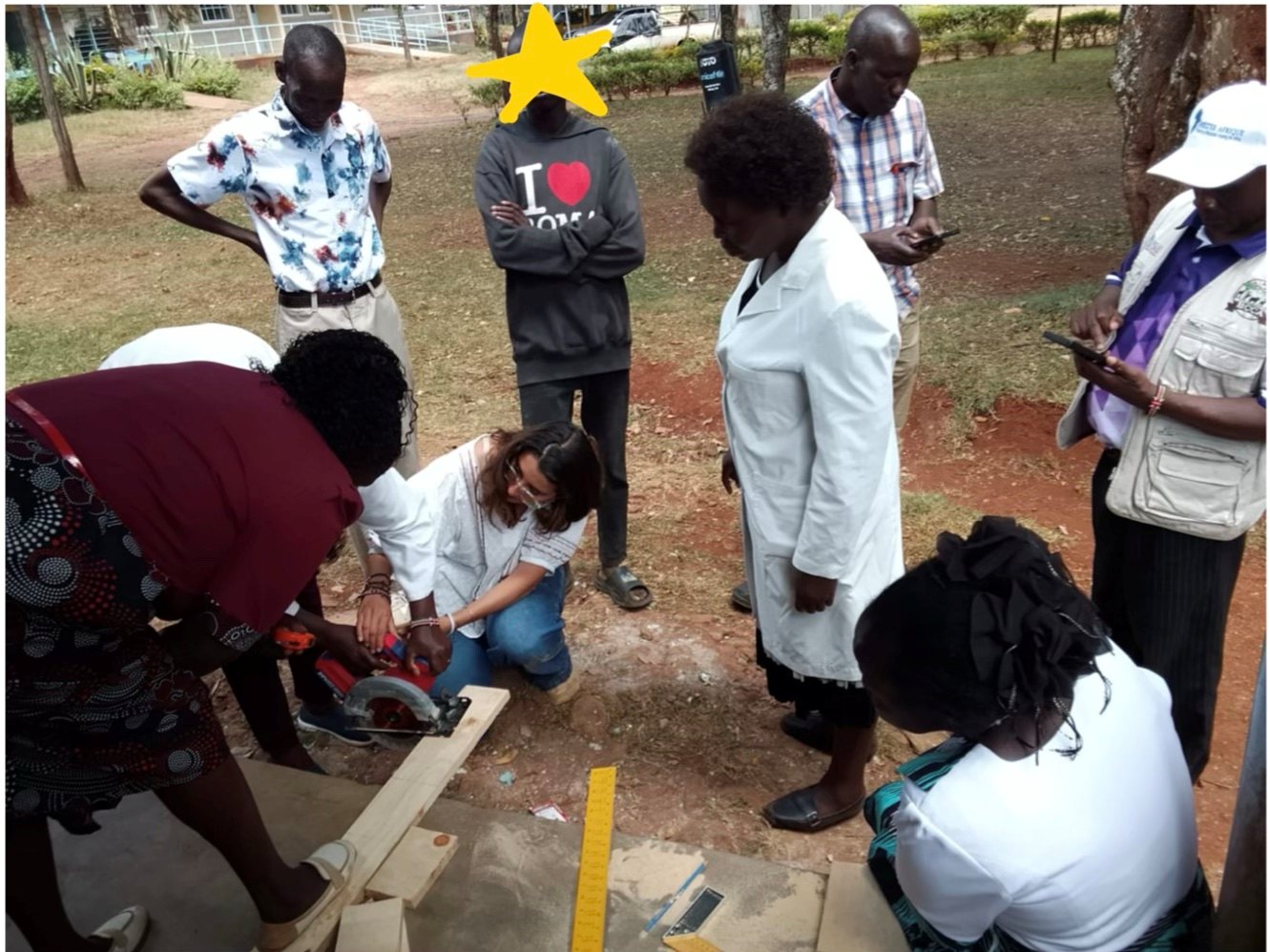
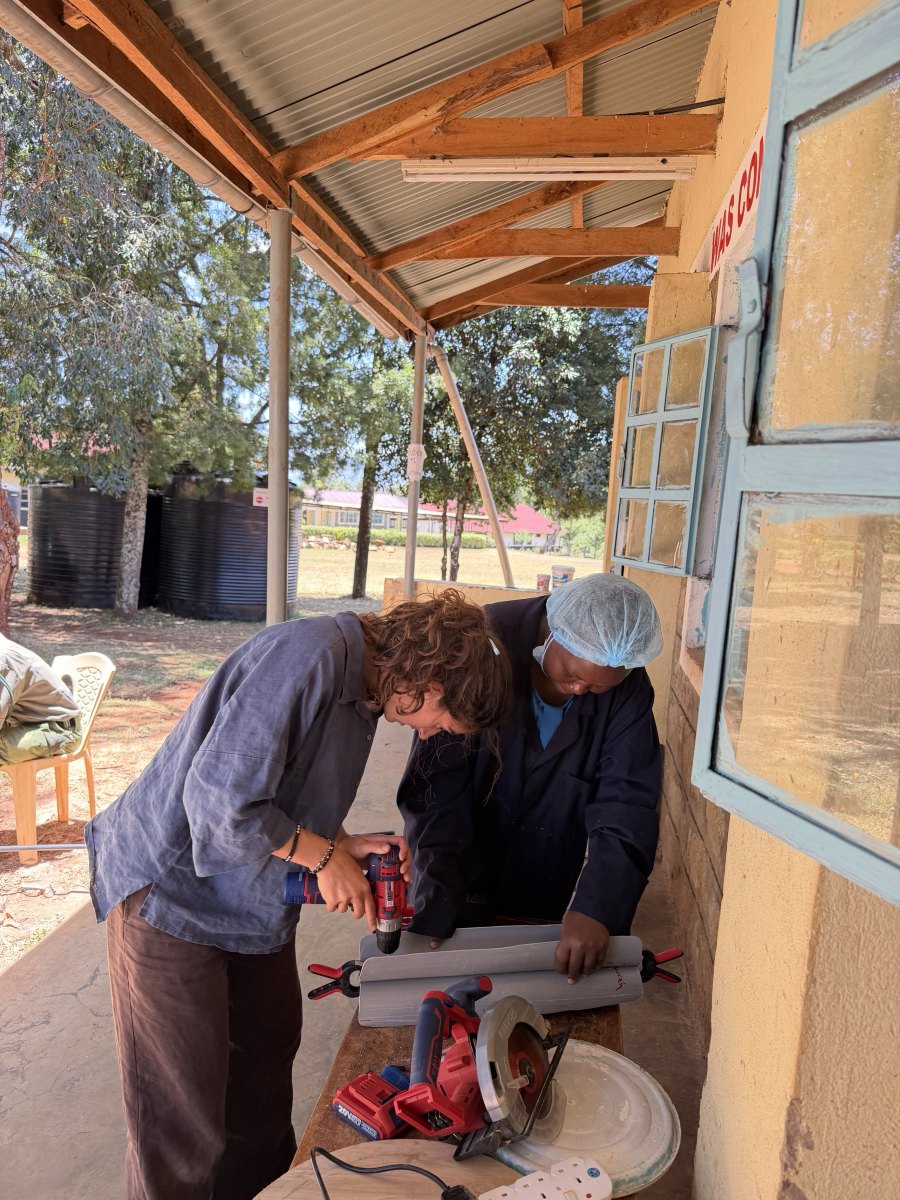
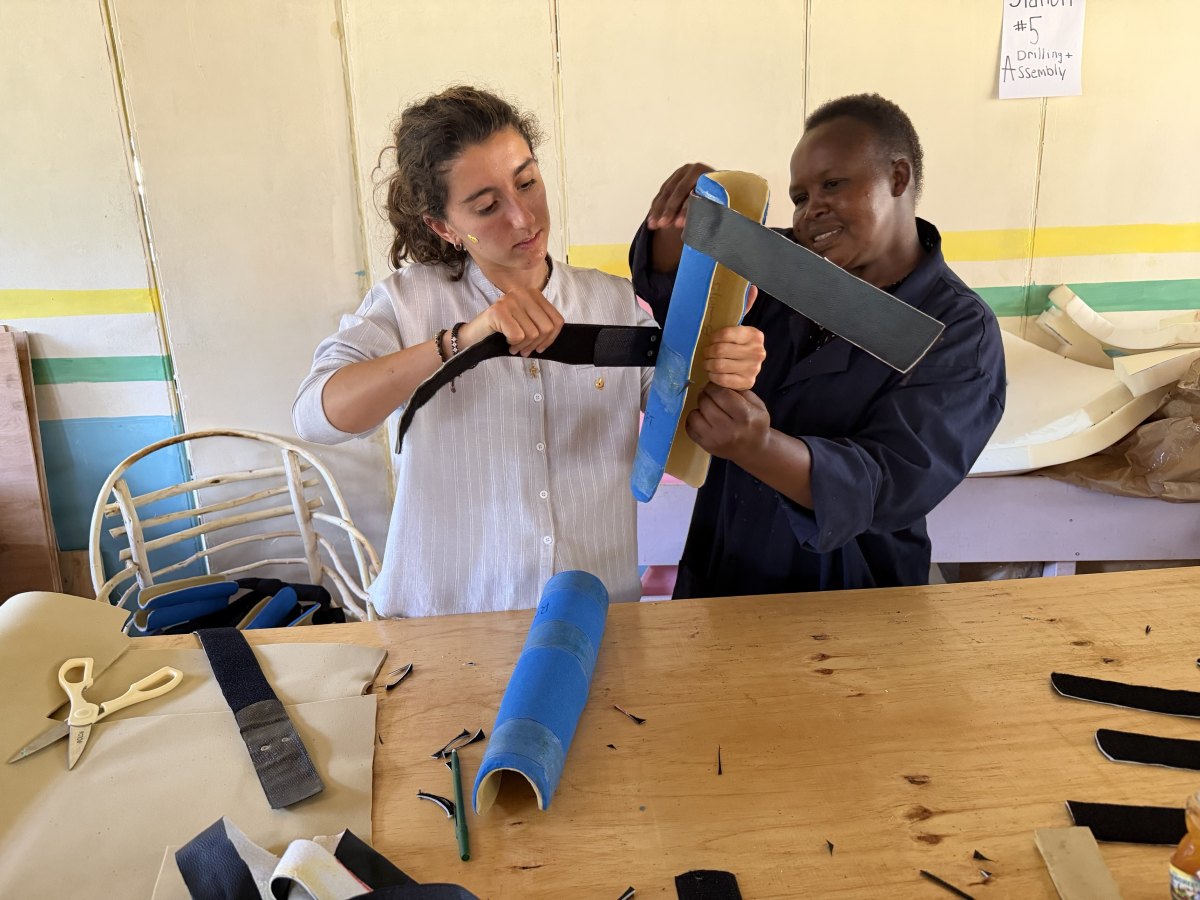
A teacher learning to use the circular saw.Teachers assembling their first tactile cue cards.The drilling station.Everyone with their finished cue cards.
Week 3
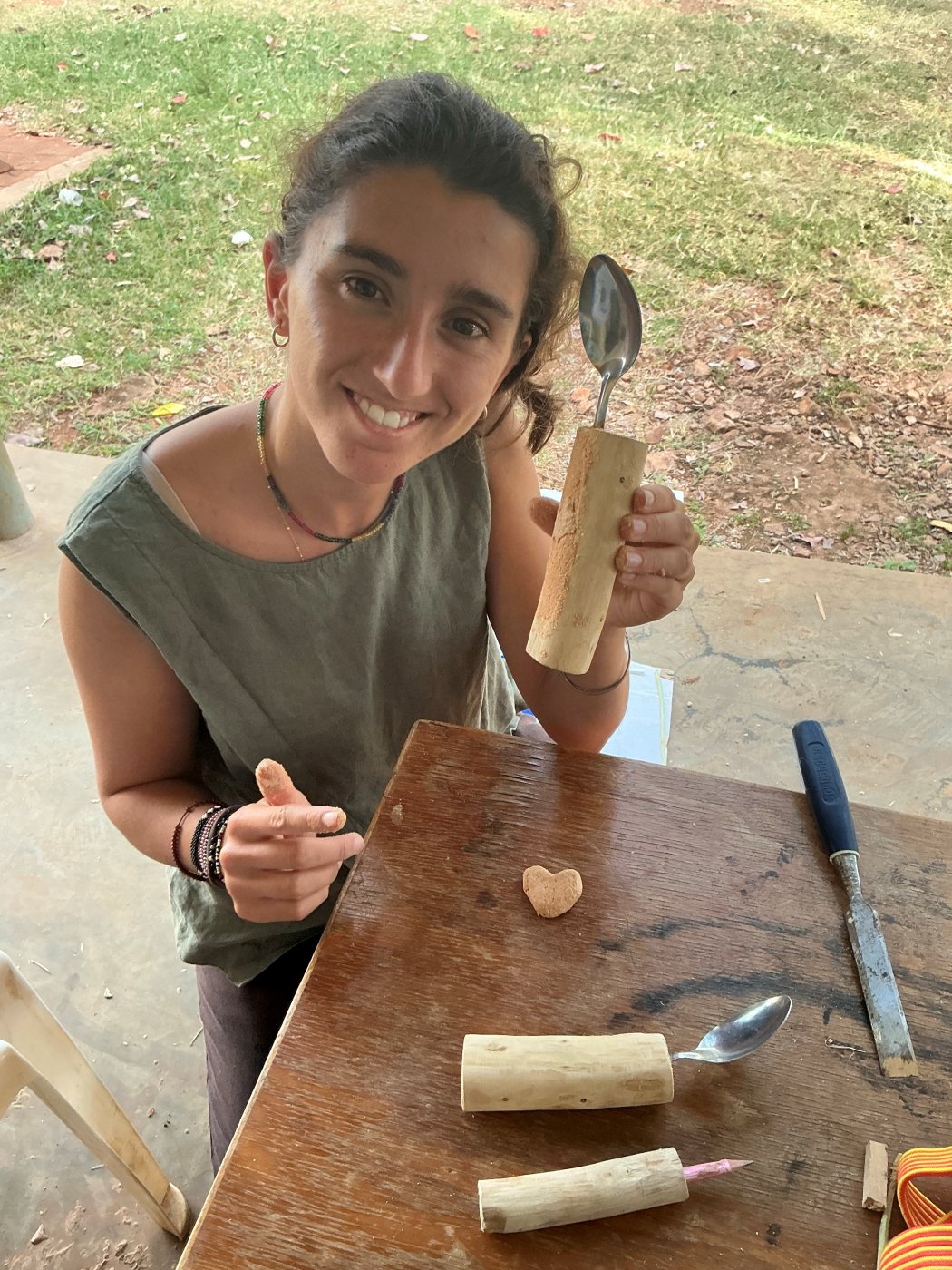
Built-up spoon handles
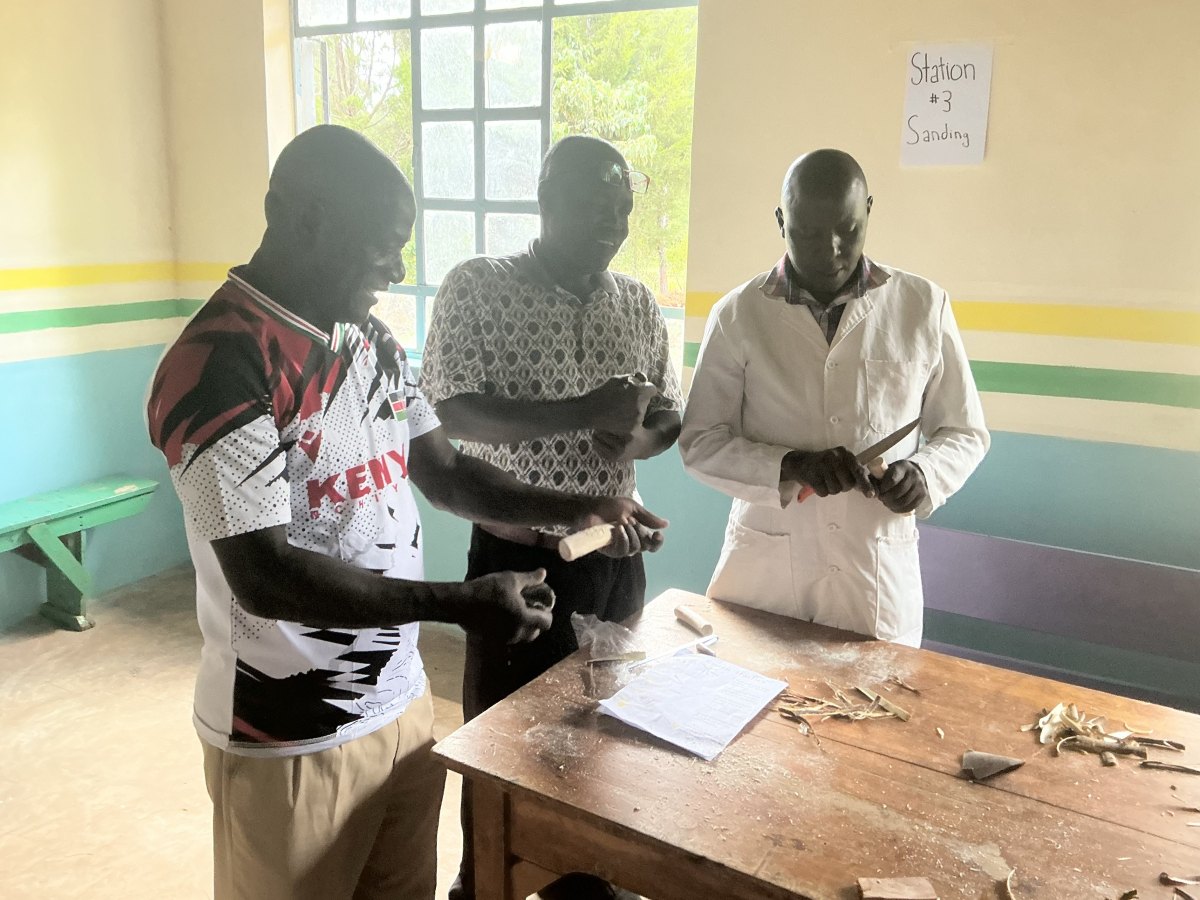
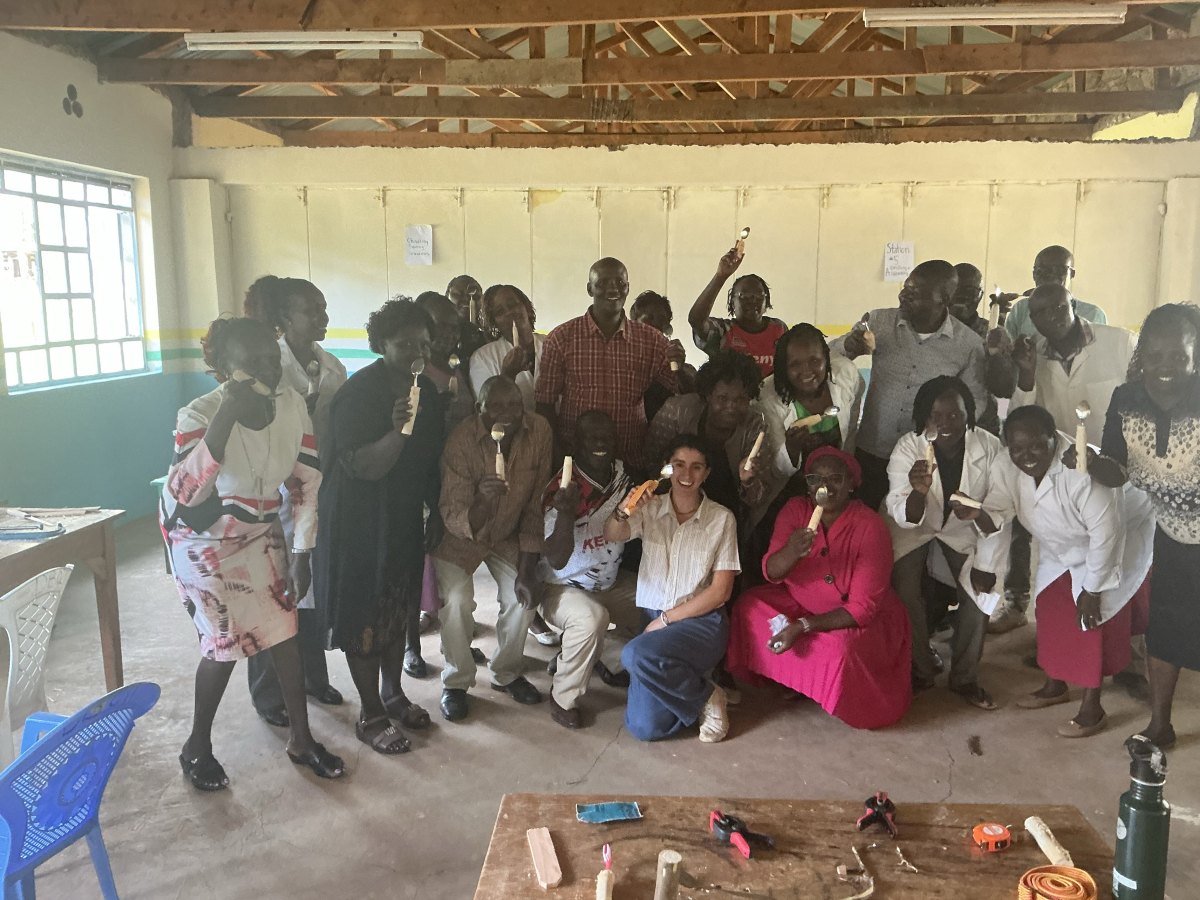
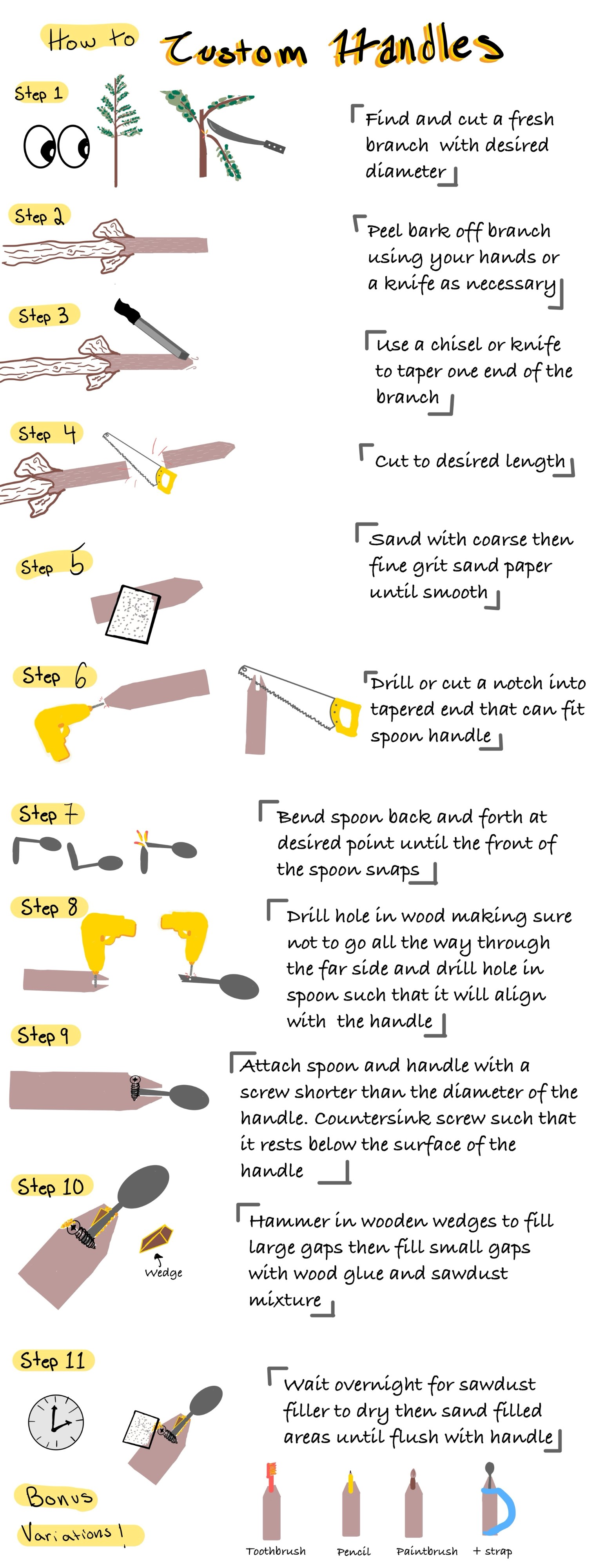
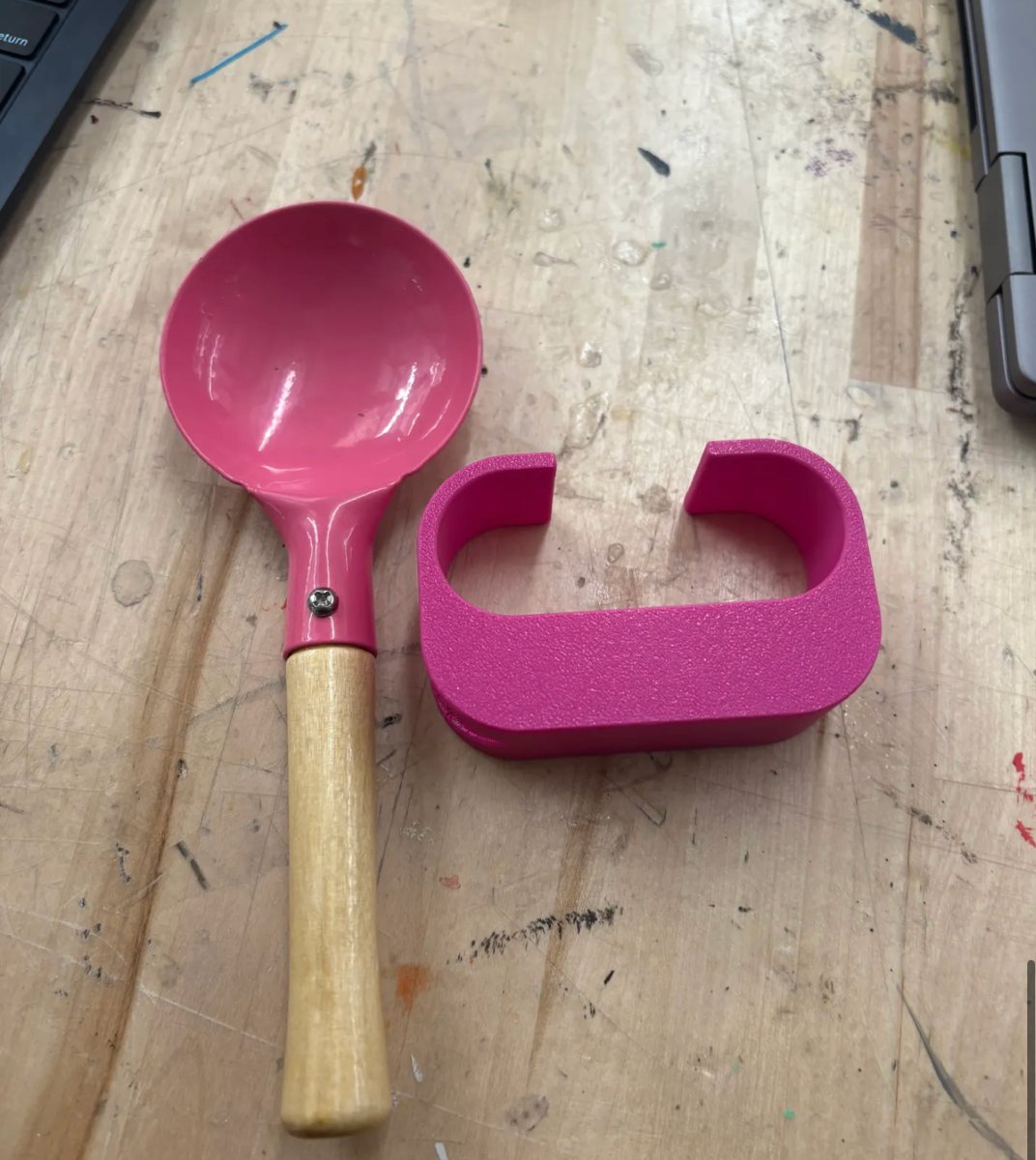
Many learners struggled with independent activities like eating and brushing their teeth because of fine motor challenges, so we made large handles for spoons.
Sawing the handle blocks to length.Carving and sanding at Station 3.Every teacher with their finished spoon handle.
Week 4
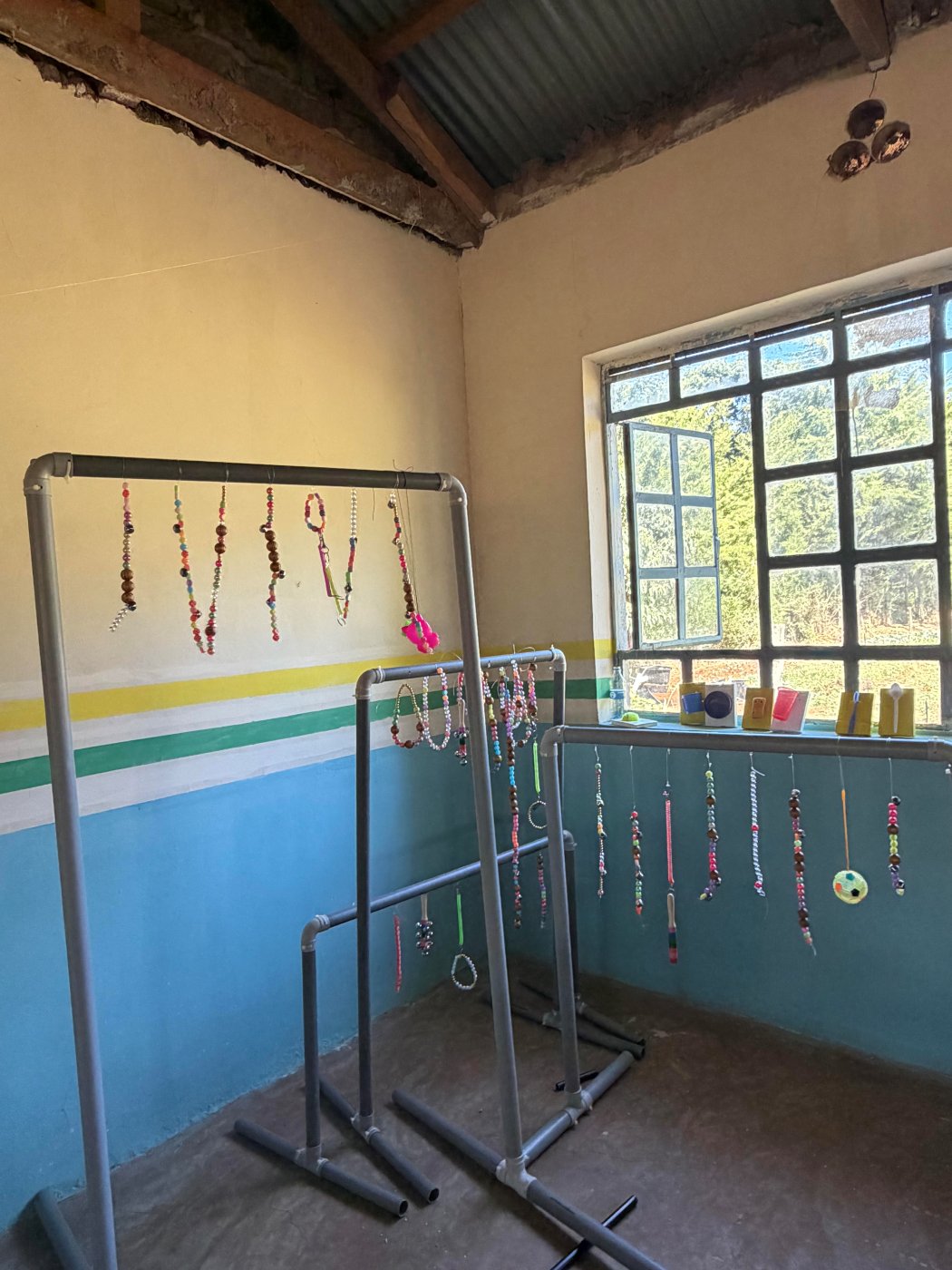
Sensory curtains
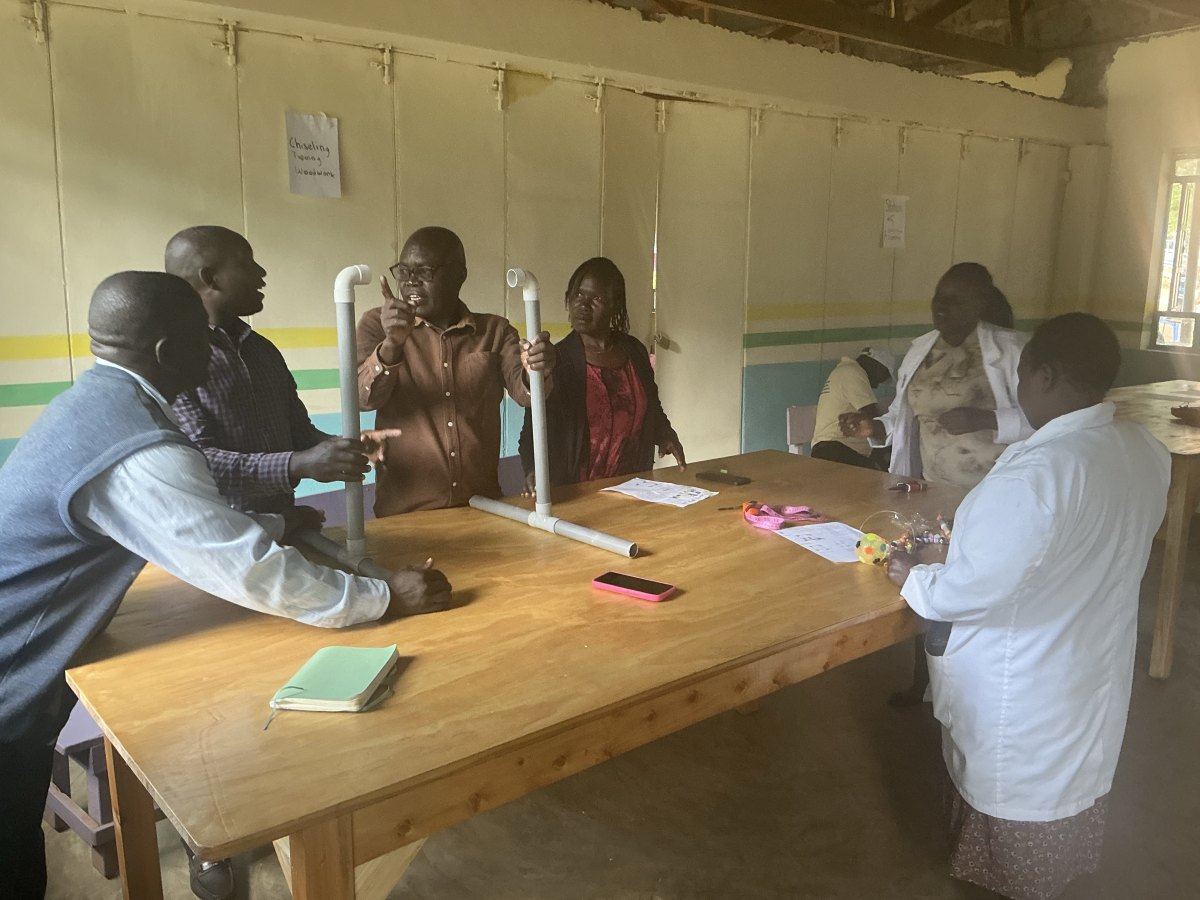
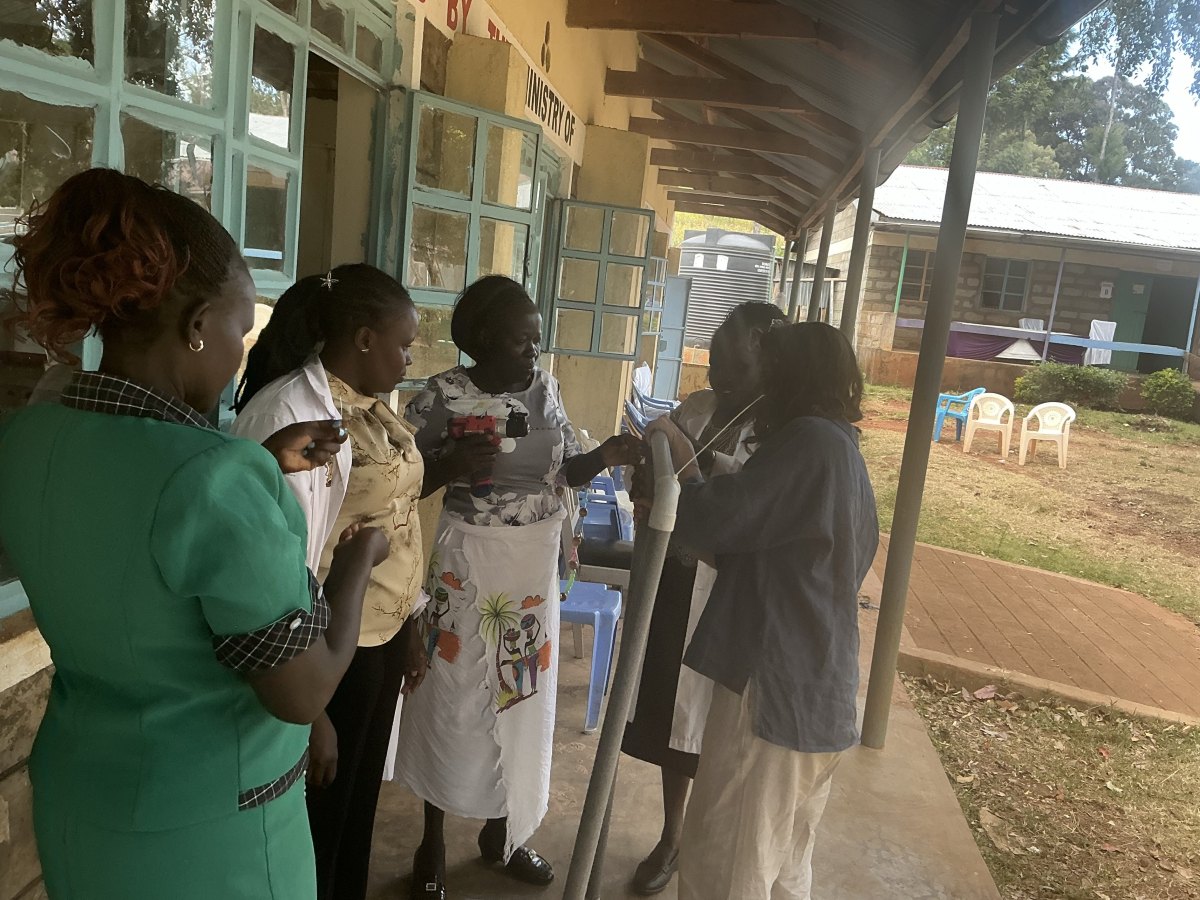
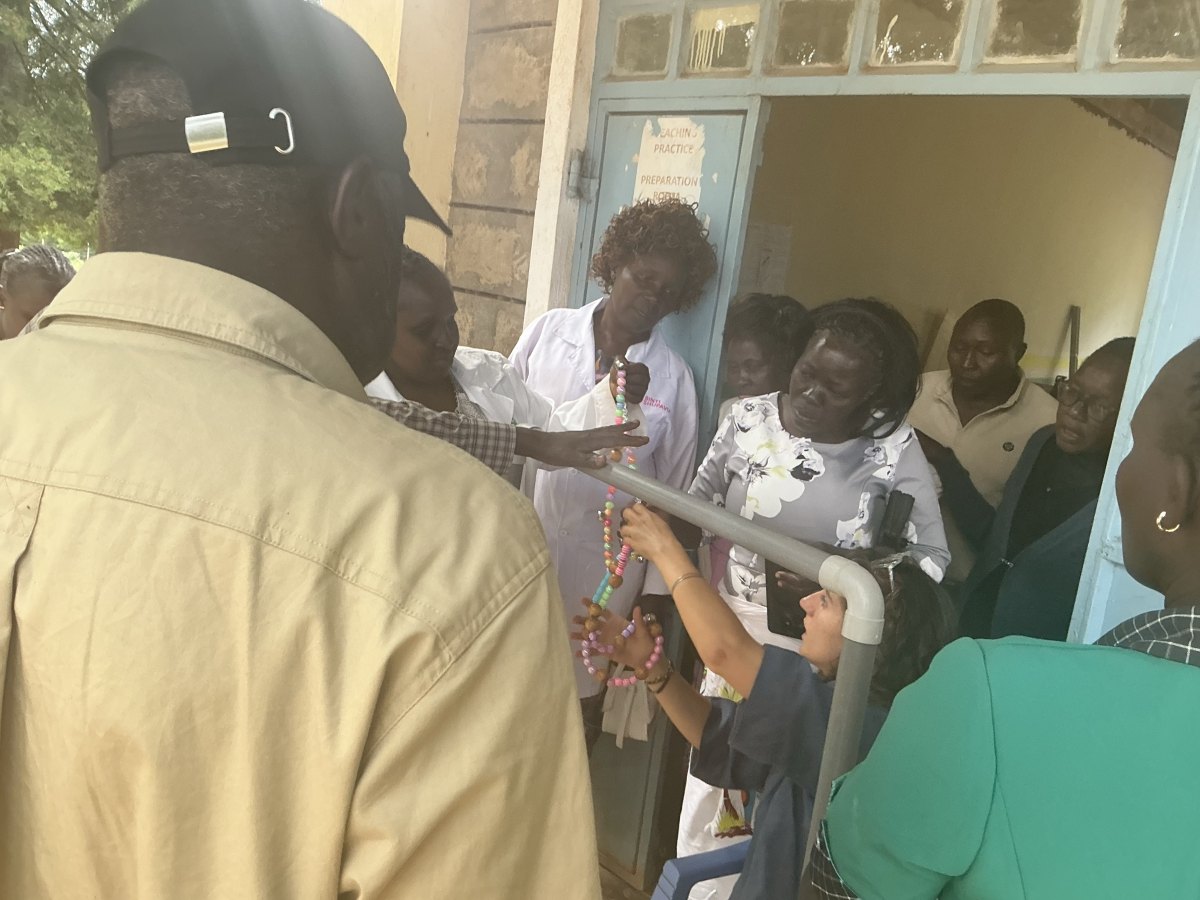
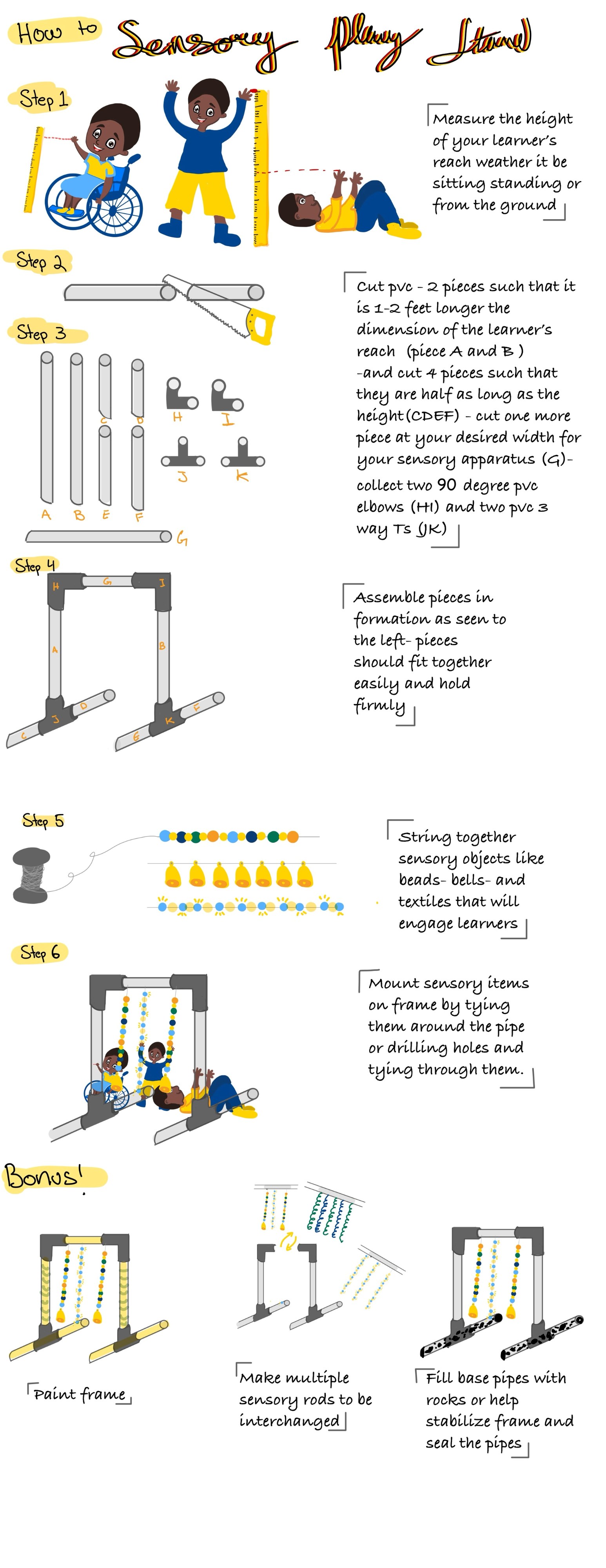
PVC-pipe sensory curtains that encourage learners to reach and stretch.
Measuring and cutting PVC pipe for the sensory curtains.Teachers working out how the PVC frame fits together.Stringing the strands onto the frame.Hanging the beaded strands.
Week 5
Independent Projects Launch
Kicked off independent projects, moving teachers from following instructions to solving their own learners' challenges.
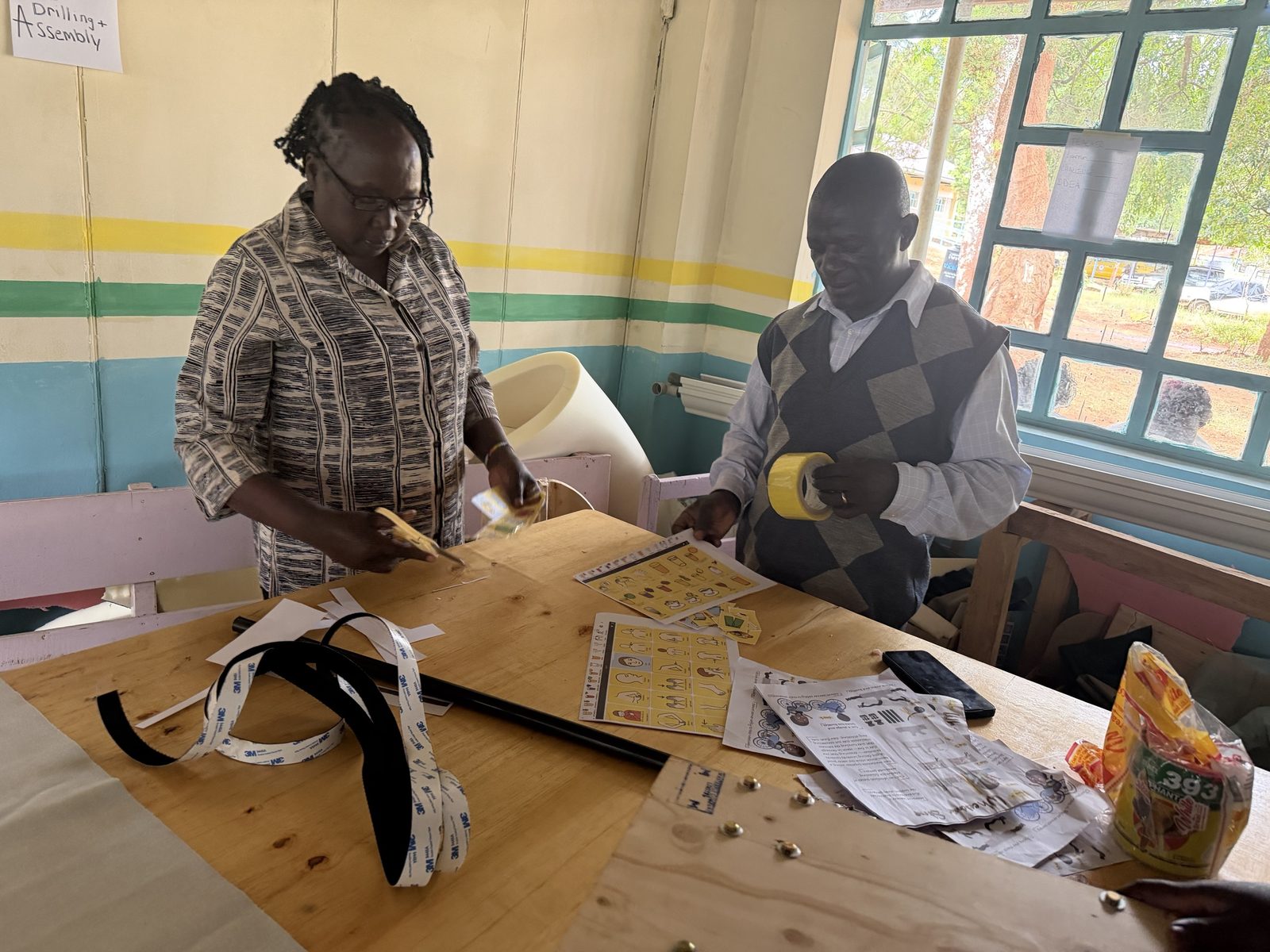
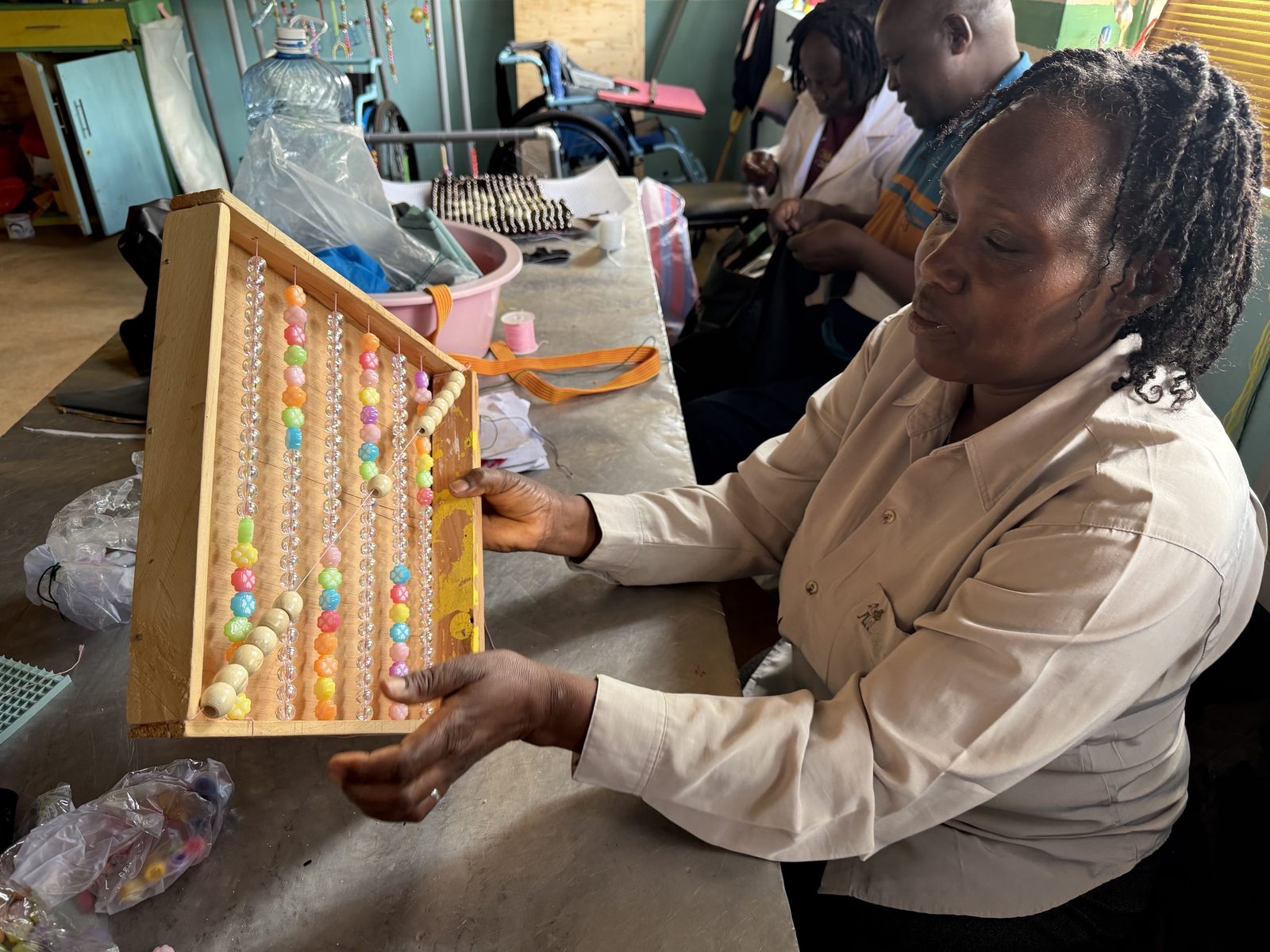
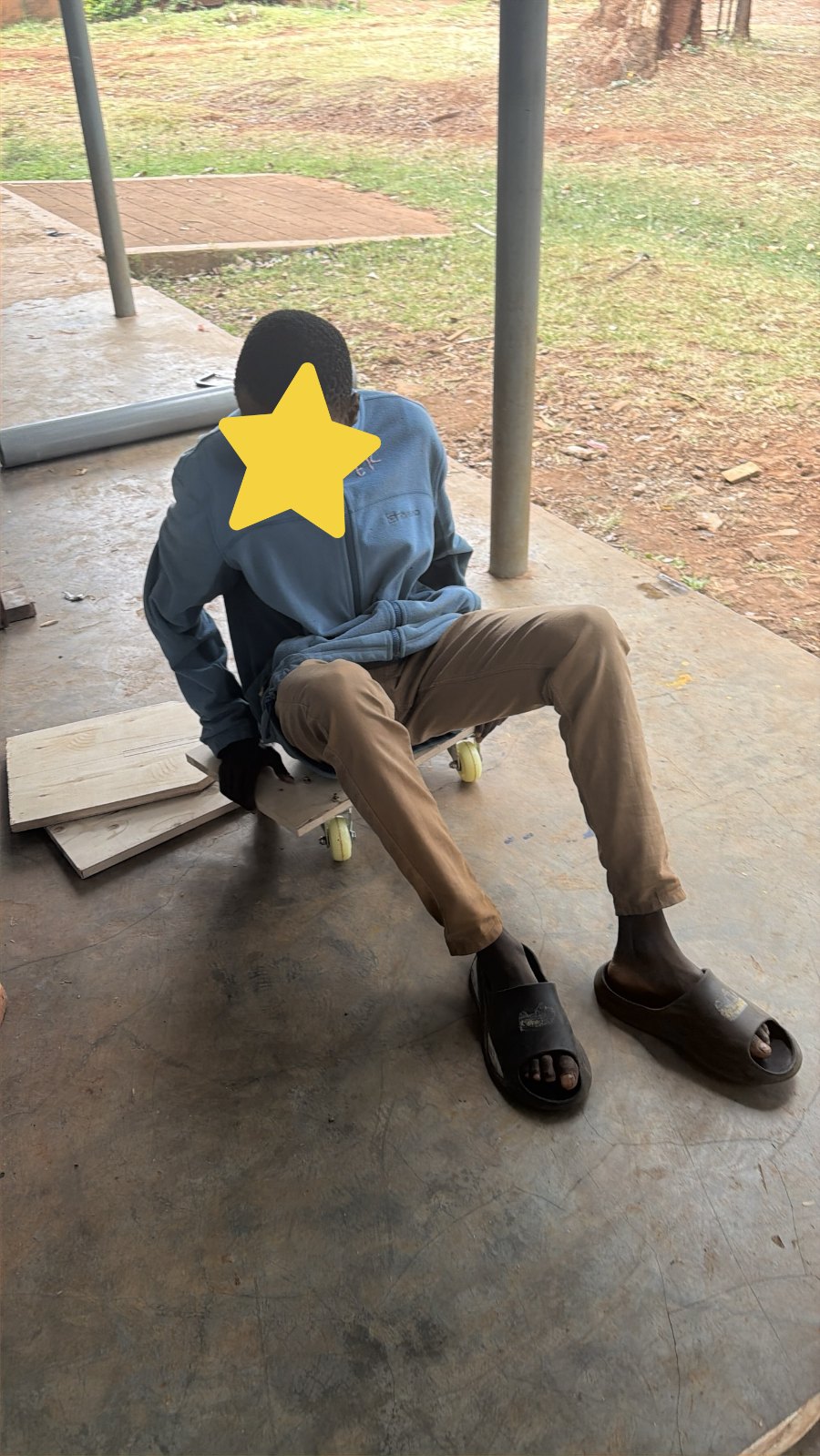
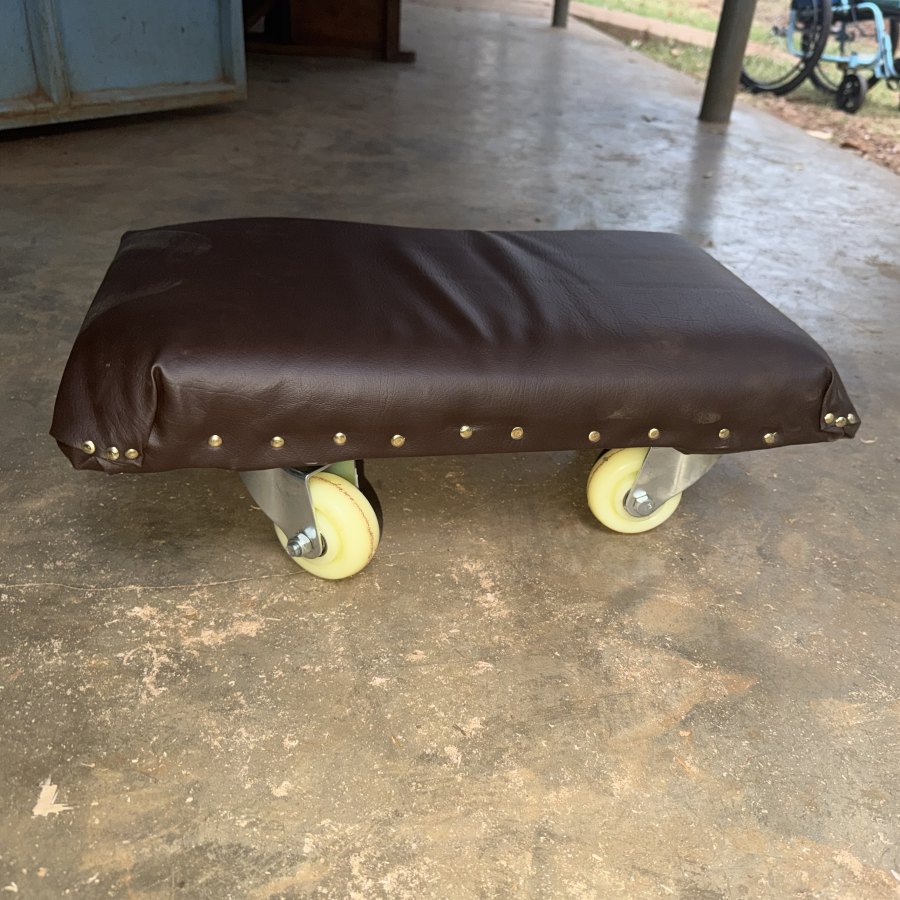
Teachers starting on their independent projects.Upholstering the scooter board.Cutting picture symbols for a communication board.A beaded sensory board in progress.
Week 6
Wheelchair support straps and cushions
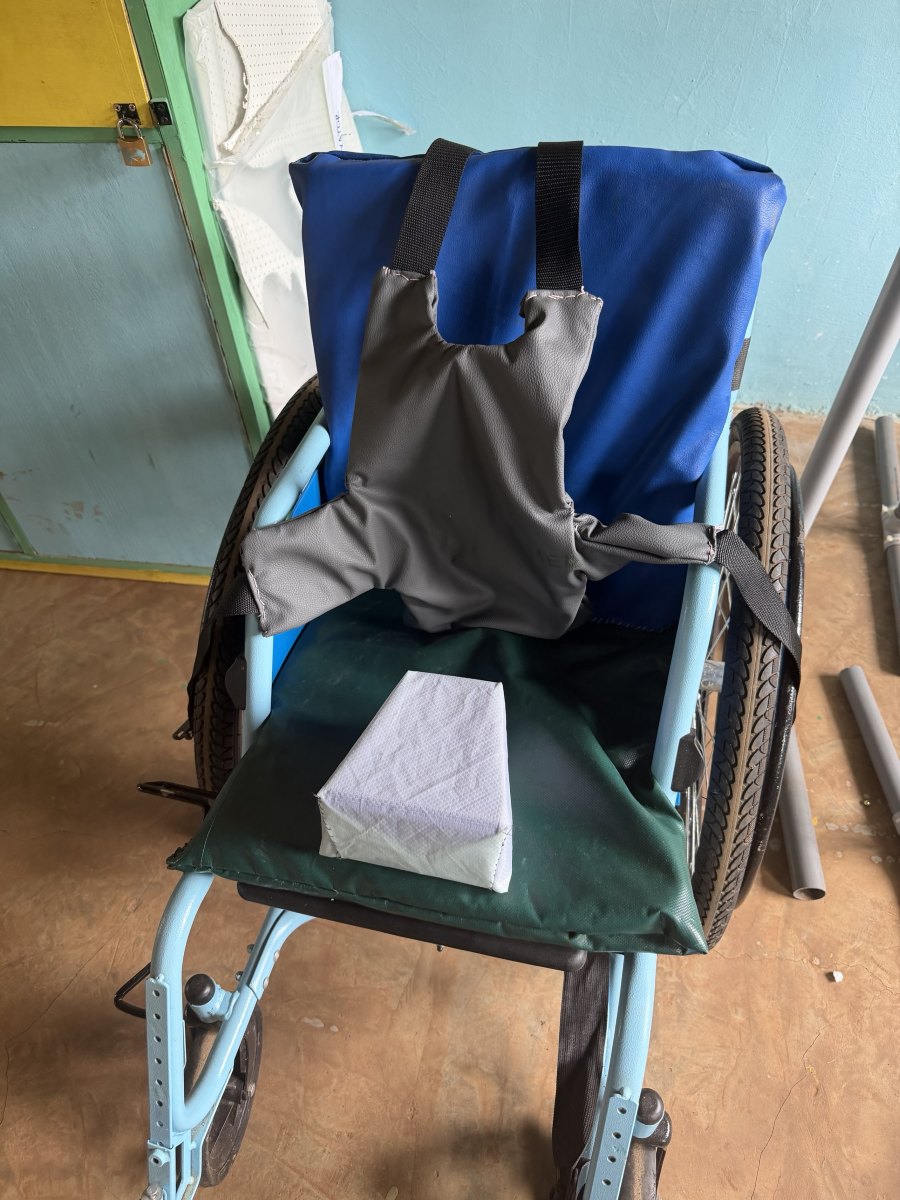
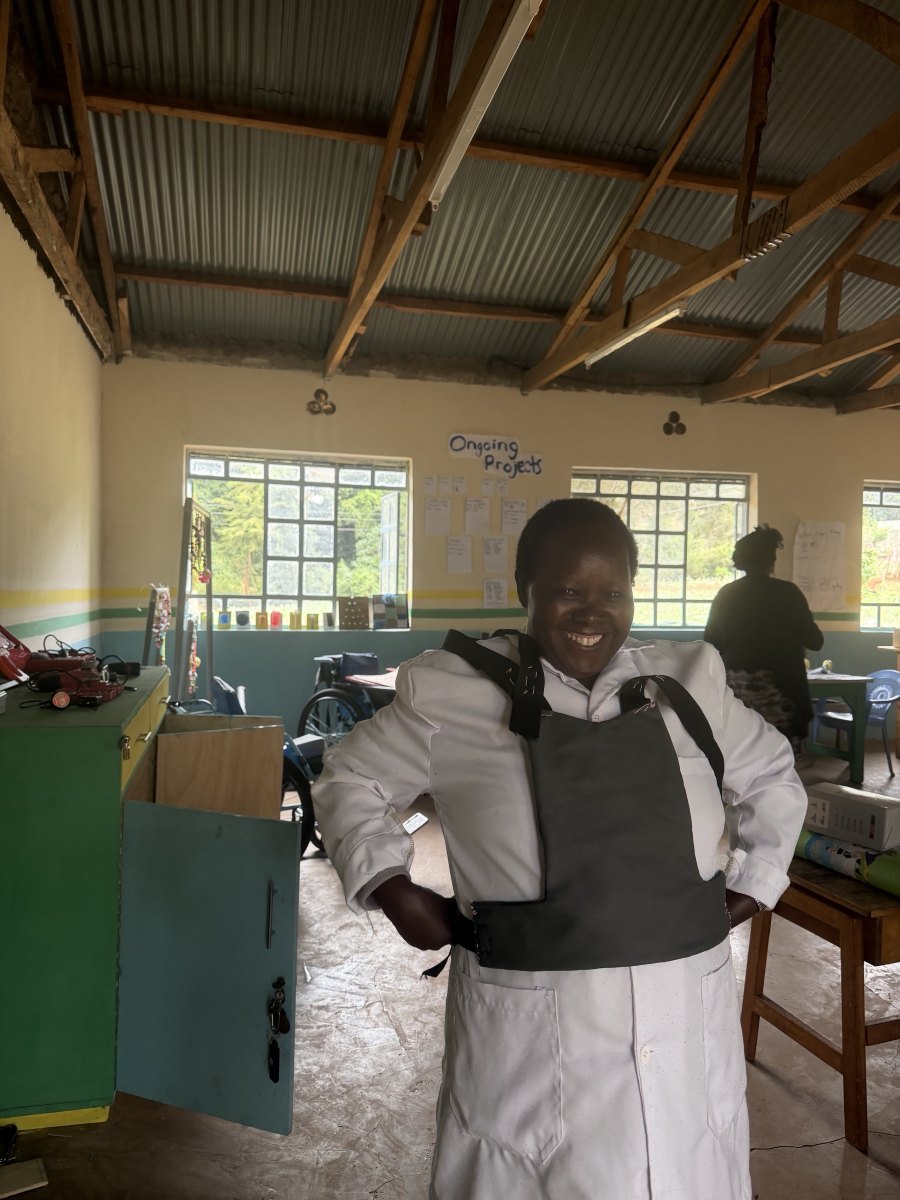
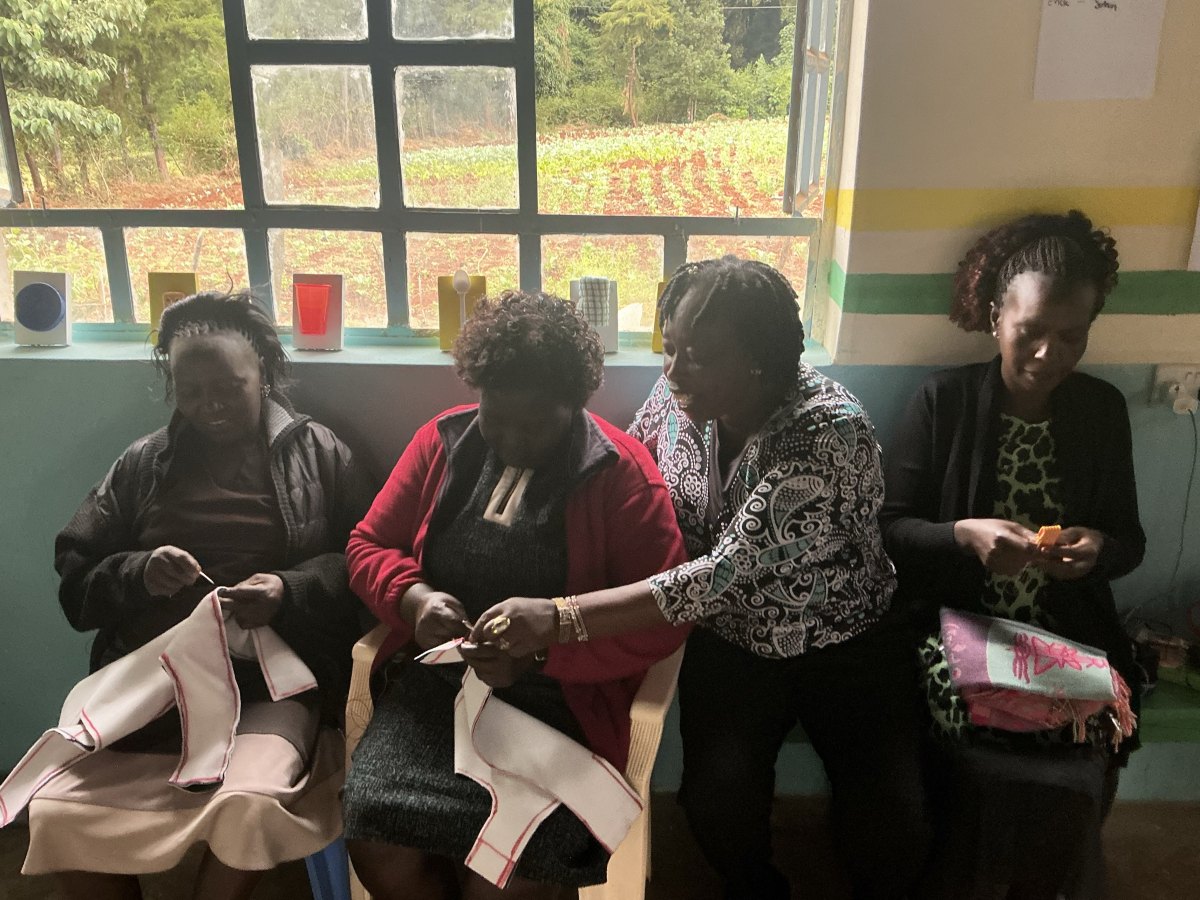
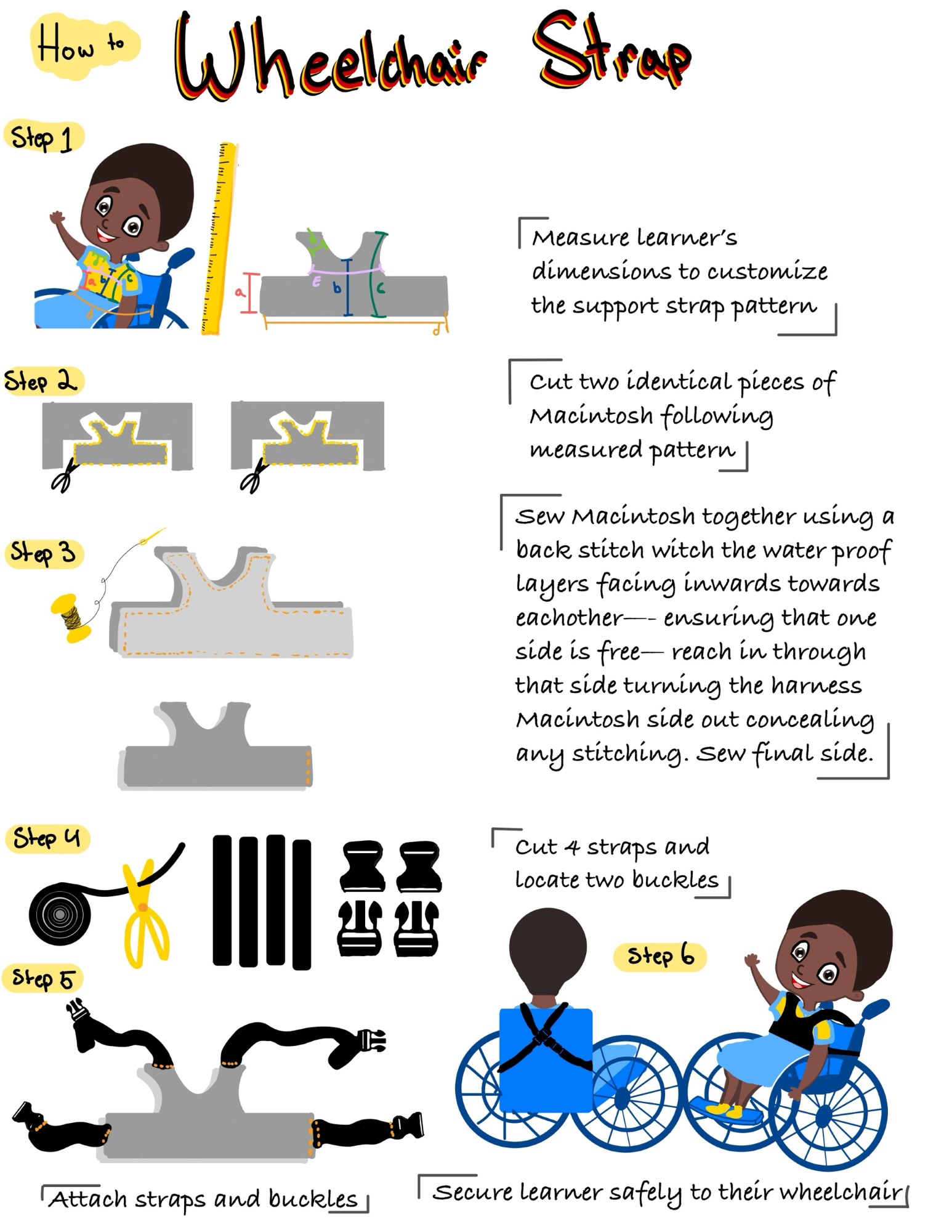
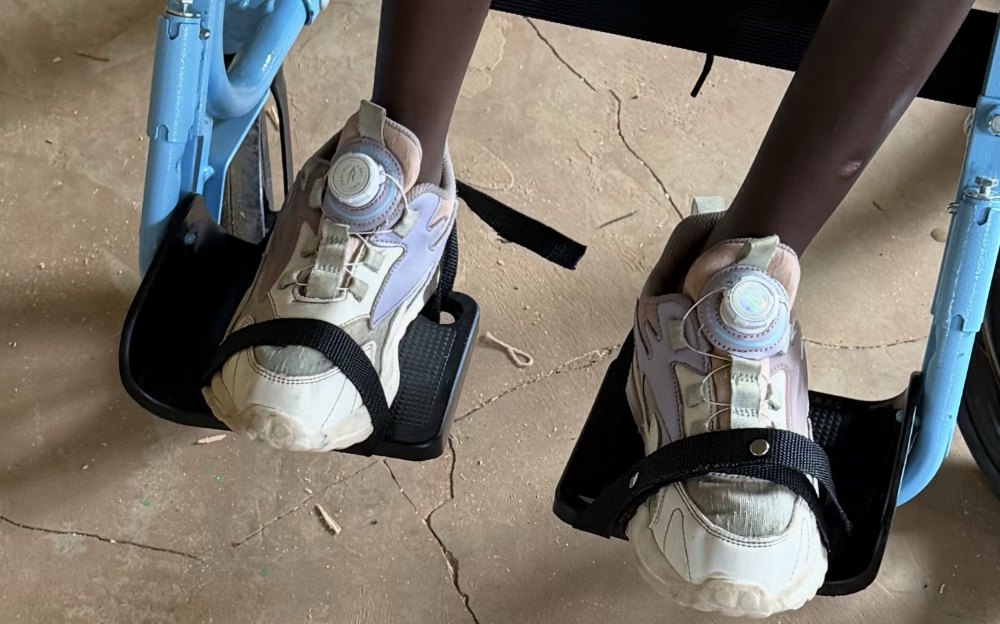
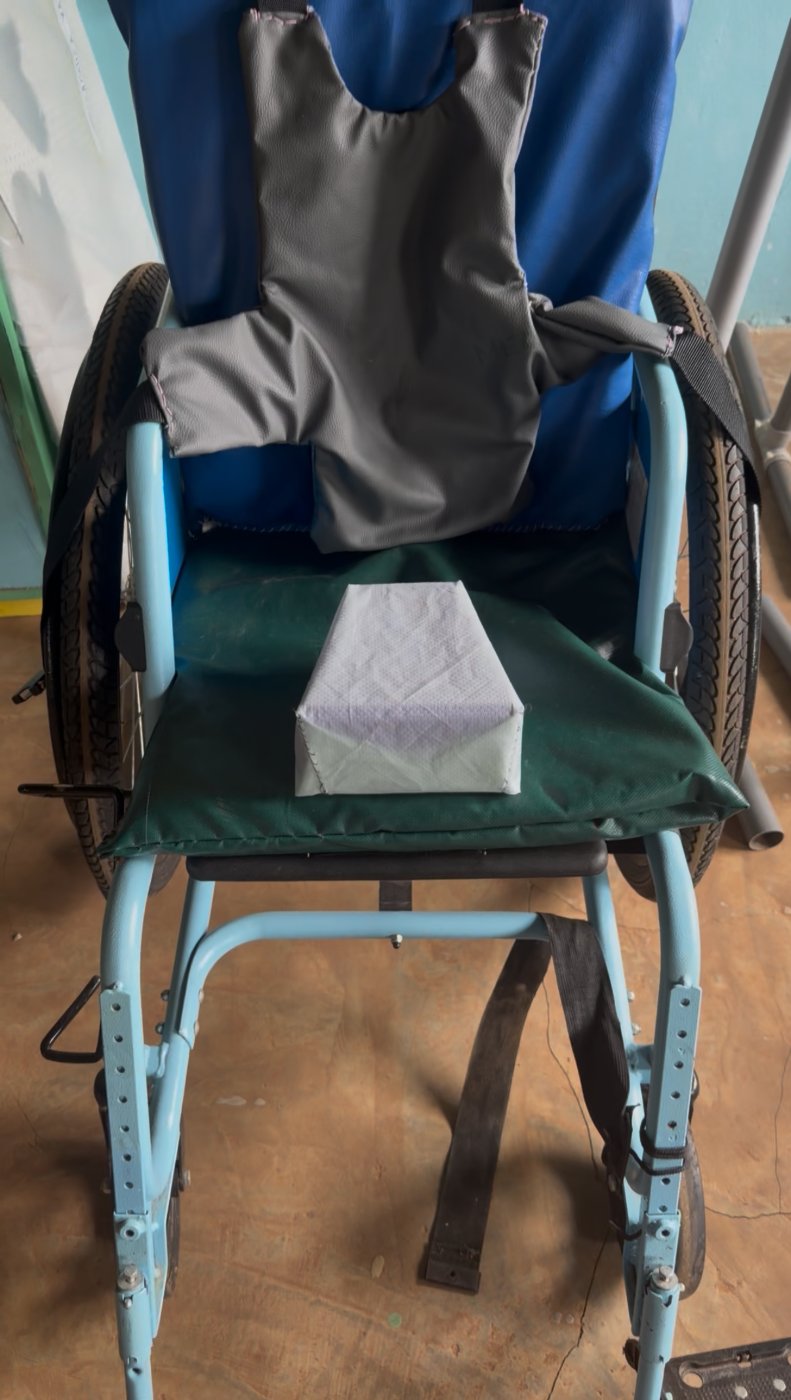
Learners had been tied into their wheelchairs with bed sheets, so we made proper support straps, along with improved wheelchair cushions, including pommels (abductors), for better fit.
A fitted chest harness, backrest, seat cushion and pommel.A teacher trying on the chest harness.Teachers hand-sewing the harness pieces.
Week 7
Alternative seating
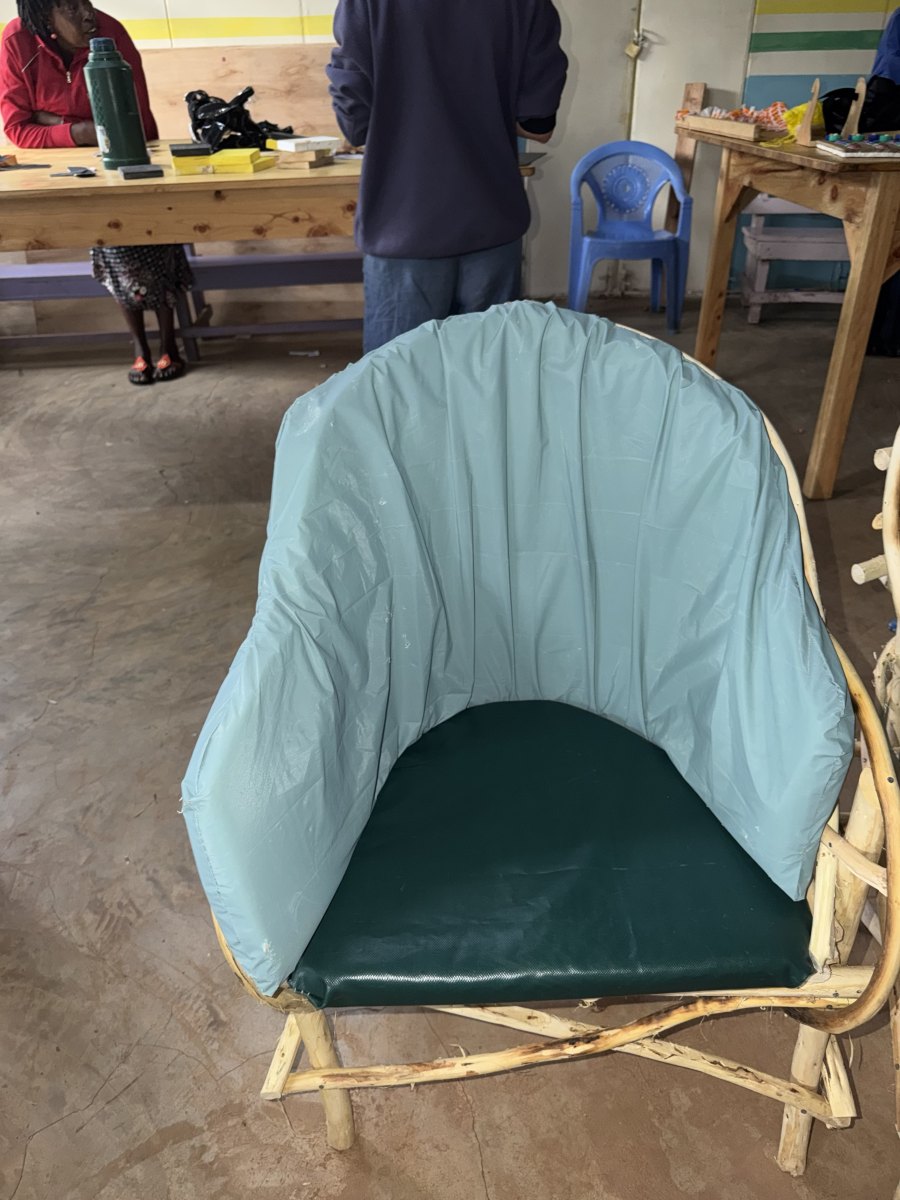
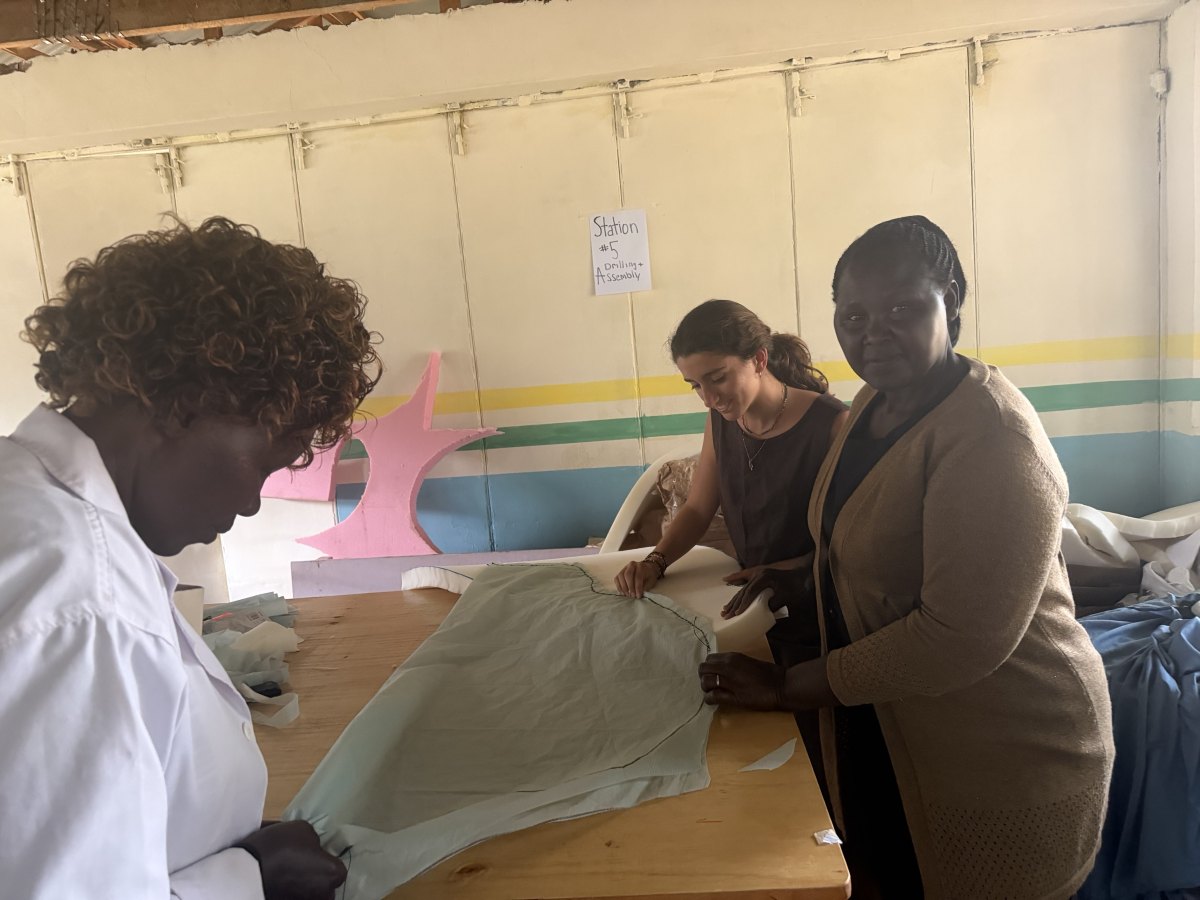
Built chairs that give learners who use wheelchairs somewhere else to sit.
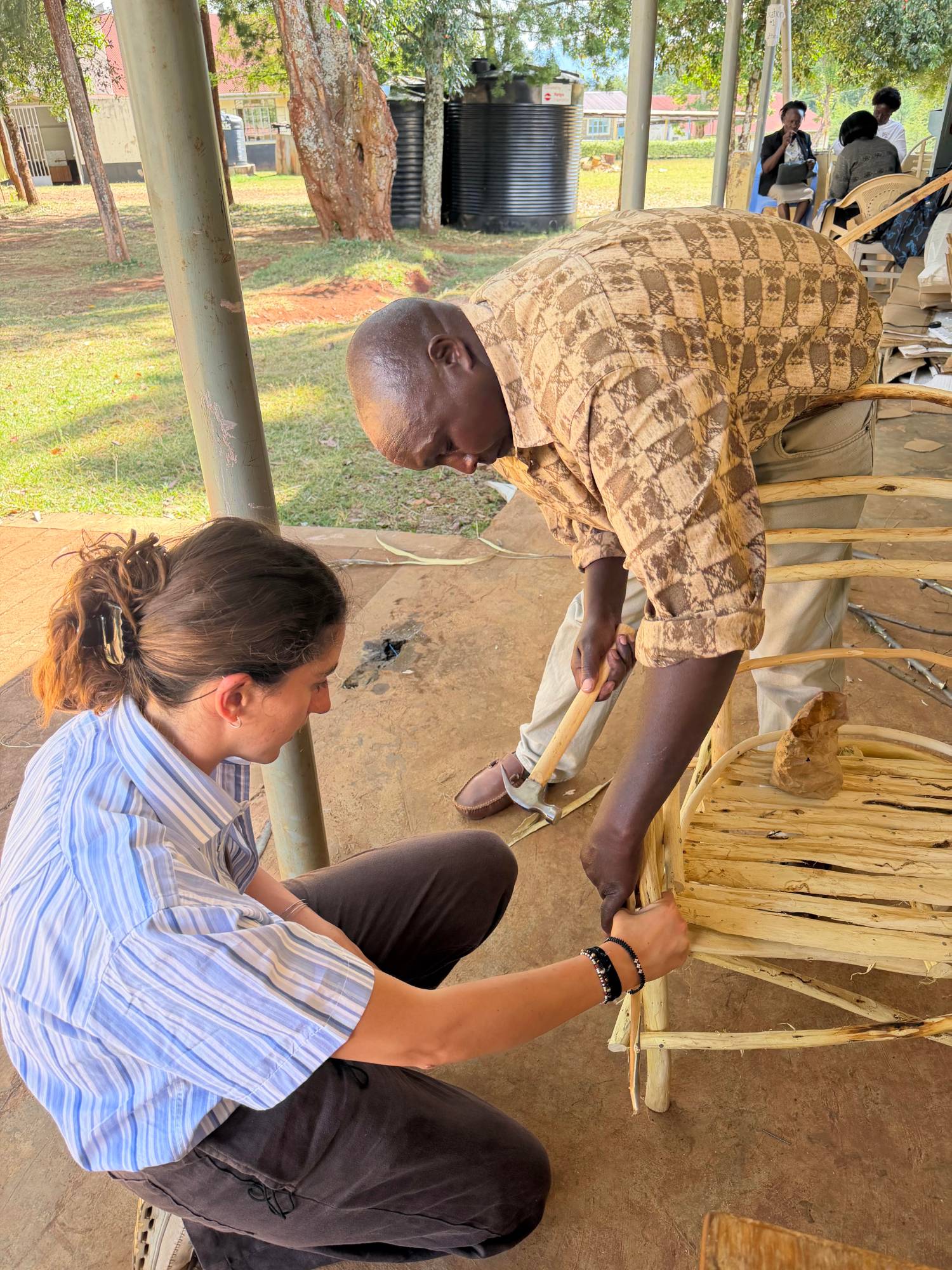
A cypress-branch chair with a padded, wraparound back.Fitting a custom cover over a foam seat.
Week 8
Engaging the learners
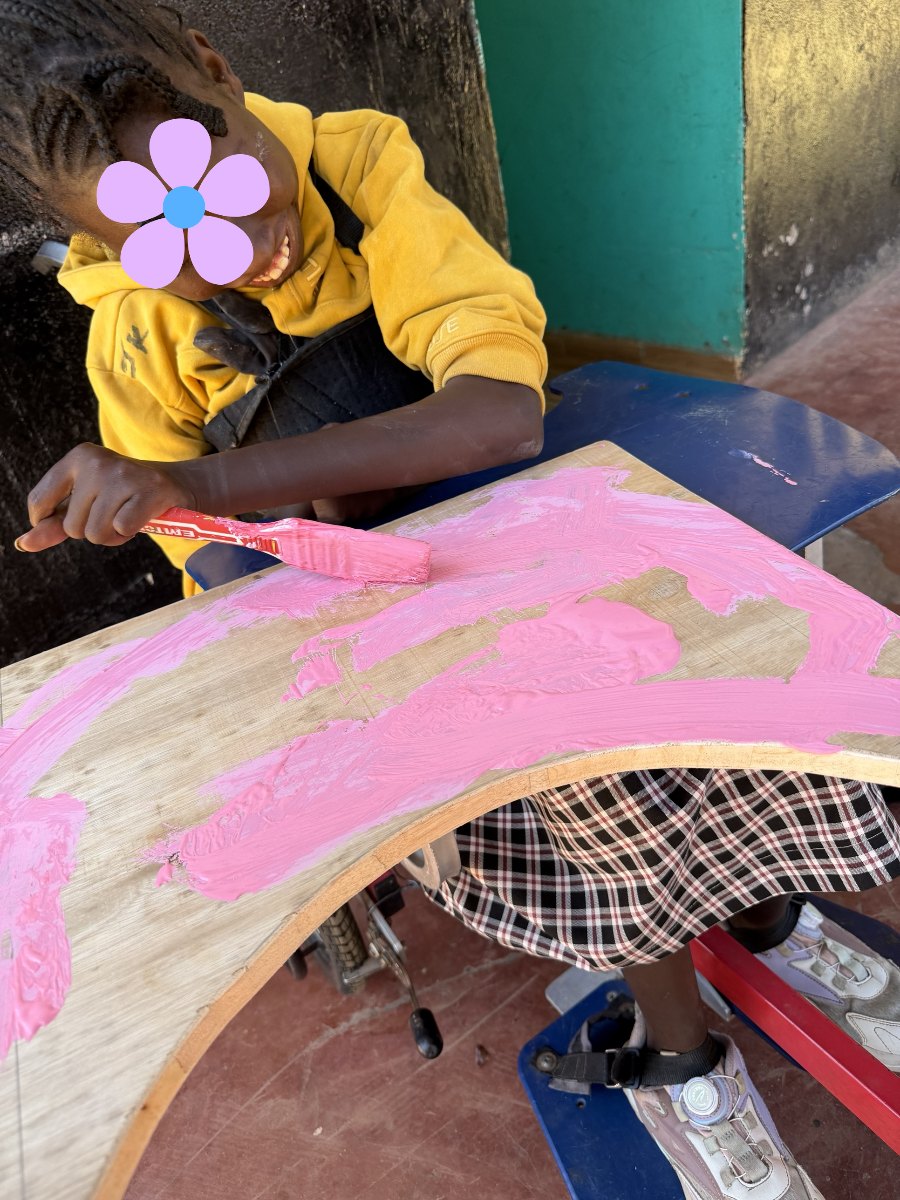
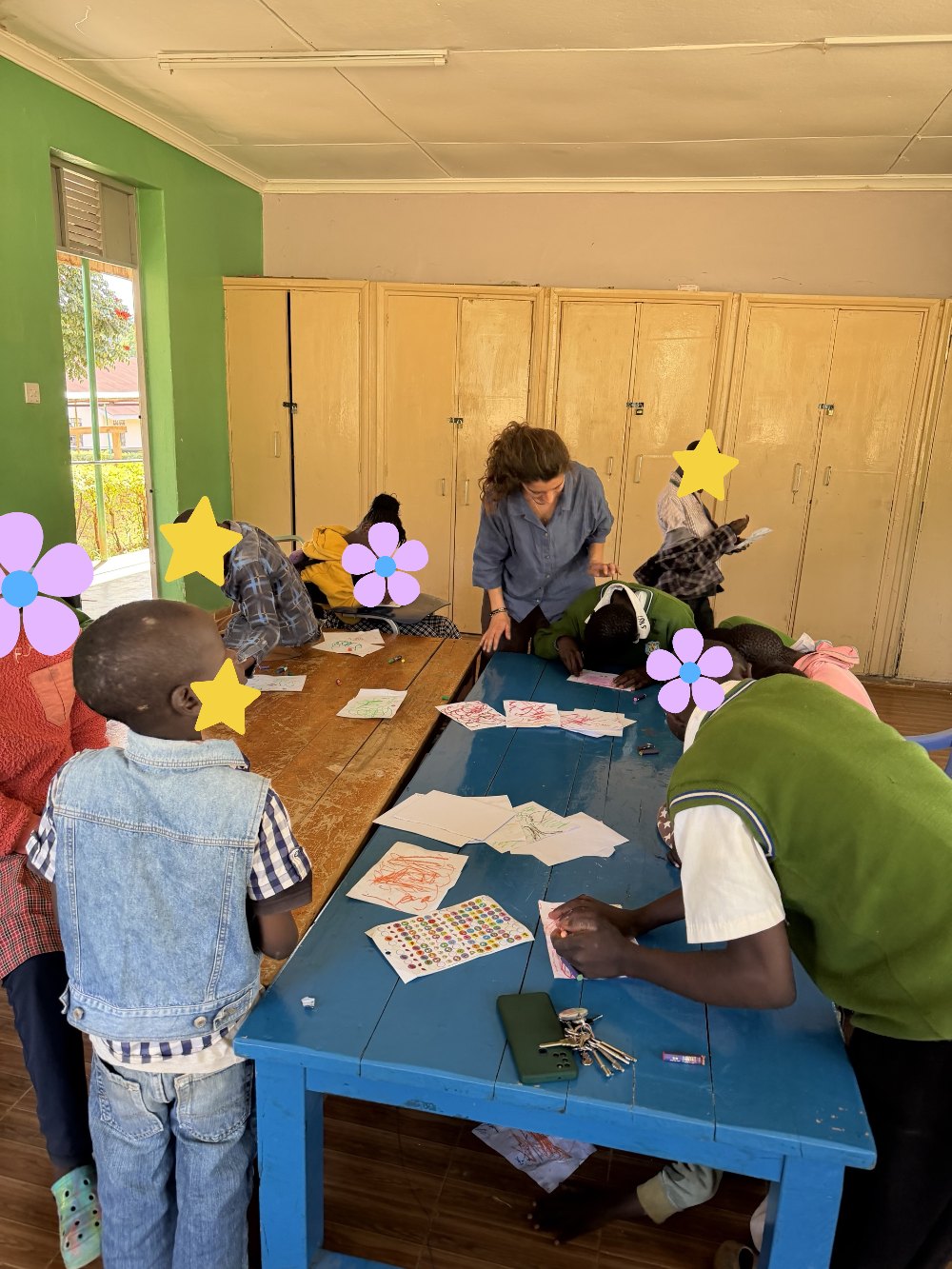
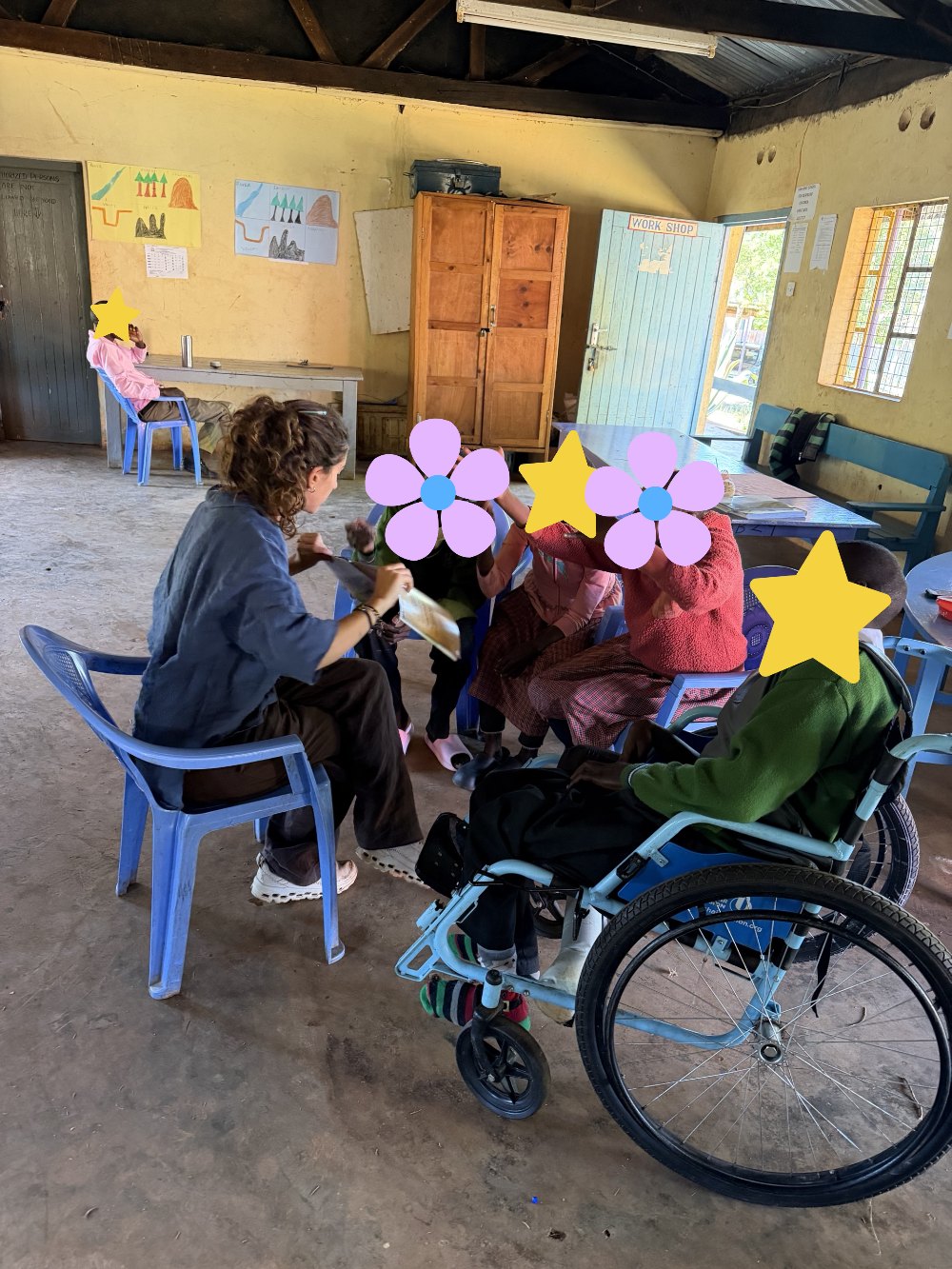
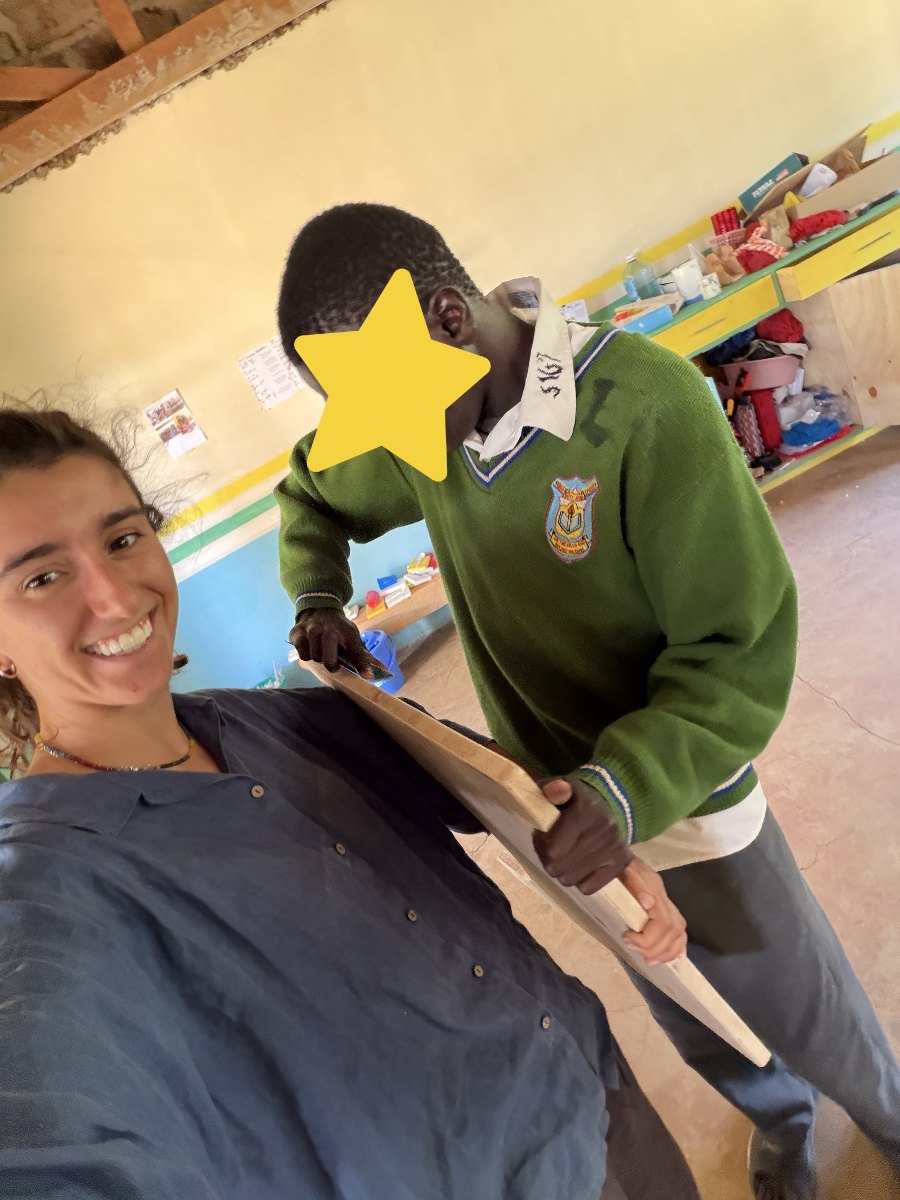
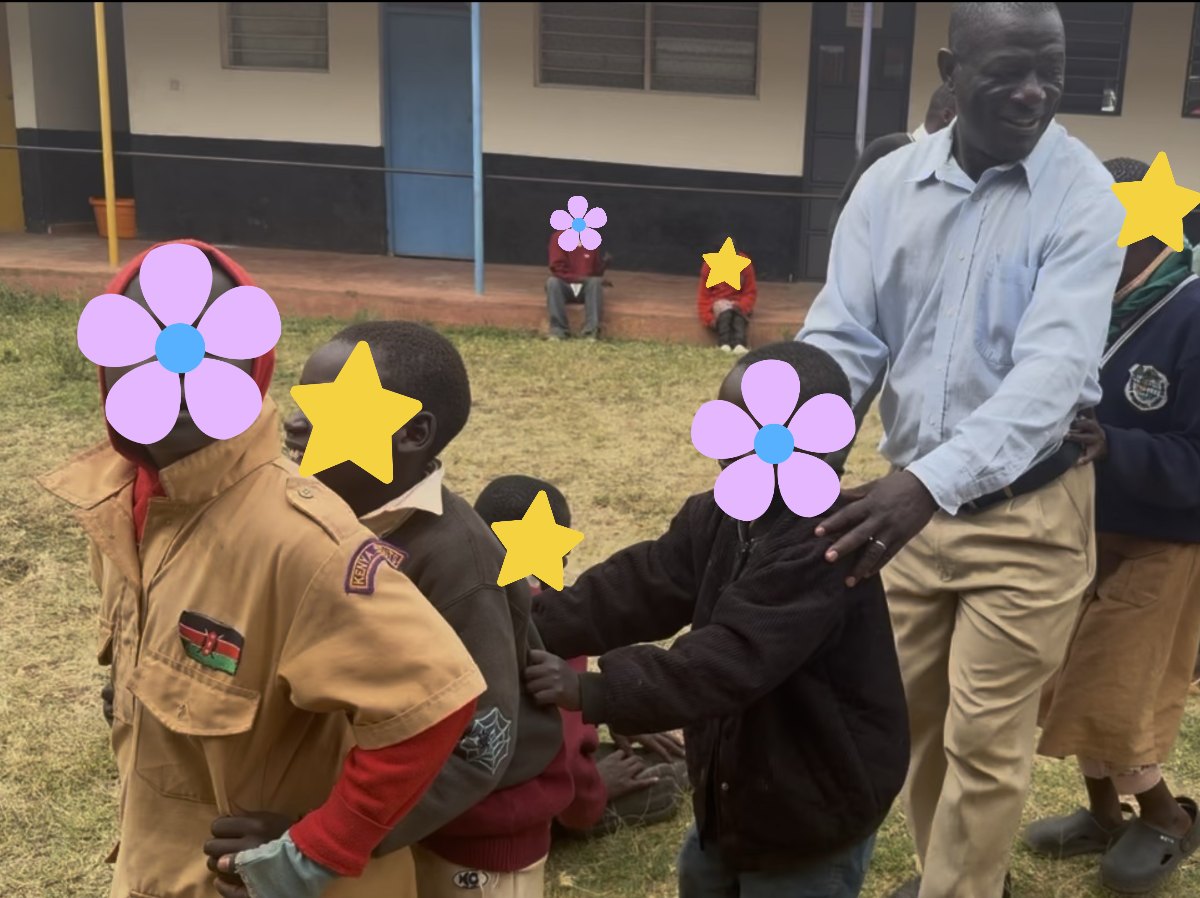
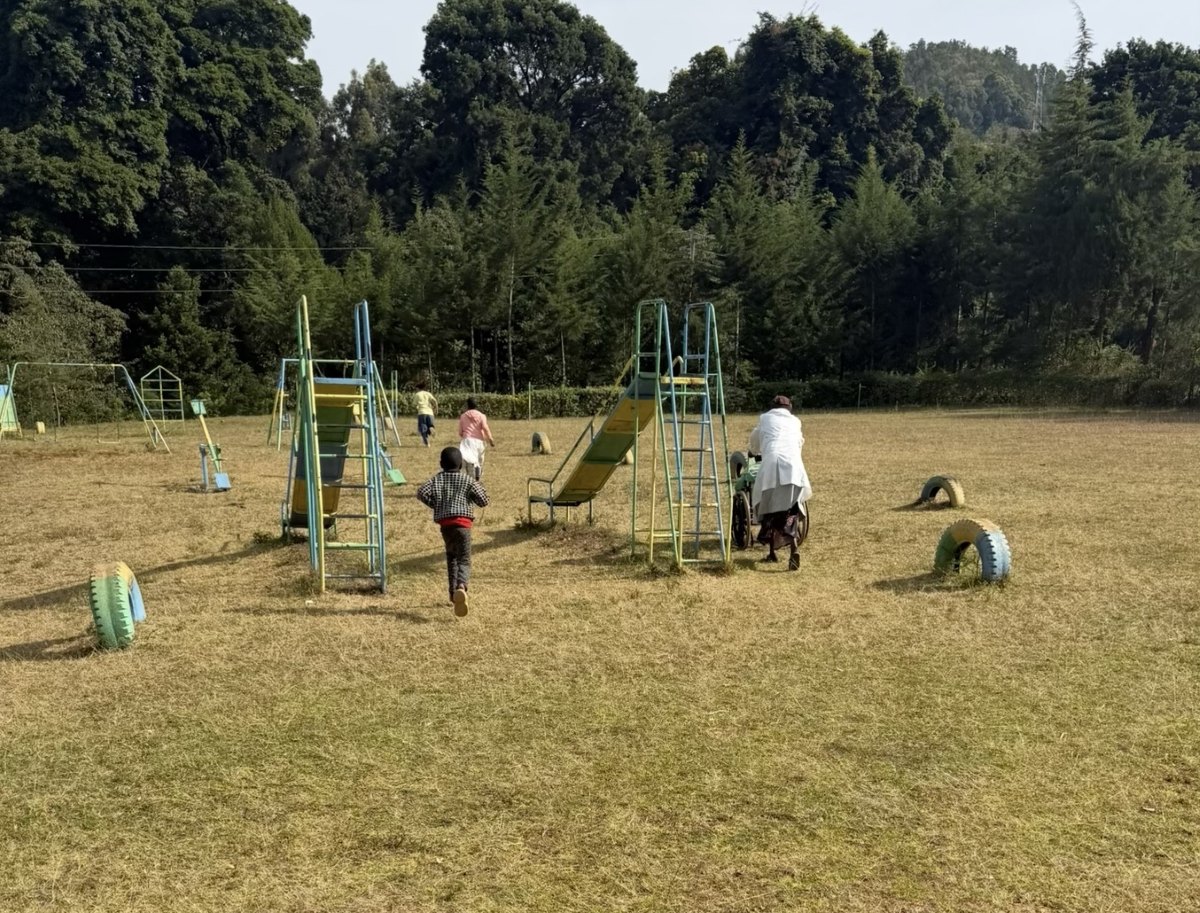
Planned weekly activities for the learners, including an art club, a run club and a dance club, and brought them into the workshop activities.
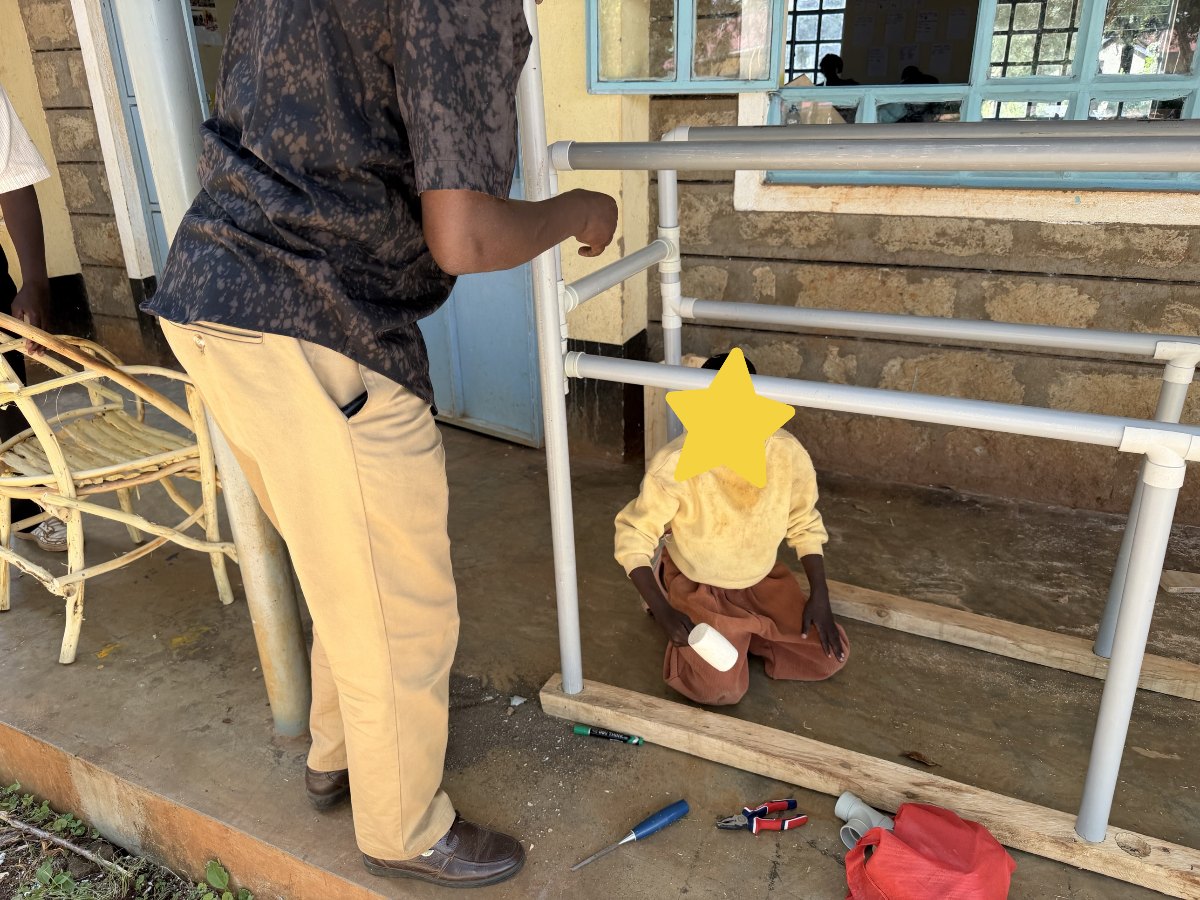
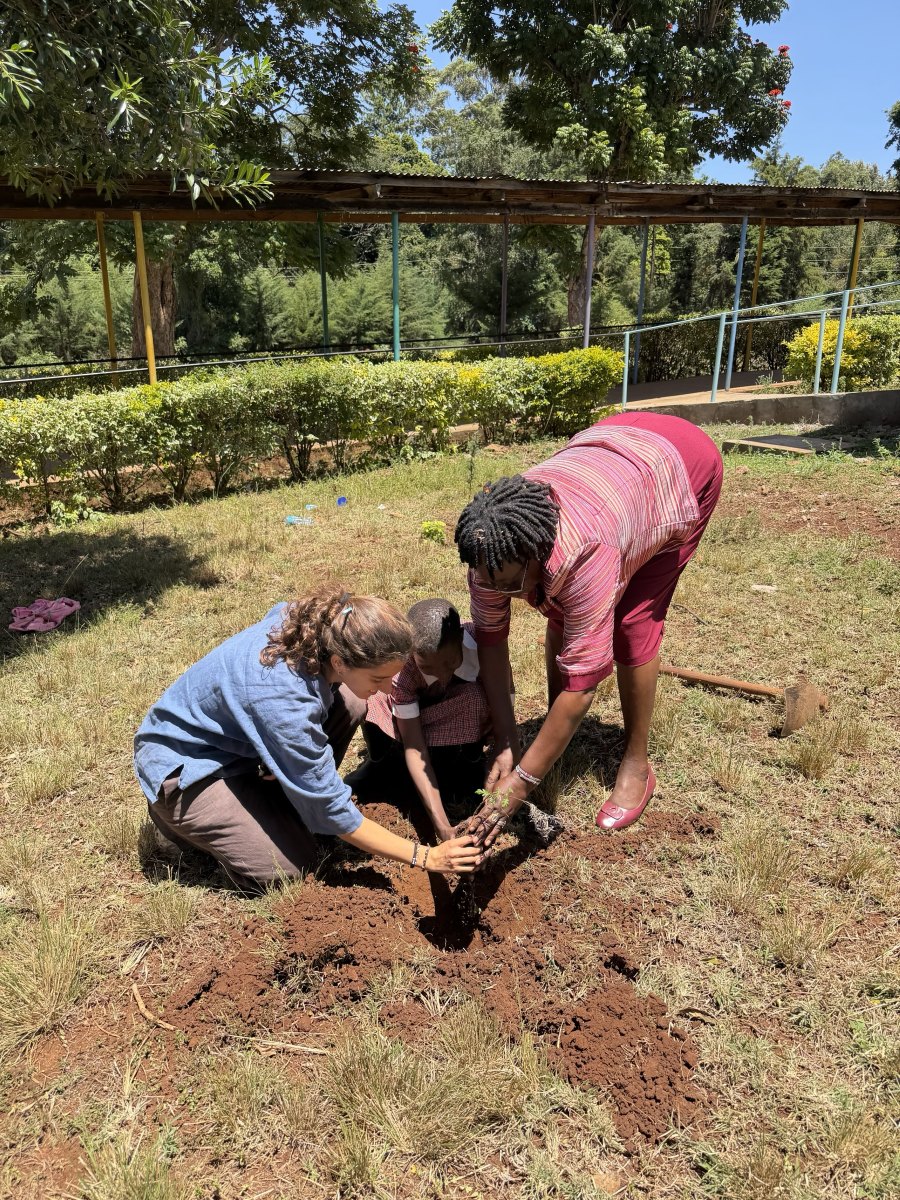
A learner joining in on the painting.Art class.Reading club.Sanding a board in the workshop.Helping assemble the parallel bars.Planting a tree together.Dance class.Run club.
Week 9
Independent Project Push
As people understood and embraced what the workshop is doing, new ideas arose. With the end of term approaching, we planned a big push, with assigned project teams fabricating the project queue.
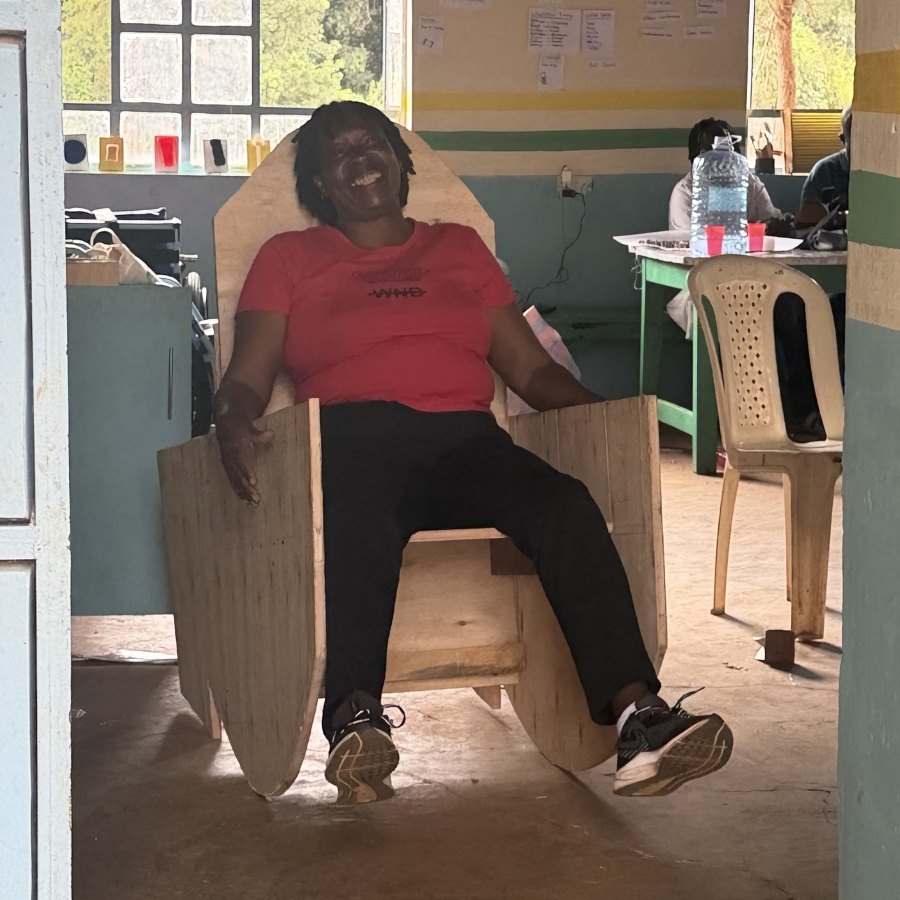
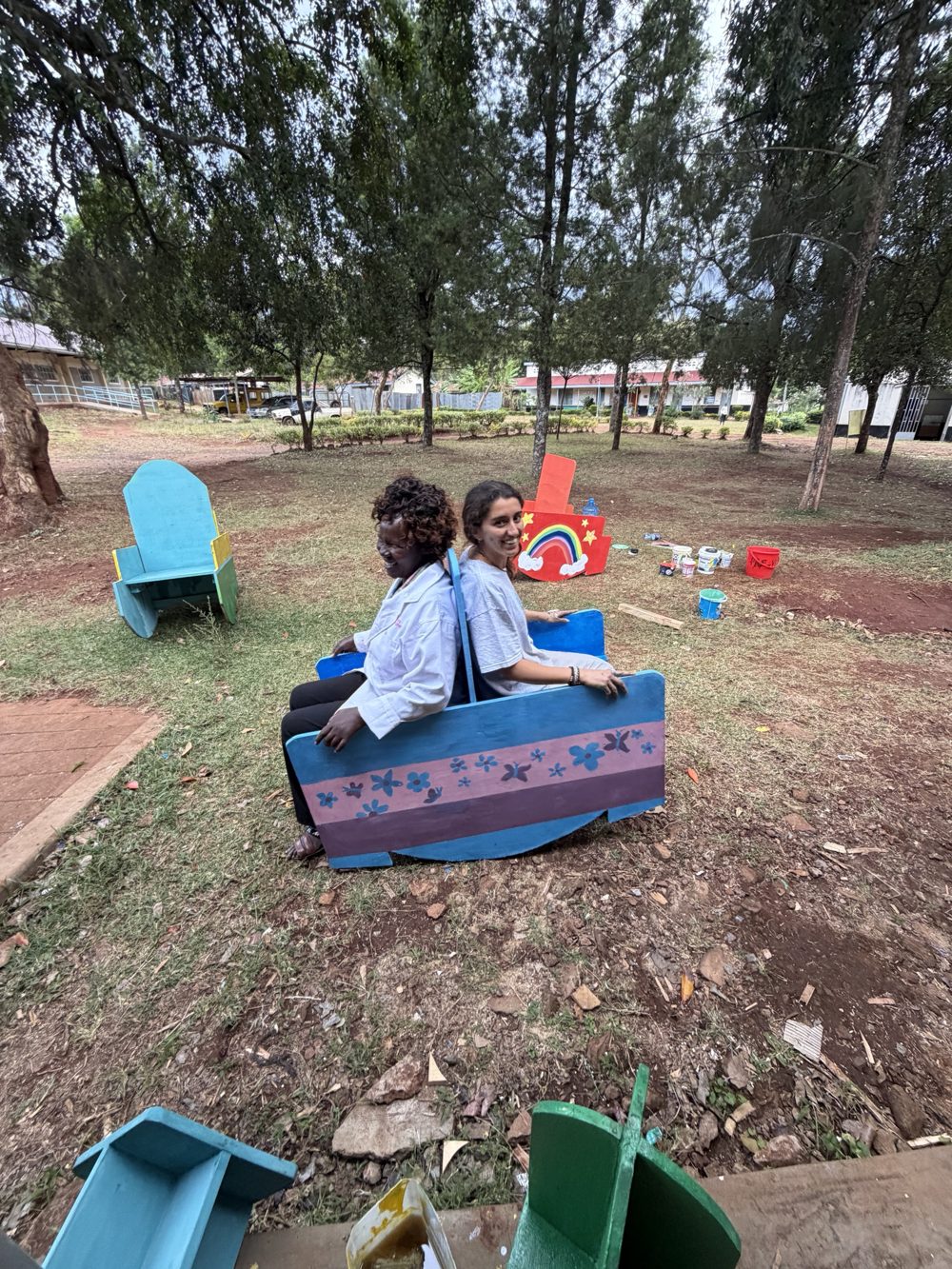
Teachers priming the two-person rocker, with a finished rocking chair behind them.Building communication boards for clothing and activities.
Week 10
Parent education for home care
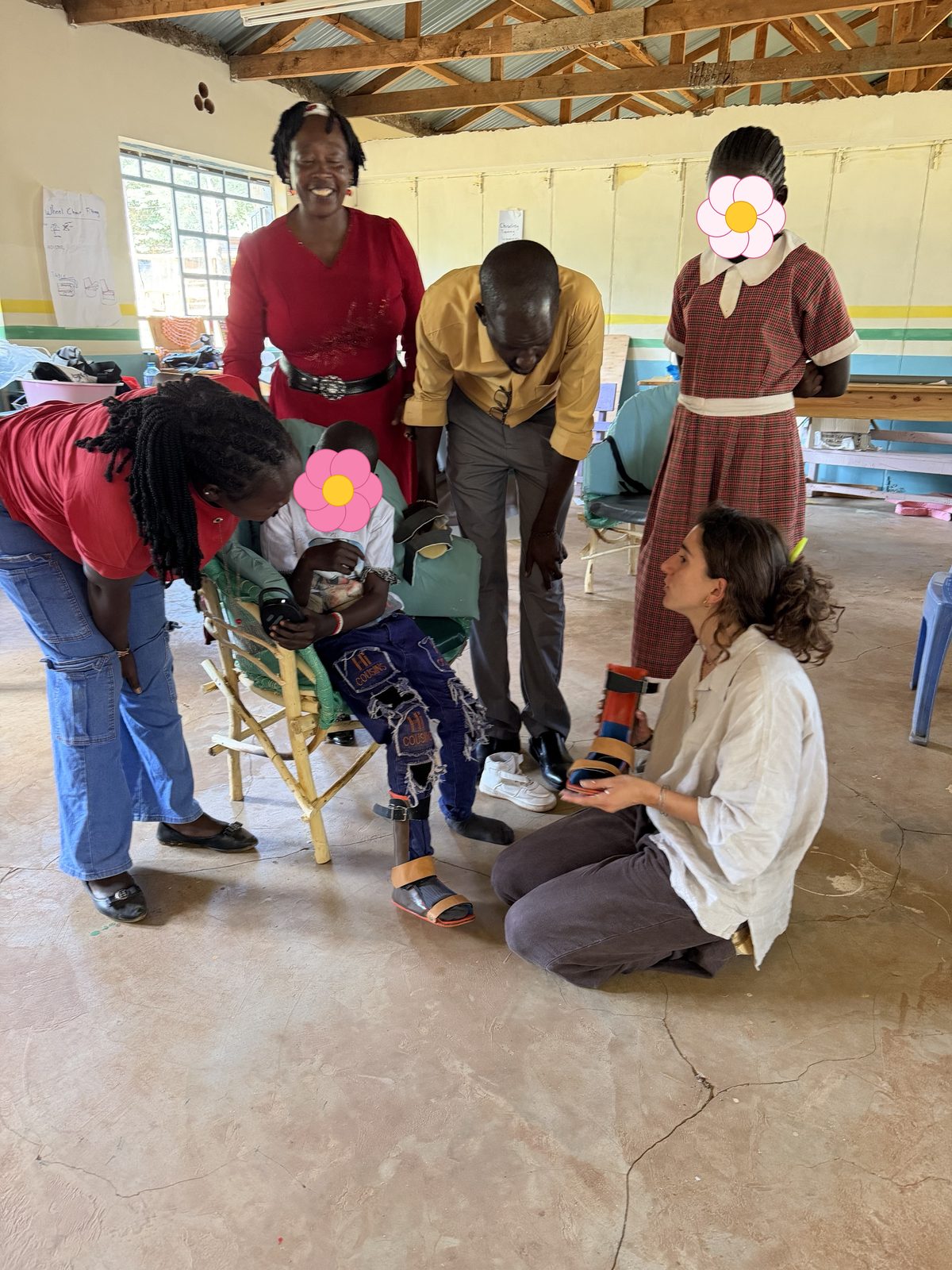
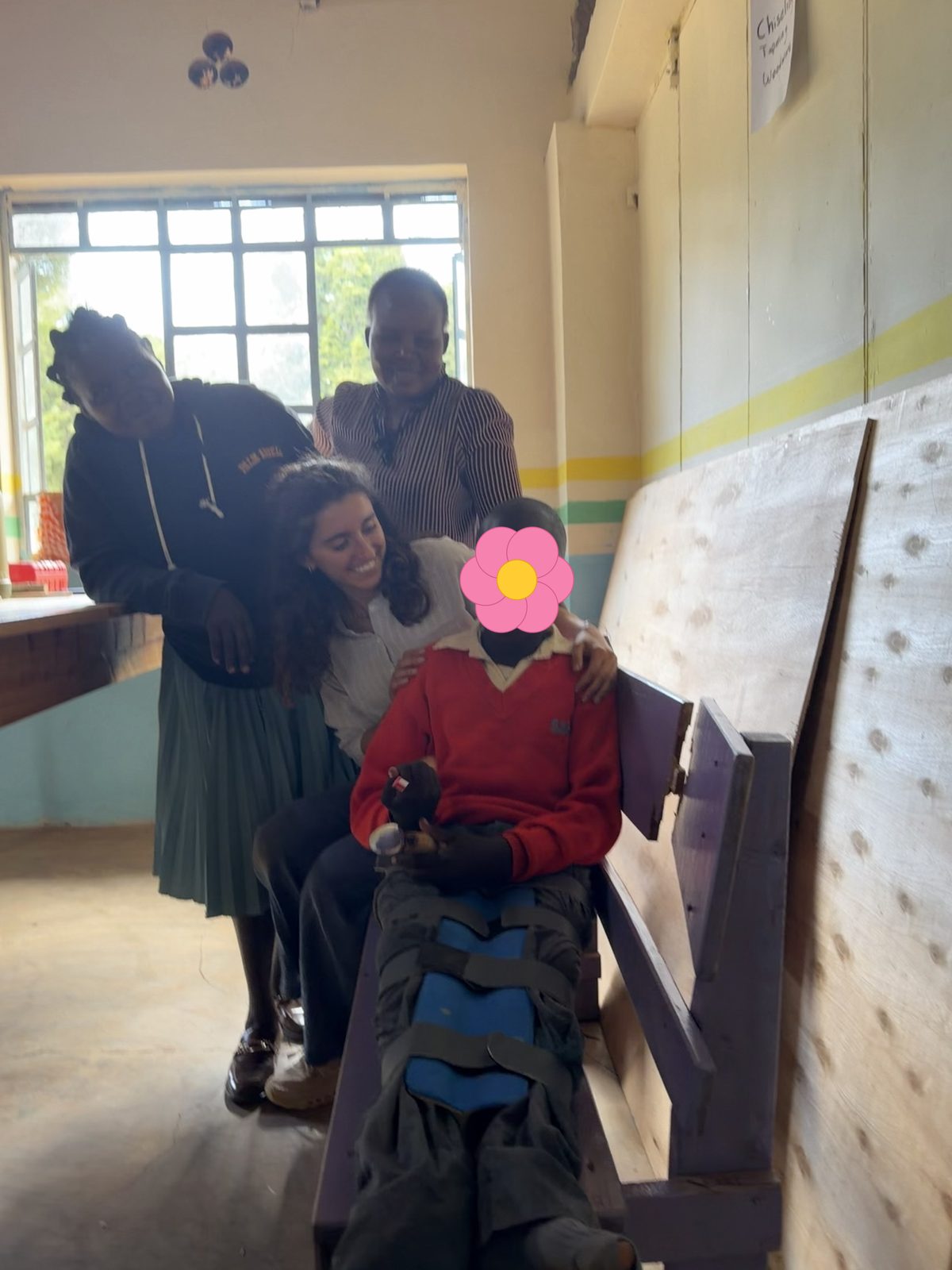
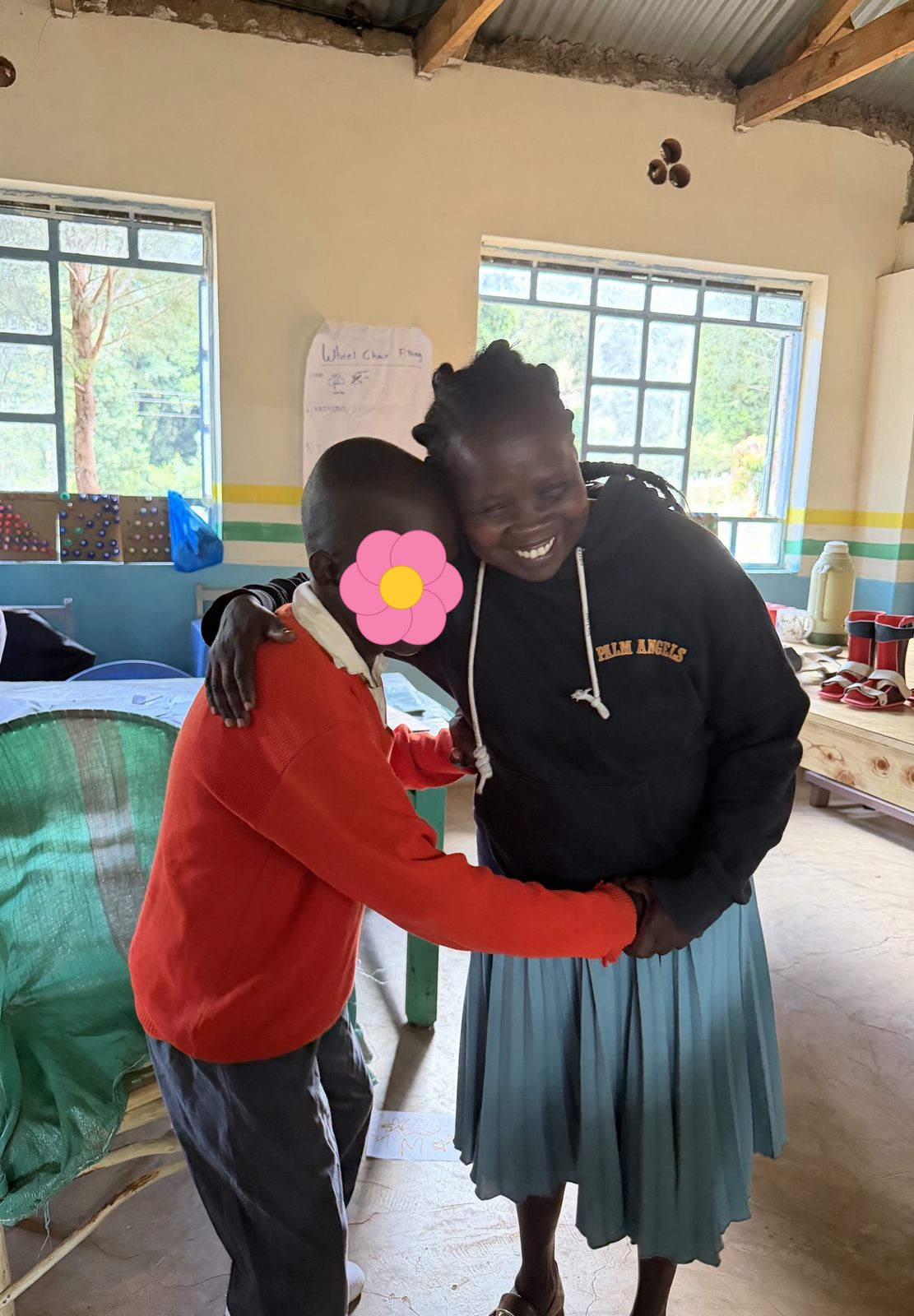
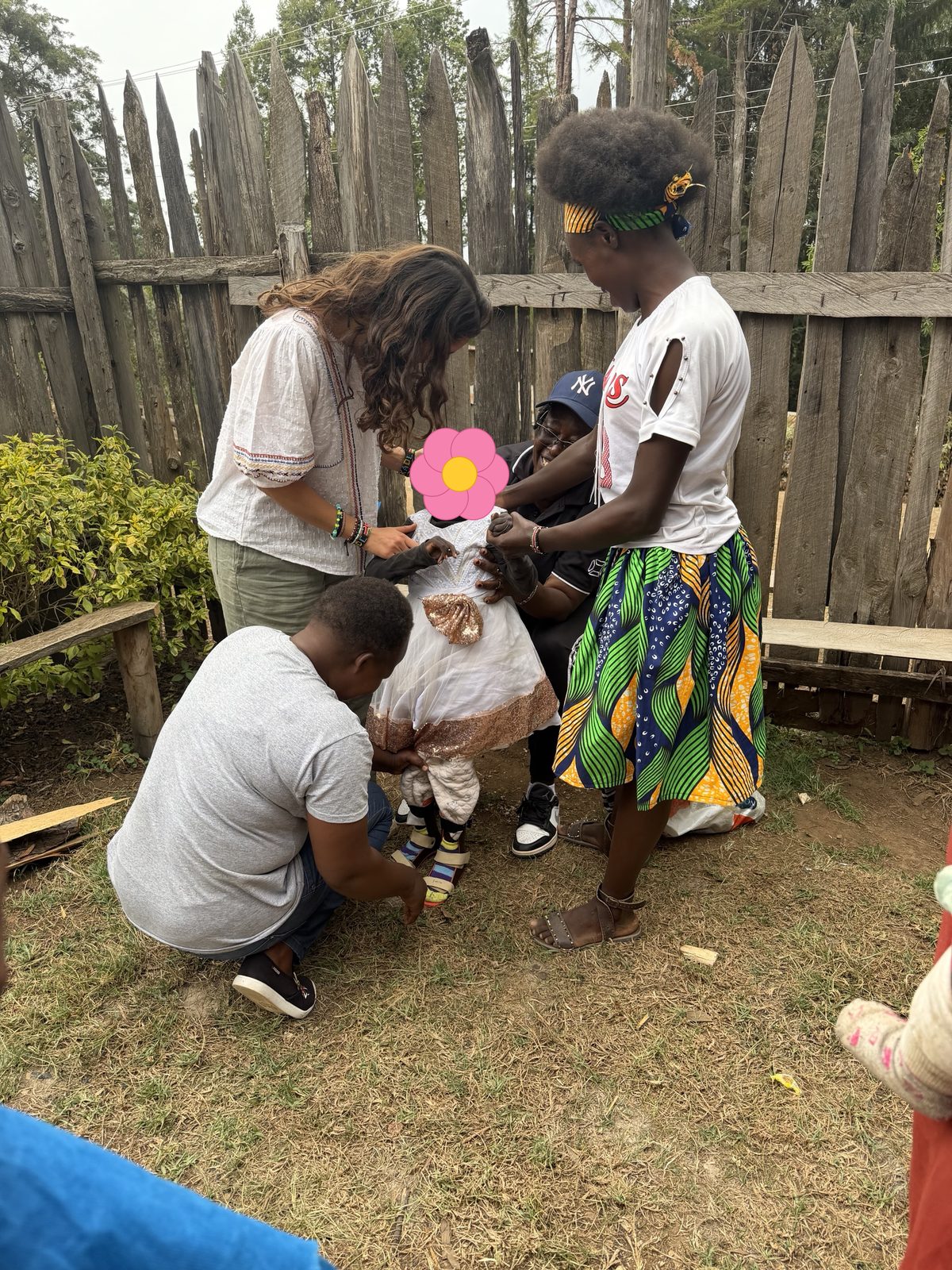
As the term wound down and parents came to pick up their learners, we met with each family to show them how to use and care for their child's braces and adaptations, and made home visits to families, so the support learners get at school can continue at home.
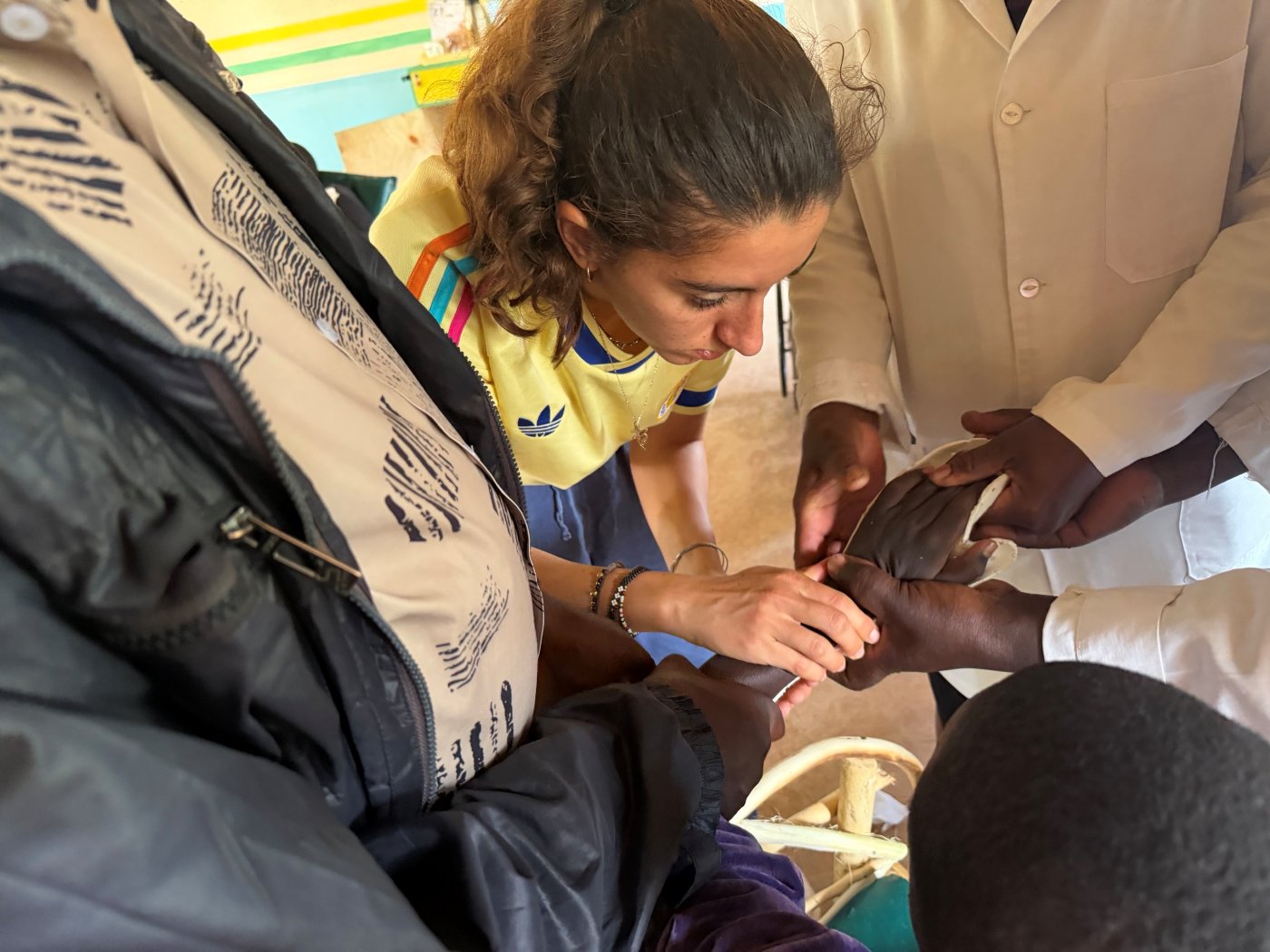
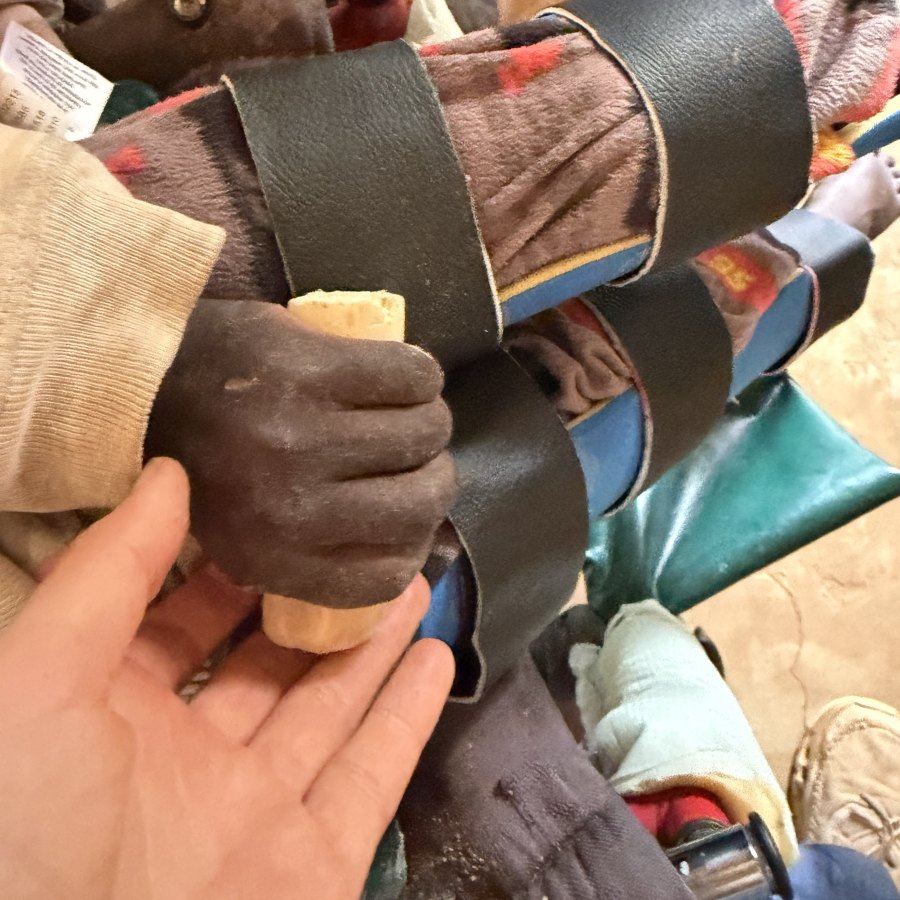
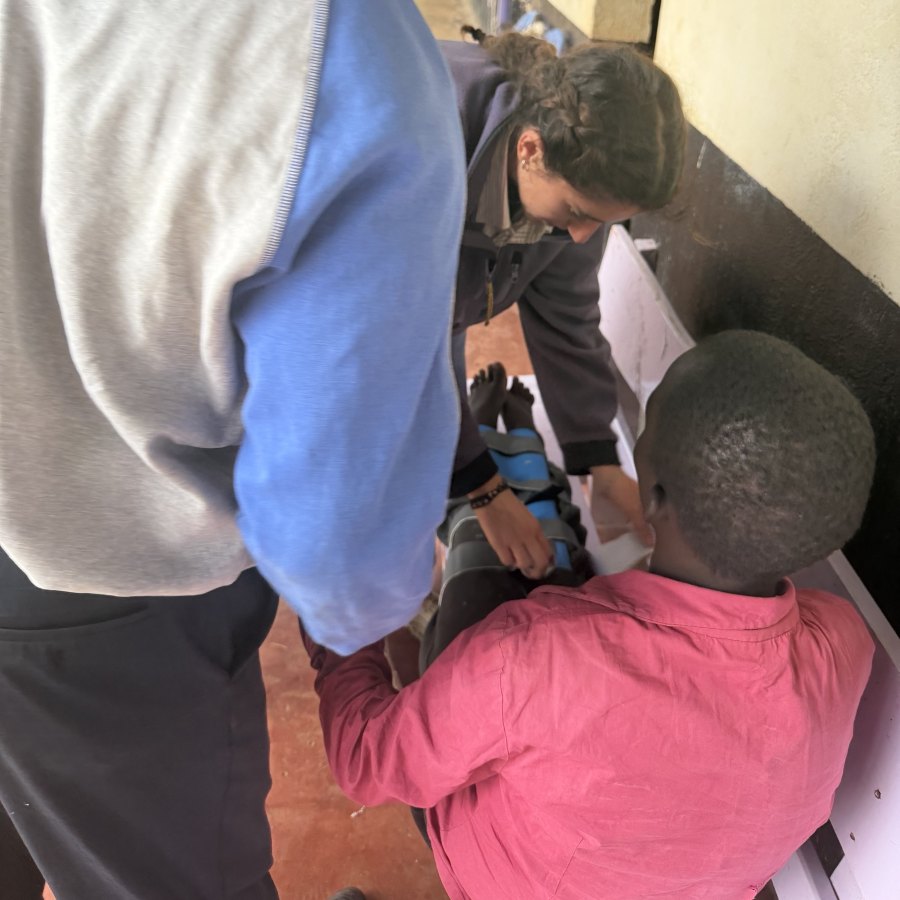
Walking a family through their child's new leg braces.Sending a learner home with his new chest harness.A mom taking home her son's knee brace, spoon and toothbrush.Hugs as he stands in his new braces.Everyone pitching in to help her stand.
Week 11
Graduation and handover
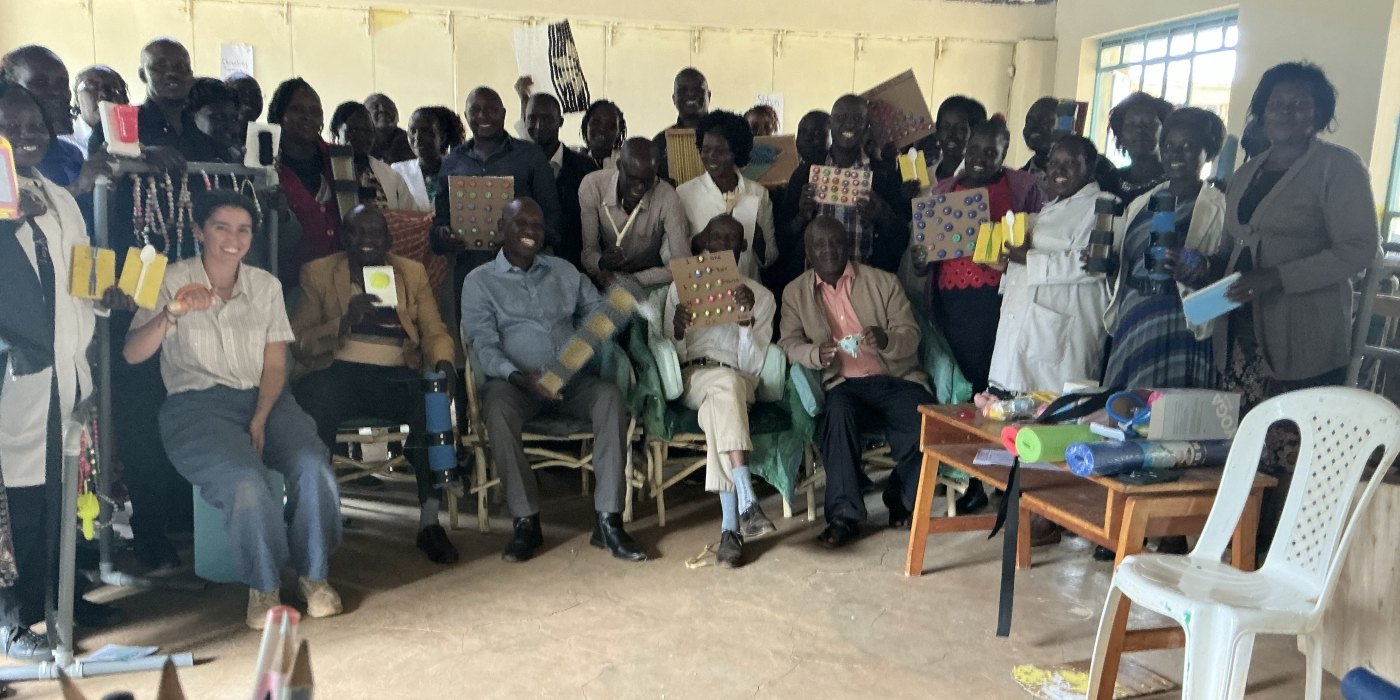
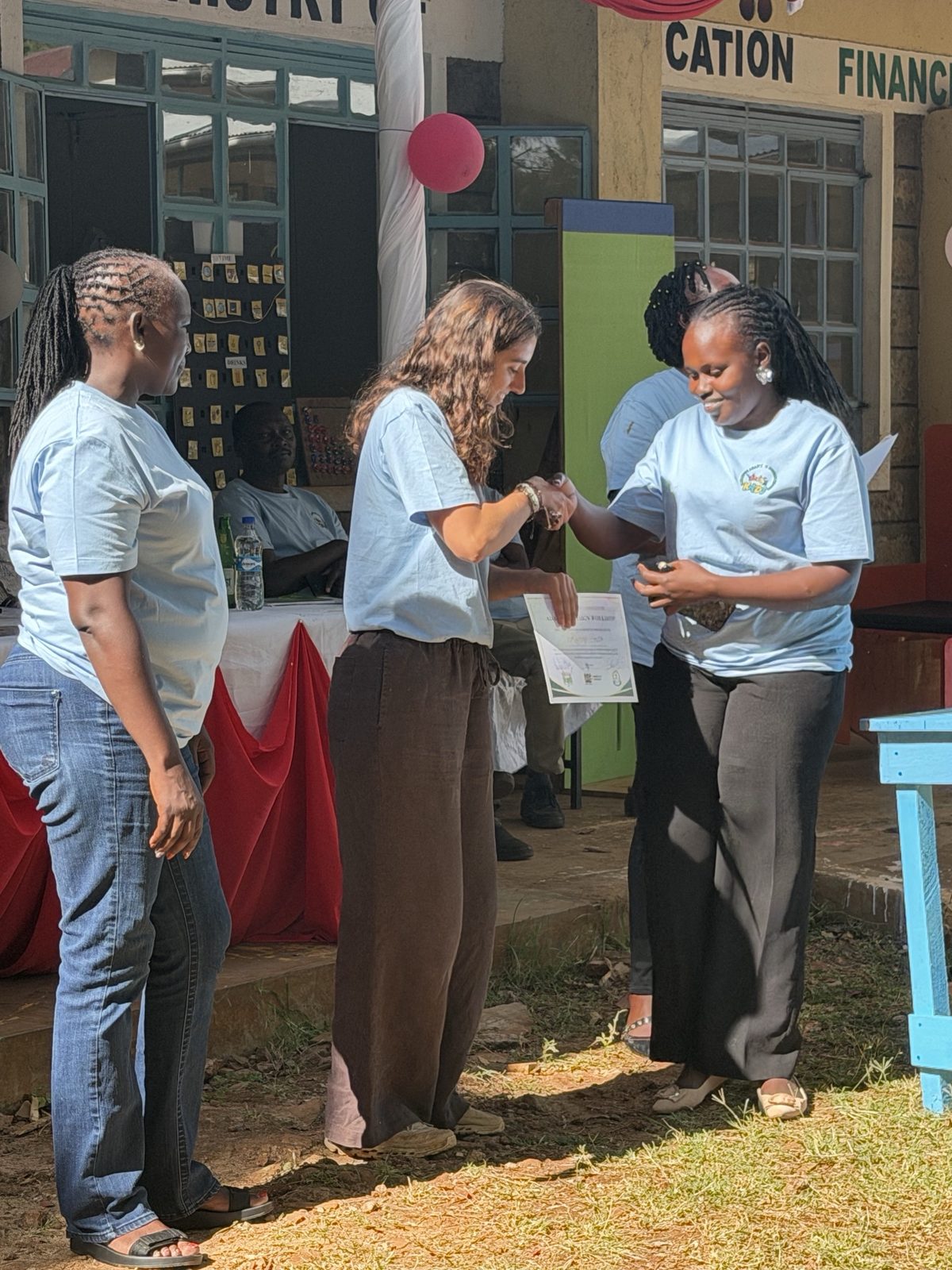
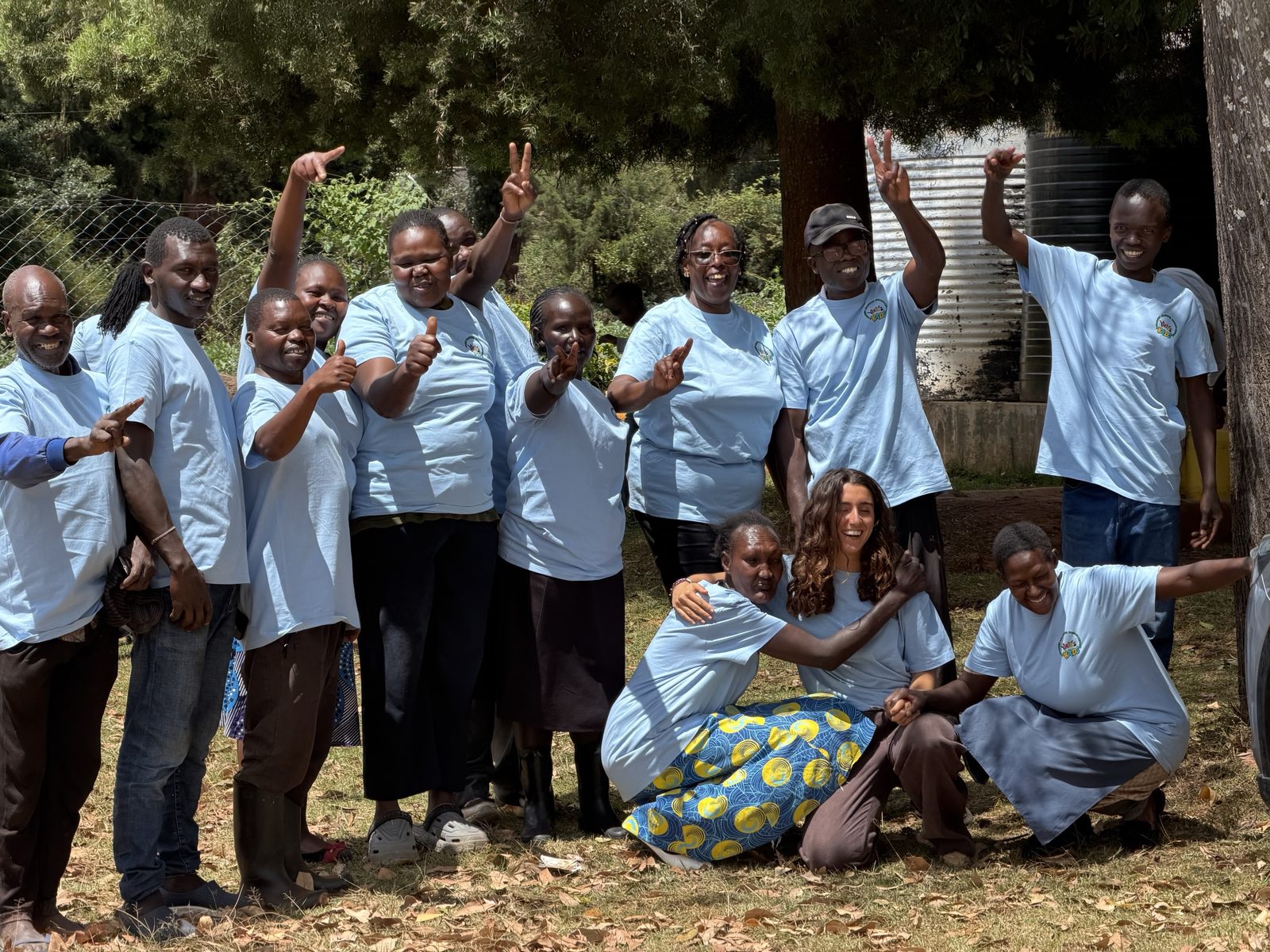
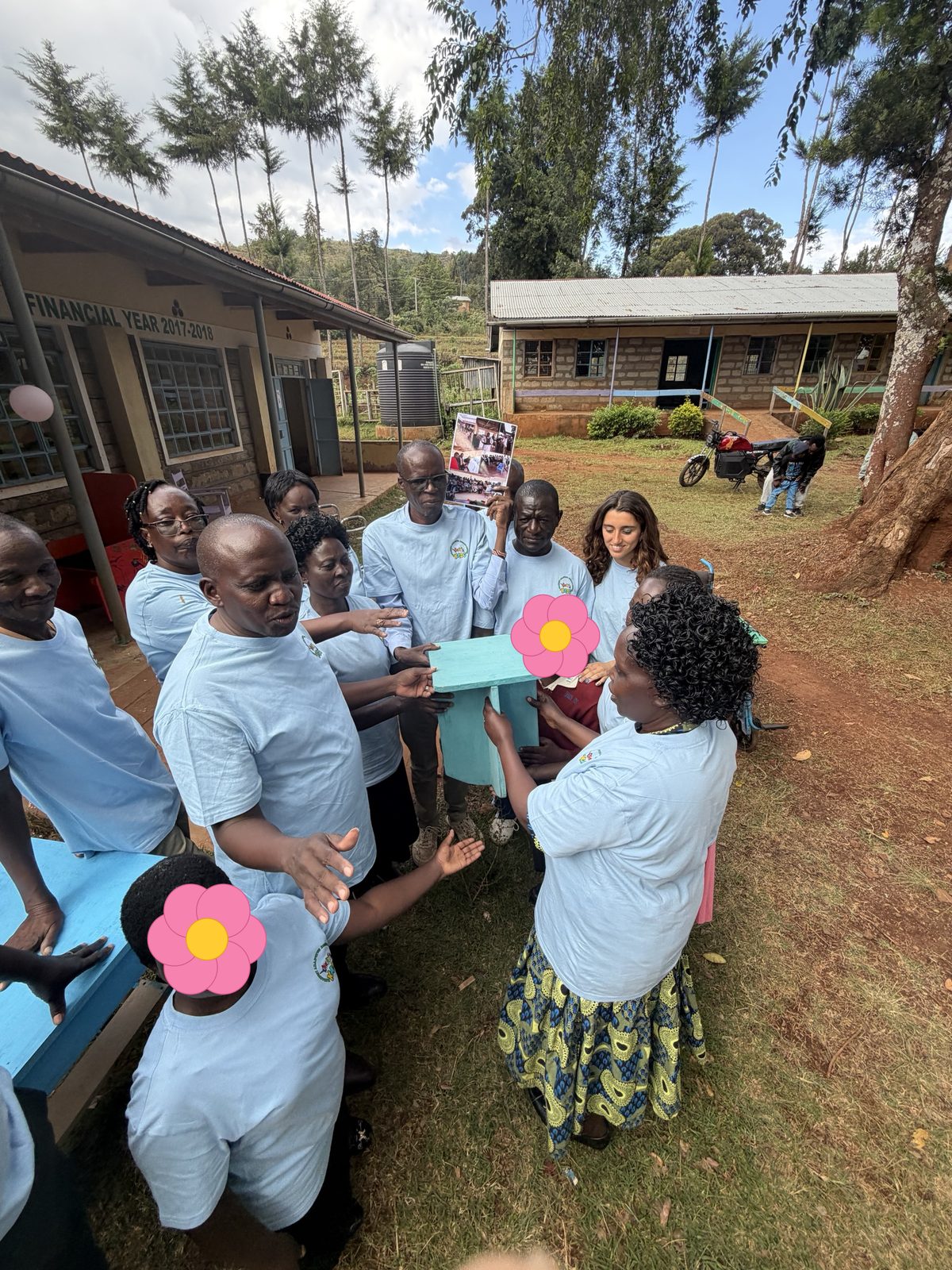
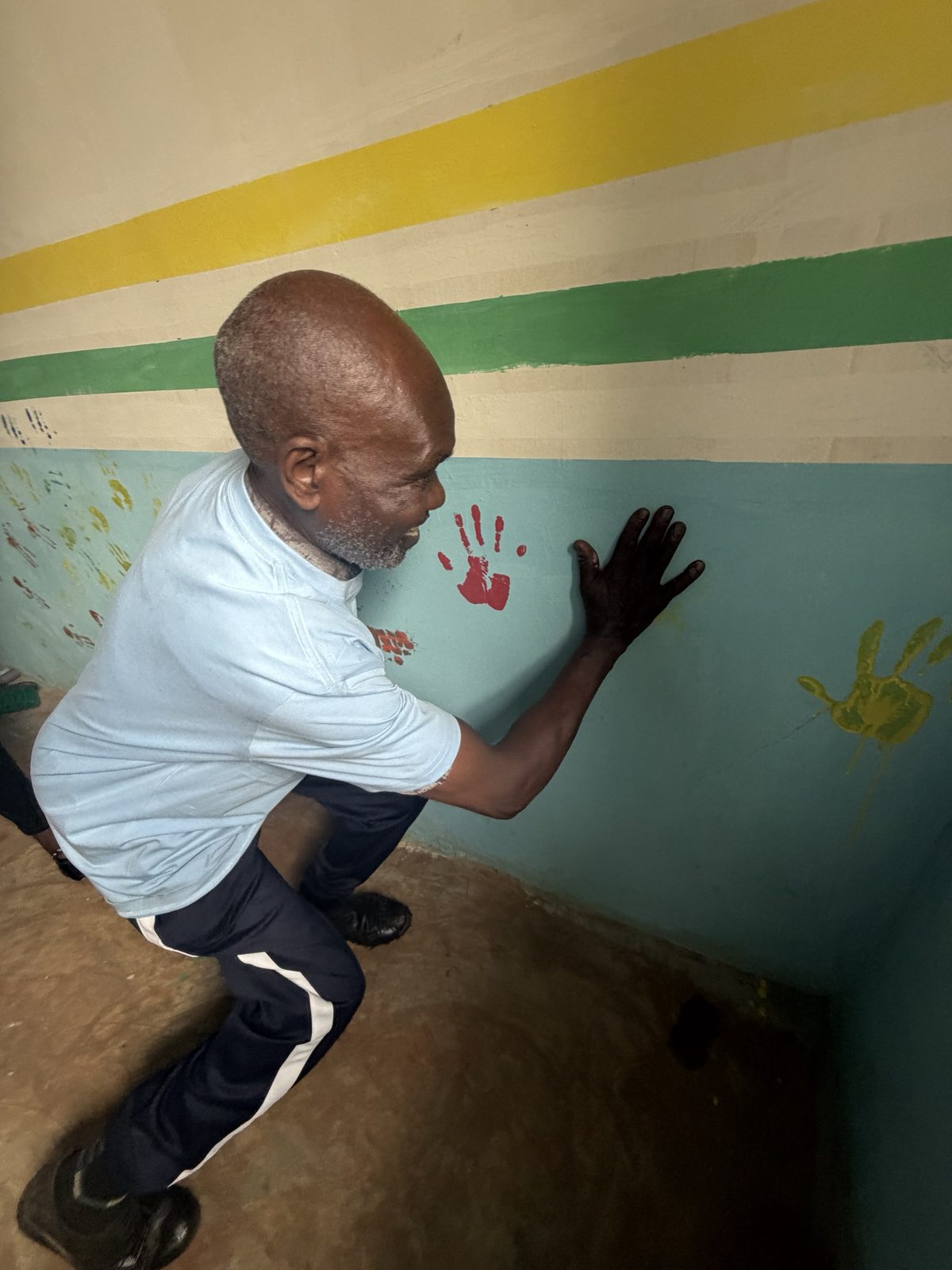
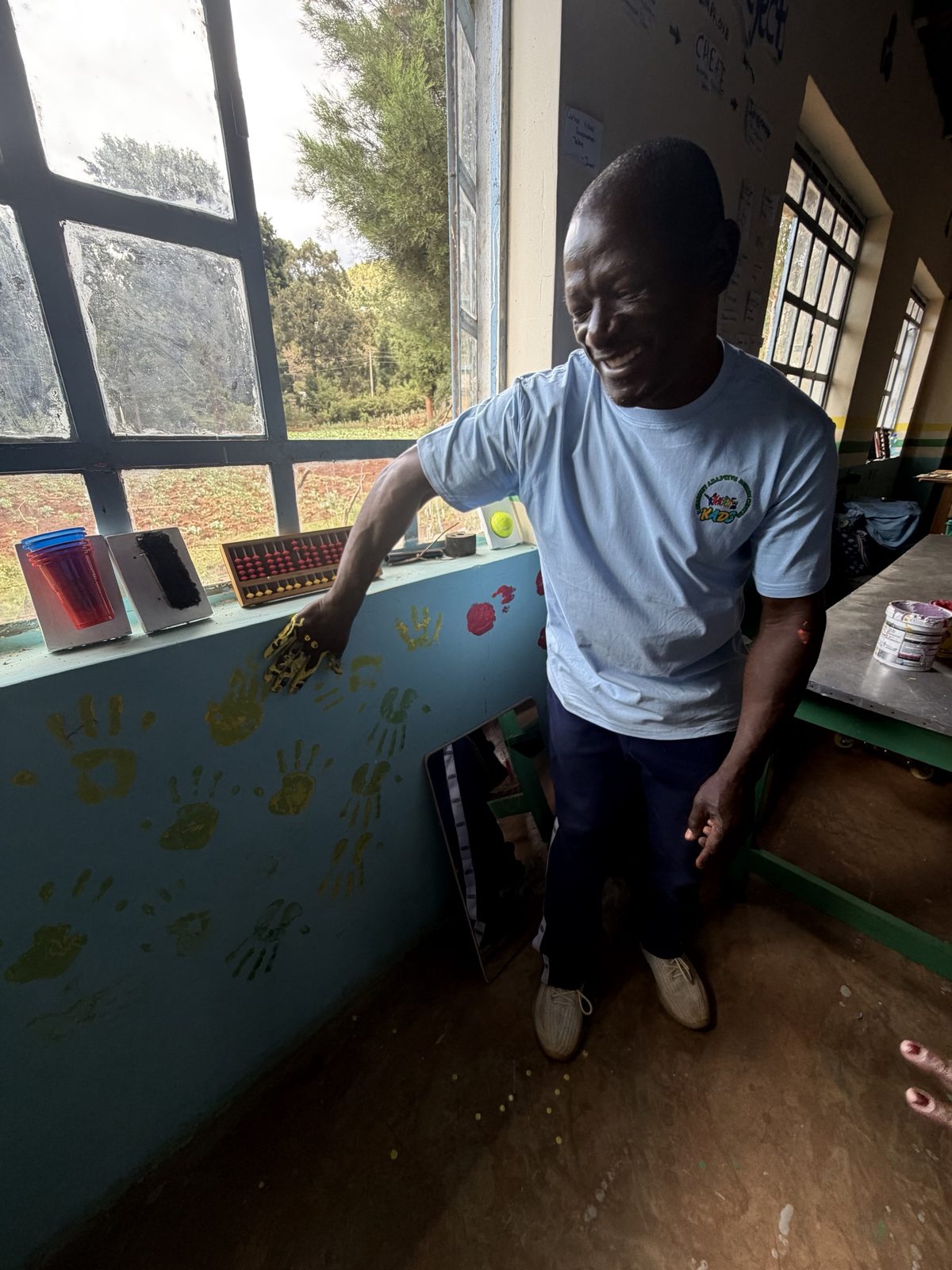
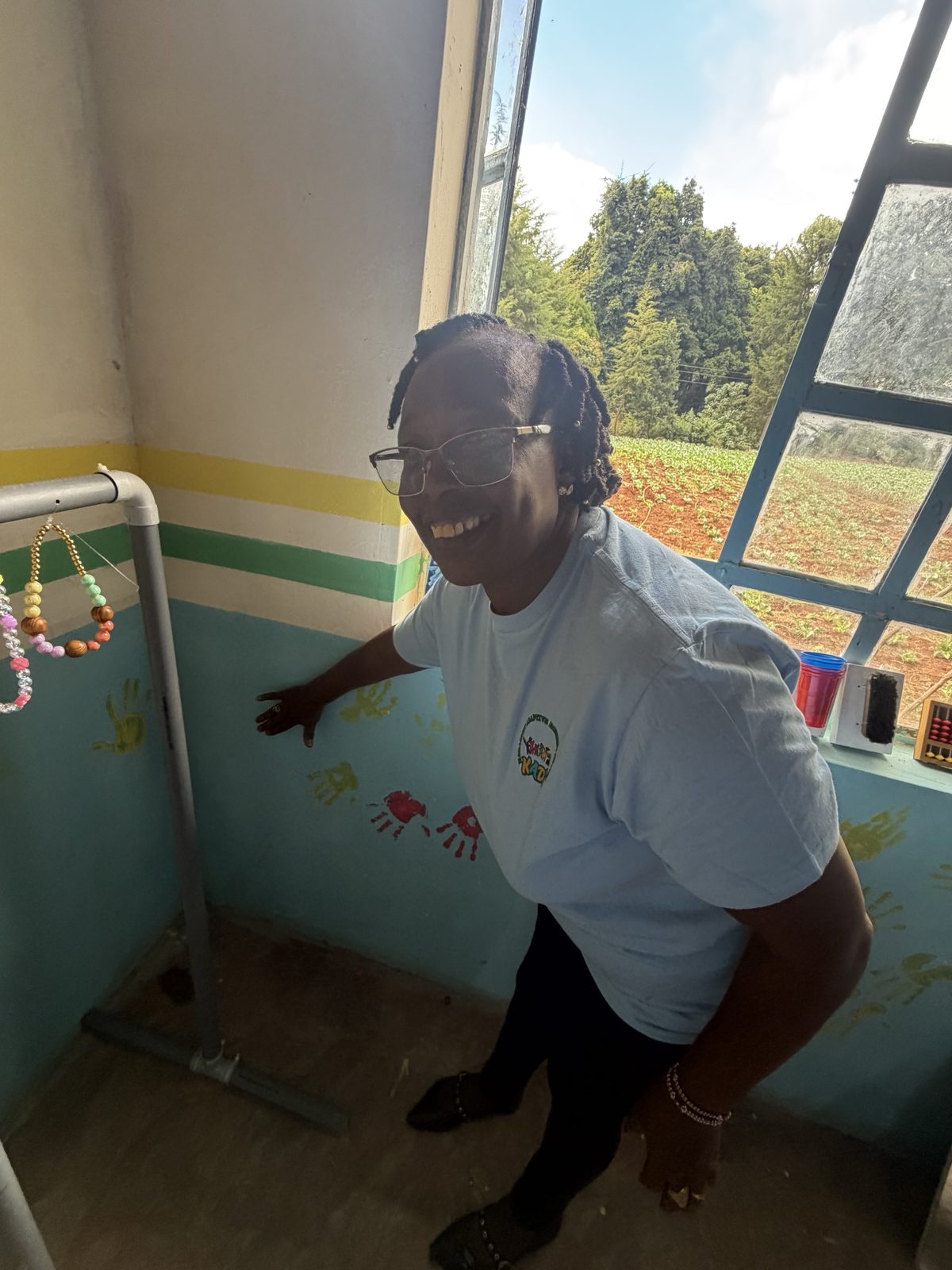
Teachers graduated from the curriculum and received their adaptive design certificates at a ceremony at the school, and I handed the workshop off to two of them, who will keep it running after I leave. To mark the handover, everyone left a handprint on the workshop wall.
Presenting the adaptive design certificates.The graduating class.Handing the workshop off to the two teachers who will run it.Celebrating the handover outside the school.Leaving our handprints on the workshop wall.Adding a handprint under the window.Every teacher left their mark.
Design Thinking
The structured weeks were productive, but I wanted to move teachers quickly from following instructions to solving problems on their own. I interviewed 40 teachers, met with 70 learners, and scoped an individualized project for each teacher and learner. With teachers' limited time, I knew much of the work would fall to me, so I made sure to bring them into the workshop at the critical points: ideating, designing, and making the first prototype together.
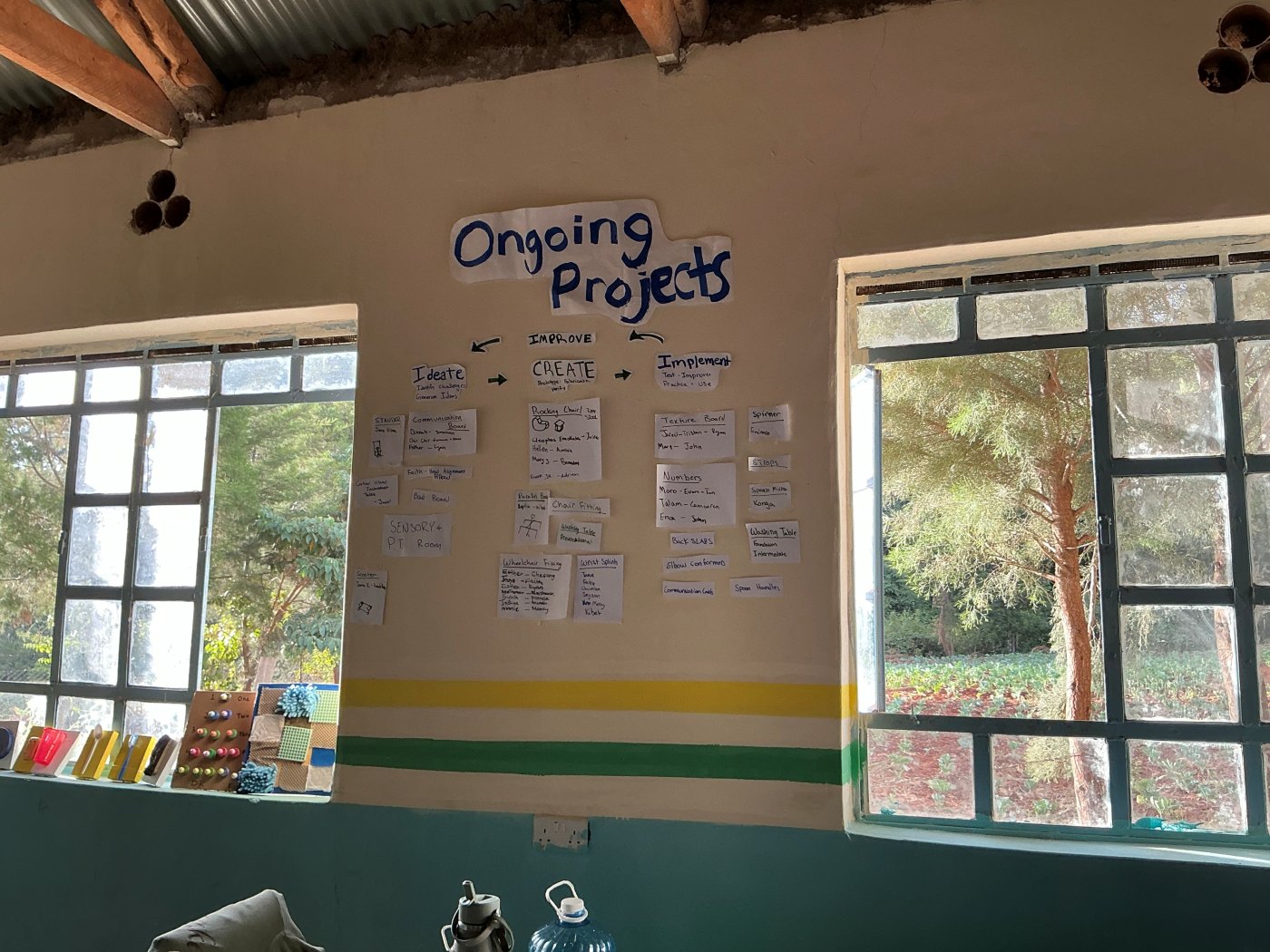
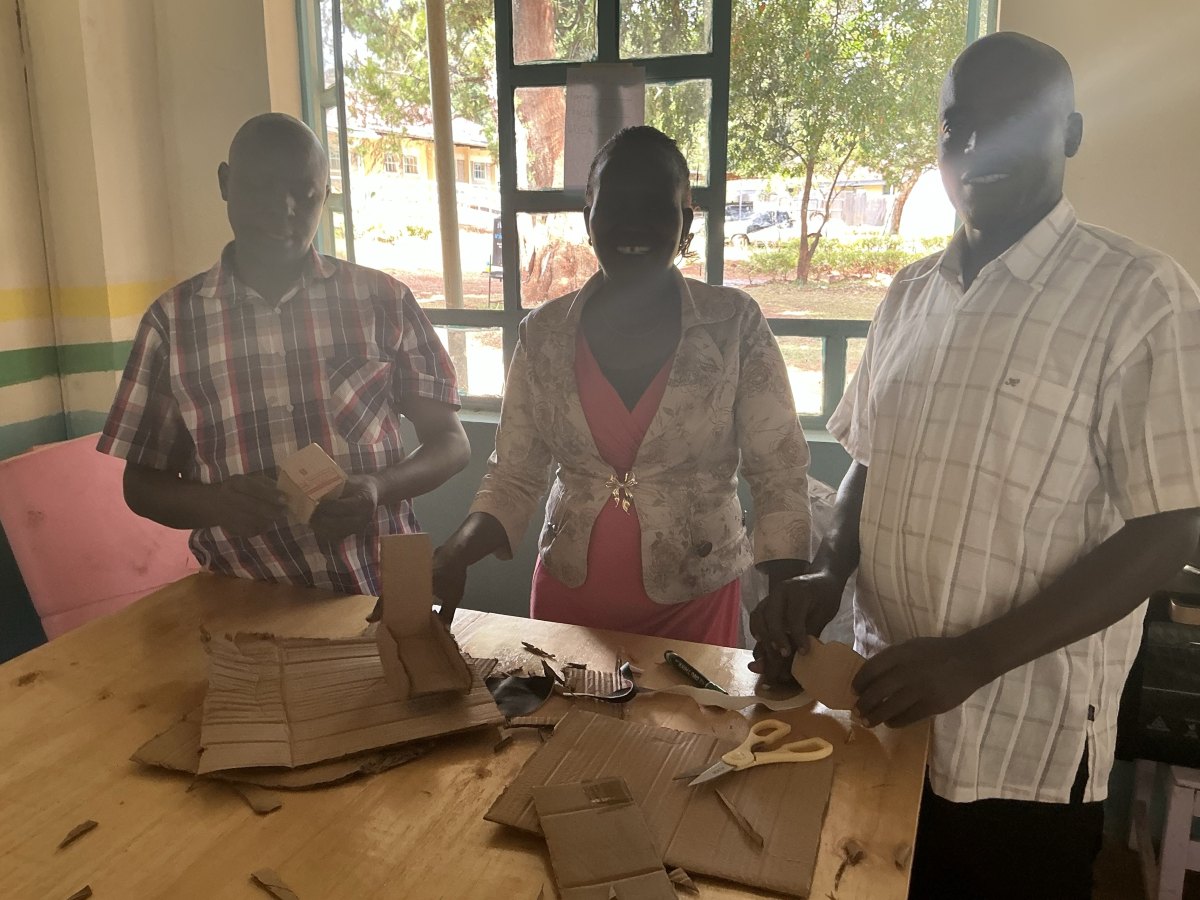
With a curriculum taught entirely through doing, I needed a way to teach design thinking implicitly. I put a simplified design cycle up on the wall and tracked every project through its stages, and for the more complex builds, like the rocking chair, I taught the teachers to make small models first.
The Ongoing Projects wall tracks every project through Ideate, Create, Implement and Improve.Teachers making cardboard mockups of their ideas before building.
How-To Guides
Illustrated step-by-step guides I made so anyone in the workshop can build these devices, whatever their experience with tools. Hover over a two-page guide to flip it, or click any guide to open it full size.
Tactile Cue Cards
Custom Handles
Sensory Play Stand
Wheelchair Strap
Stories
With Eddah and a batch of finished braces.
Learning from Orthopedic Technologist Eddah
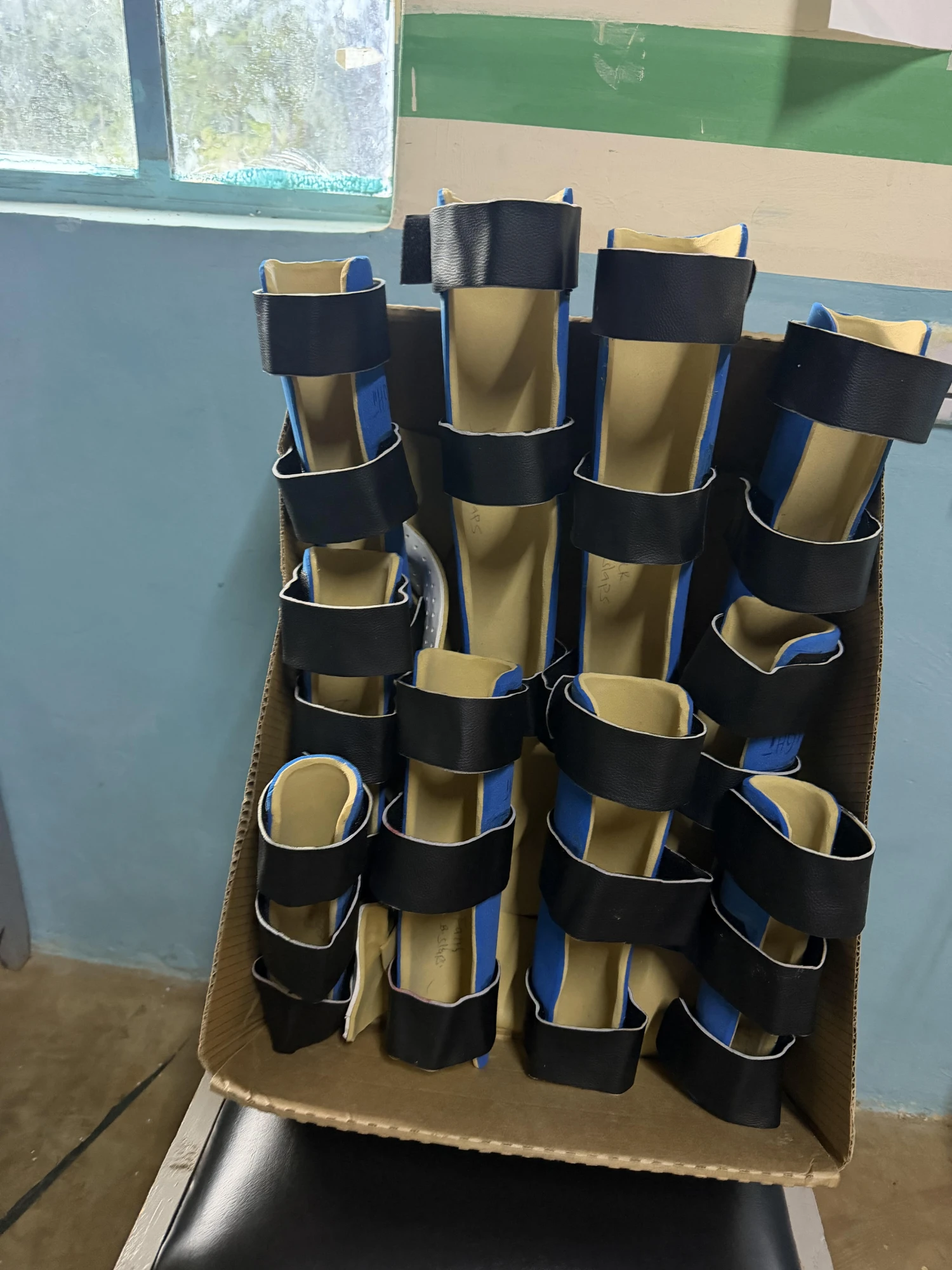
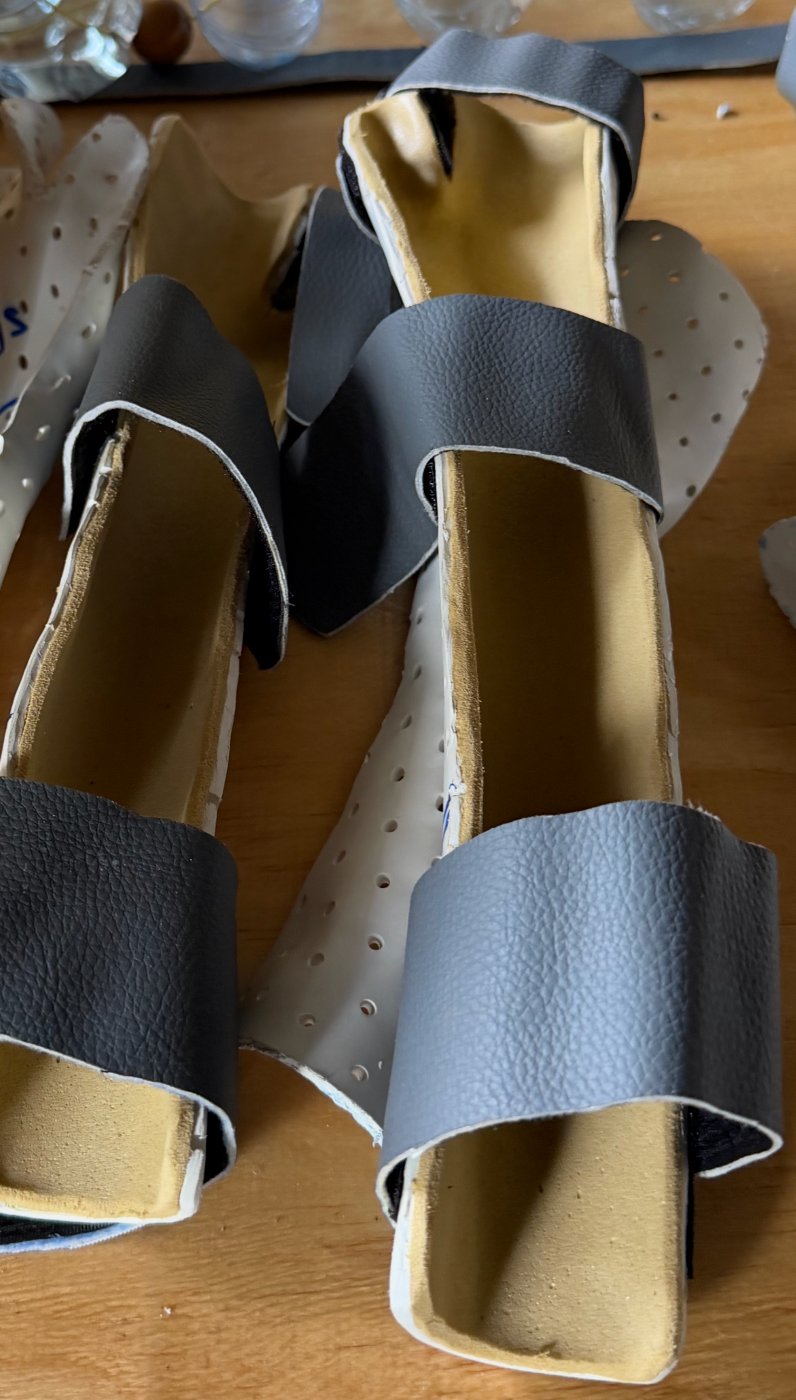
Alongside the teachers, my own project with the county's occupational therapists has been making affordable PVC-pipe braces, backslabs and elbow conformers, for learners whose muscle contractures make it hard to extend their knees and elbows while they sleep. I was lucky to meet Eddah, an orthopedic technologist who agreed to train me in making them, and they're nearly done. Next, I want to bring in the learners' caregivers.
Celebrating our girl eating lunch by herself!
Eating independently
Three learners who couldn't eat on their own before can now feed themselves with built-up spoon handles.
BeforeAfter
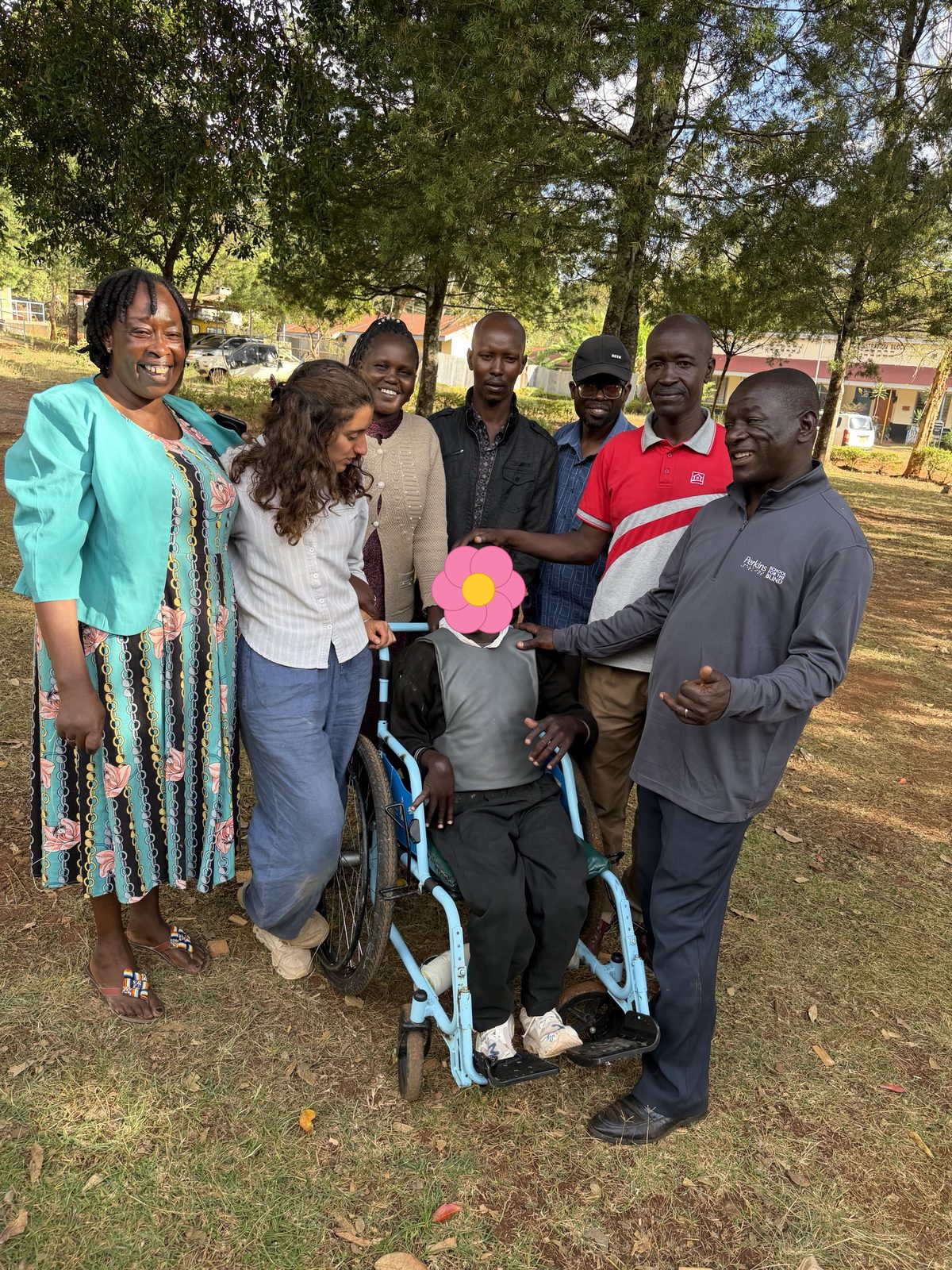
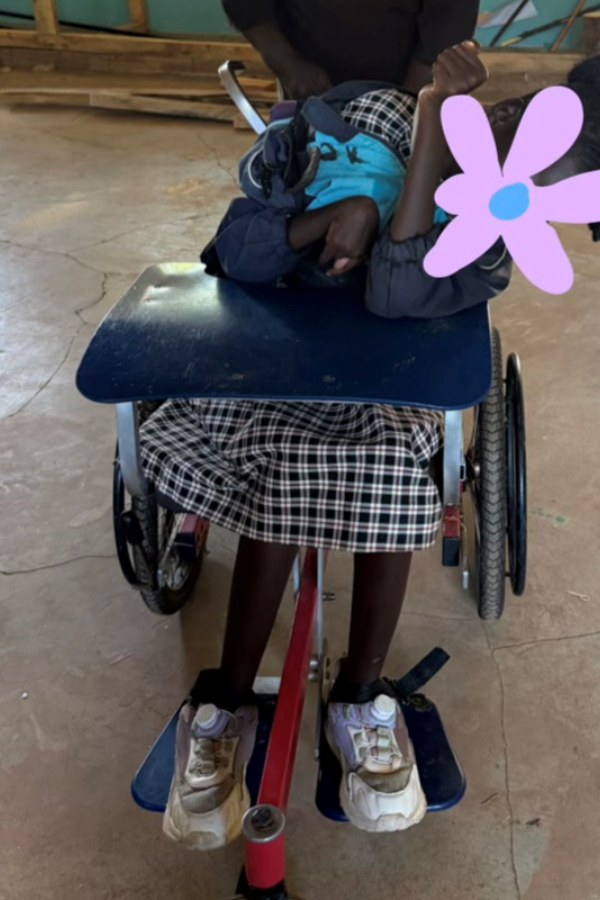
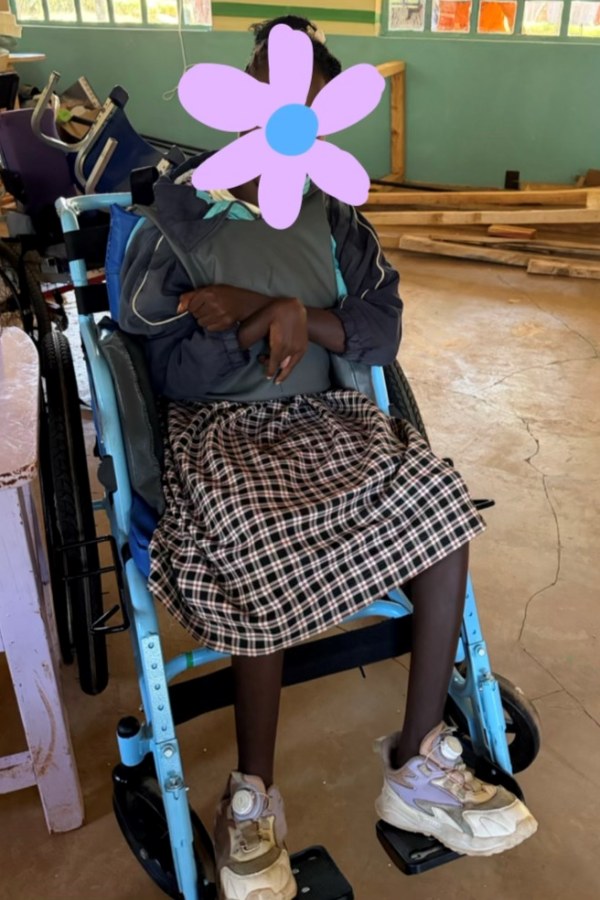
Wheelchair fitting
Using custom cushions and wheelchair harnesses to ensure proper wheelchair fit and support. Previously, wheelchairs were used as is, and with no harnesses available, bed sheets were used to tie learners to their chairs.
Female empowerment through tools
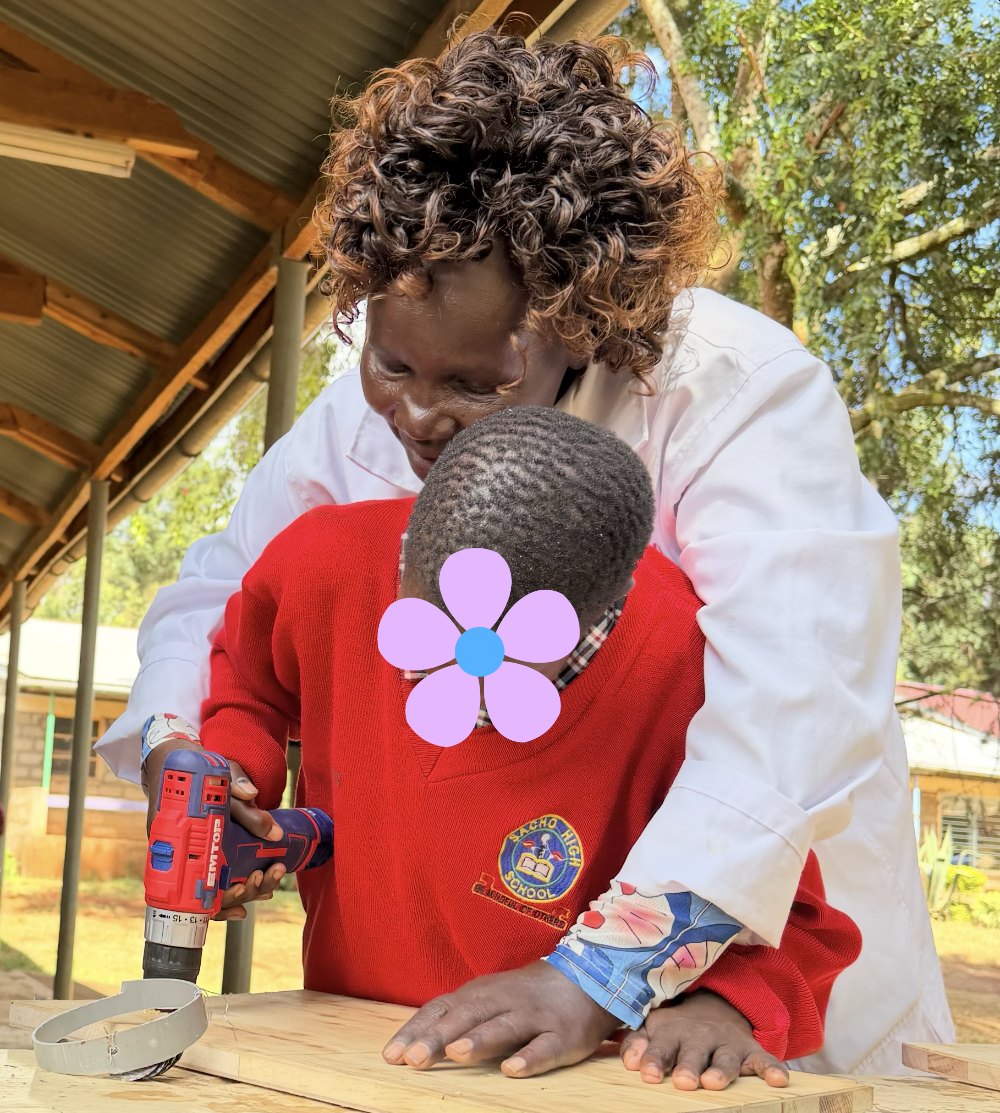
When I collected feedback on the workshop, many of the women at the school said they felt empowered by learning shop skills and using power tools, skills that are locally reserved for men. They told me they enjoyed watching me do these things, and now feel comfortable doing something they couldn't do before. Something I hear the women teachers say a lot: "Yes! We can do it!"
It goes the other way too: it's been exciting to watch the men learn to sew, a skill locally reserved for women.
My favorite moment of the whole workshop came on the very first day, when the women visibly flipped from recoiling at the sight of the circular saw to joy and confidence after making a few cuts for our tactile cue card project.
Using a power saw for the first time.A teacher, a few weeks in, teaching her learner how to use a power drill.
Project Portfolio
Tactile cue cards
Spoon & toothbrush handles
Sensory curtains
Wheelchair straps
Foot straps
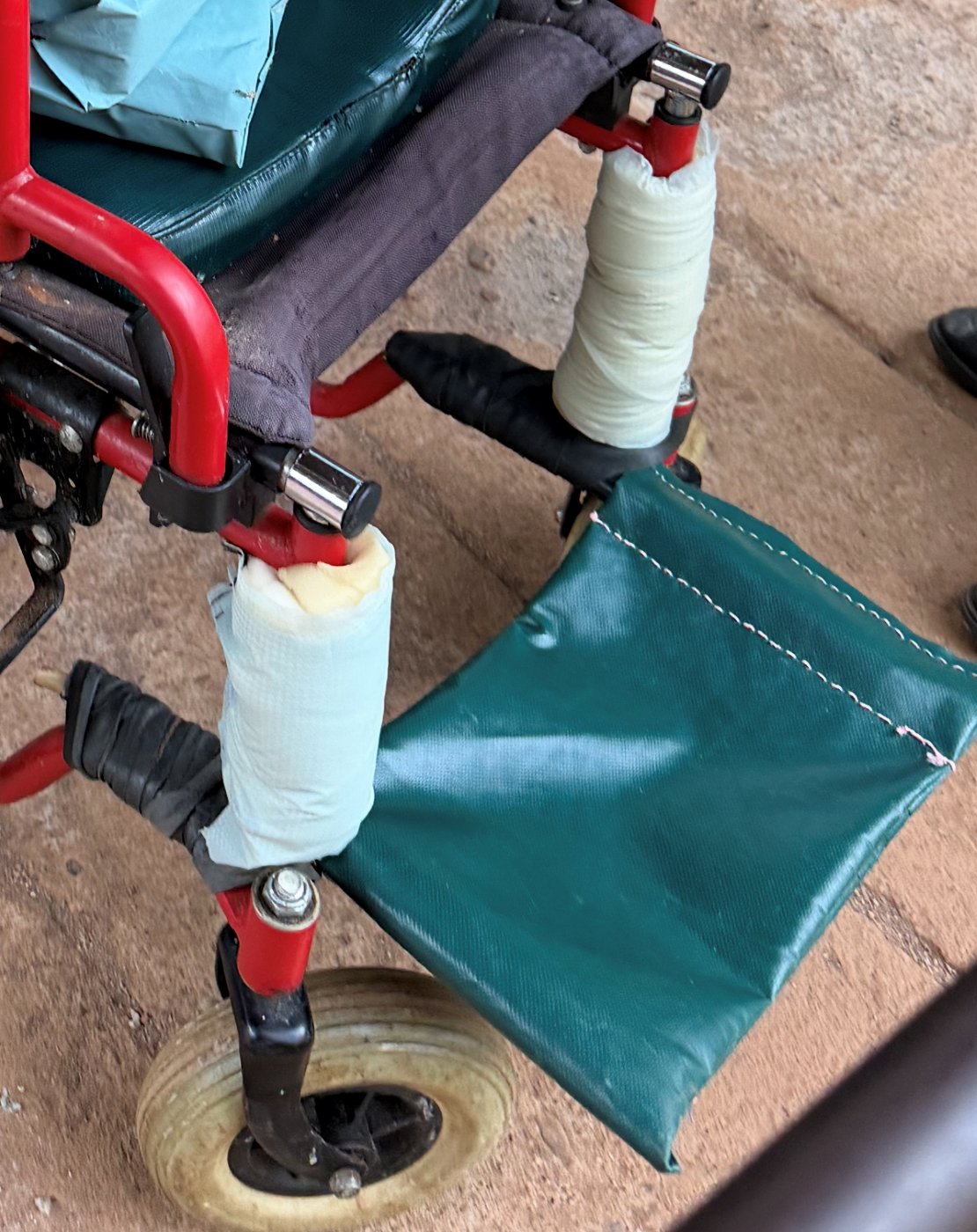
Soft footrest
Pommel / abductor
Wheelchair table
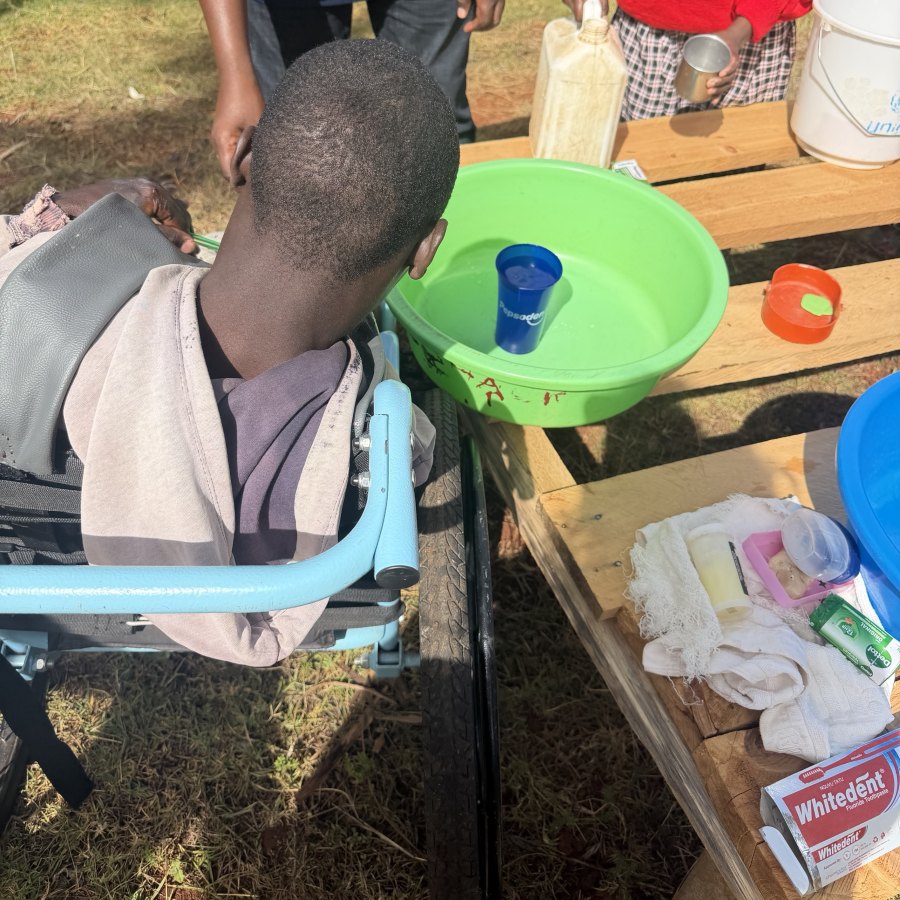
Washing table
Brings daily activities like washing and brushing teeth, once done on the ground, up to wheelchair height.
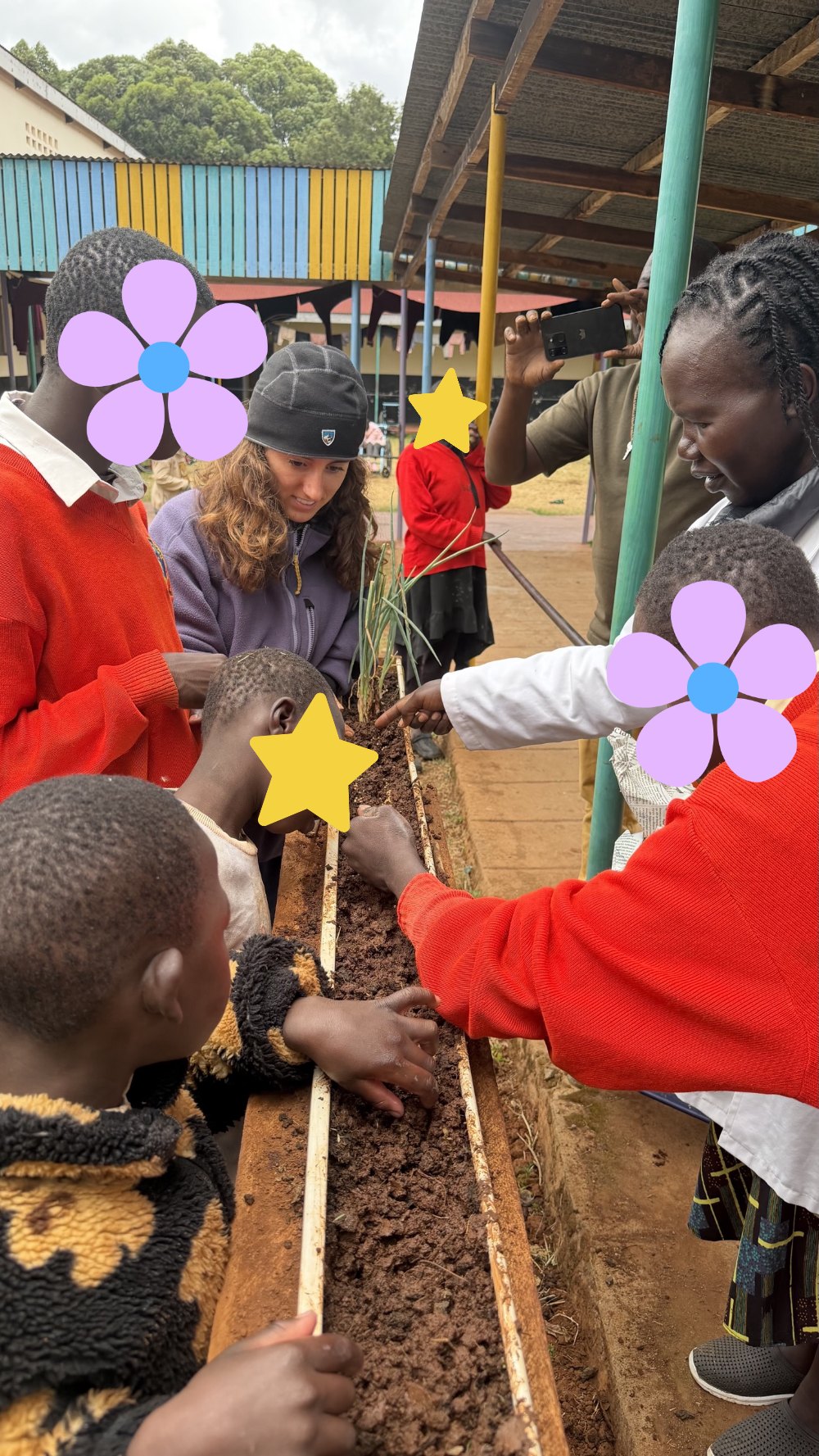
Accessible garden bed
Made from a reclaimed rain gutter.
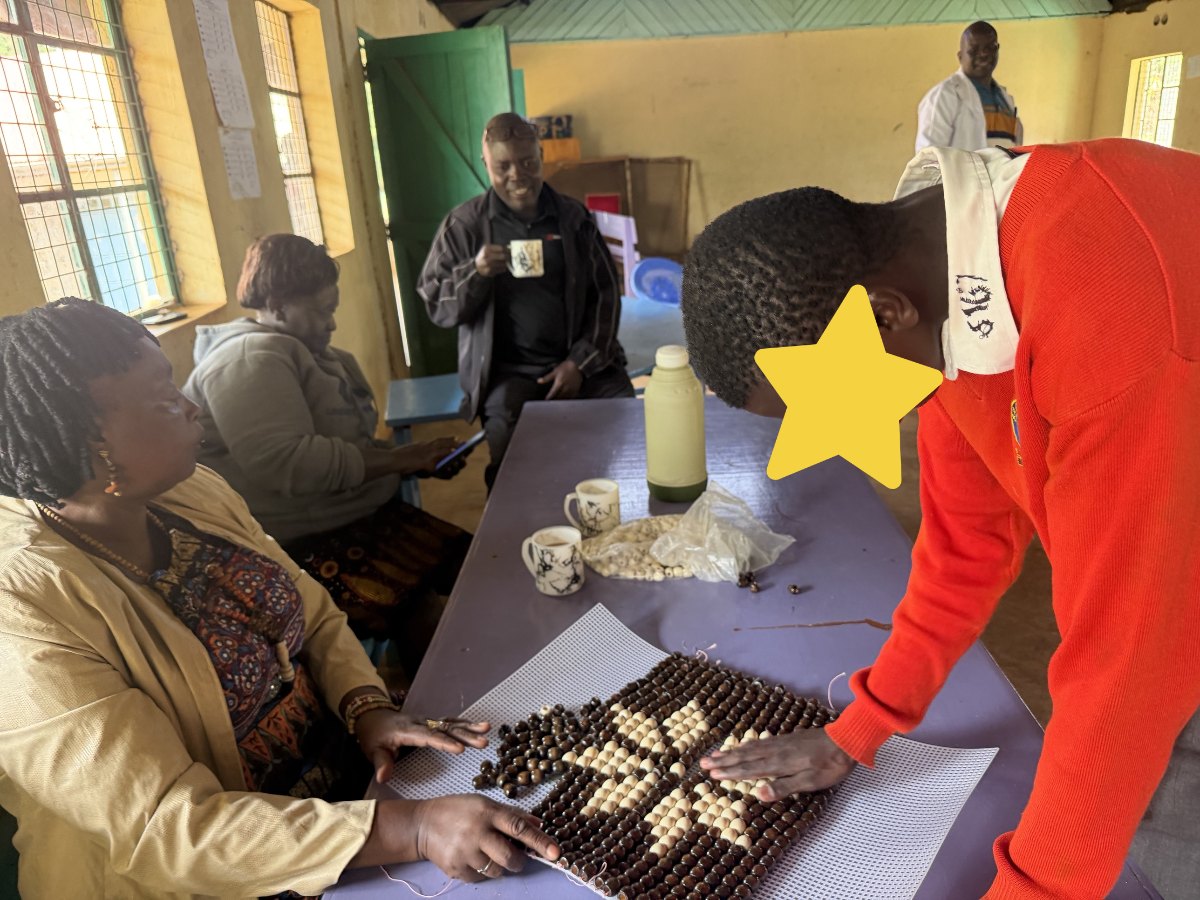
Beaded sensory / massage mat
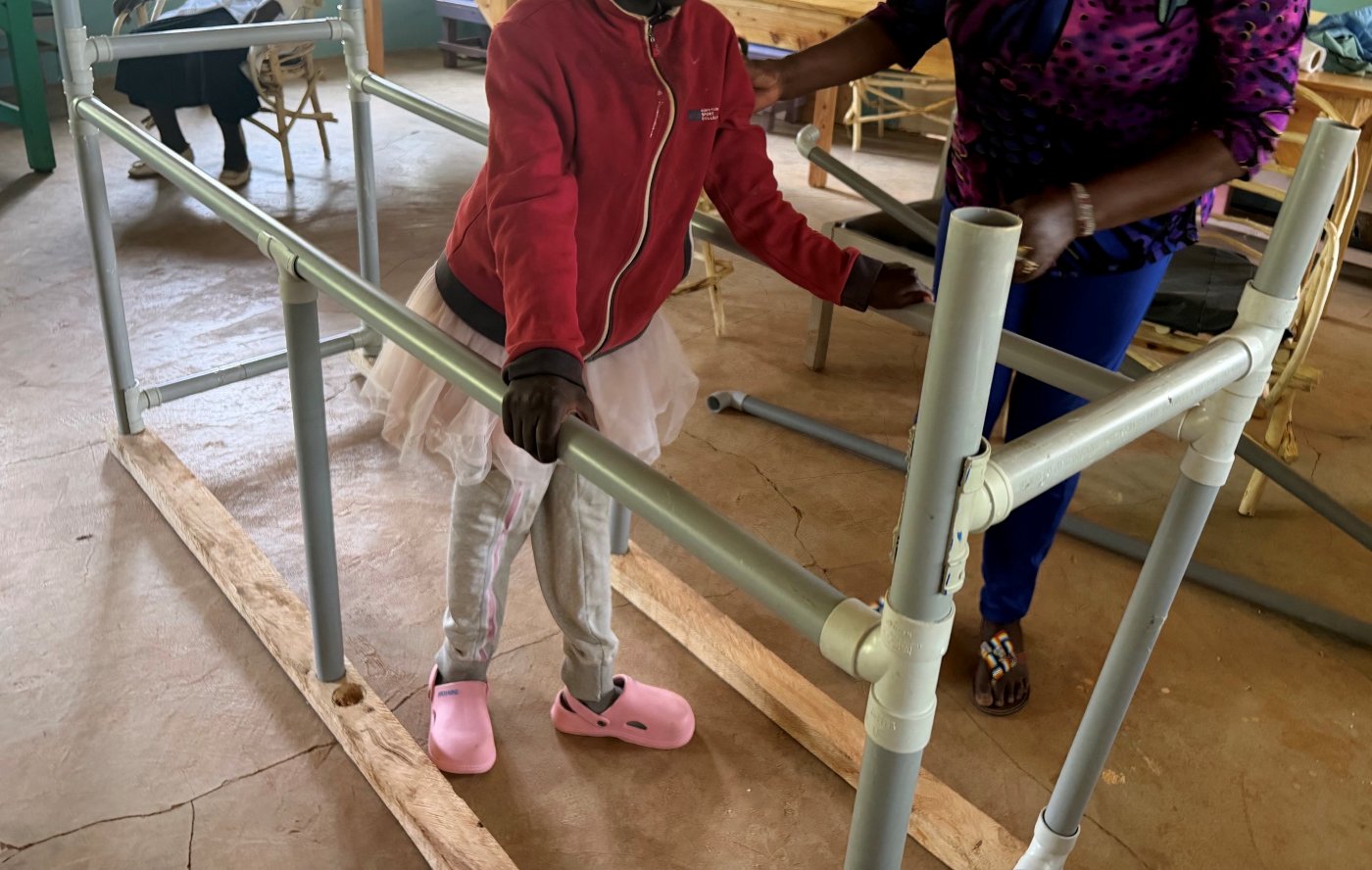
Parallel bars
Scooter board
For a learner who fears walking but has use of his legs.
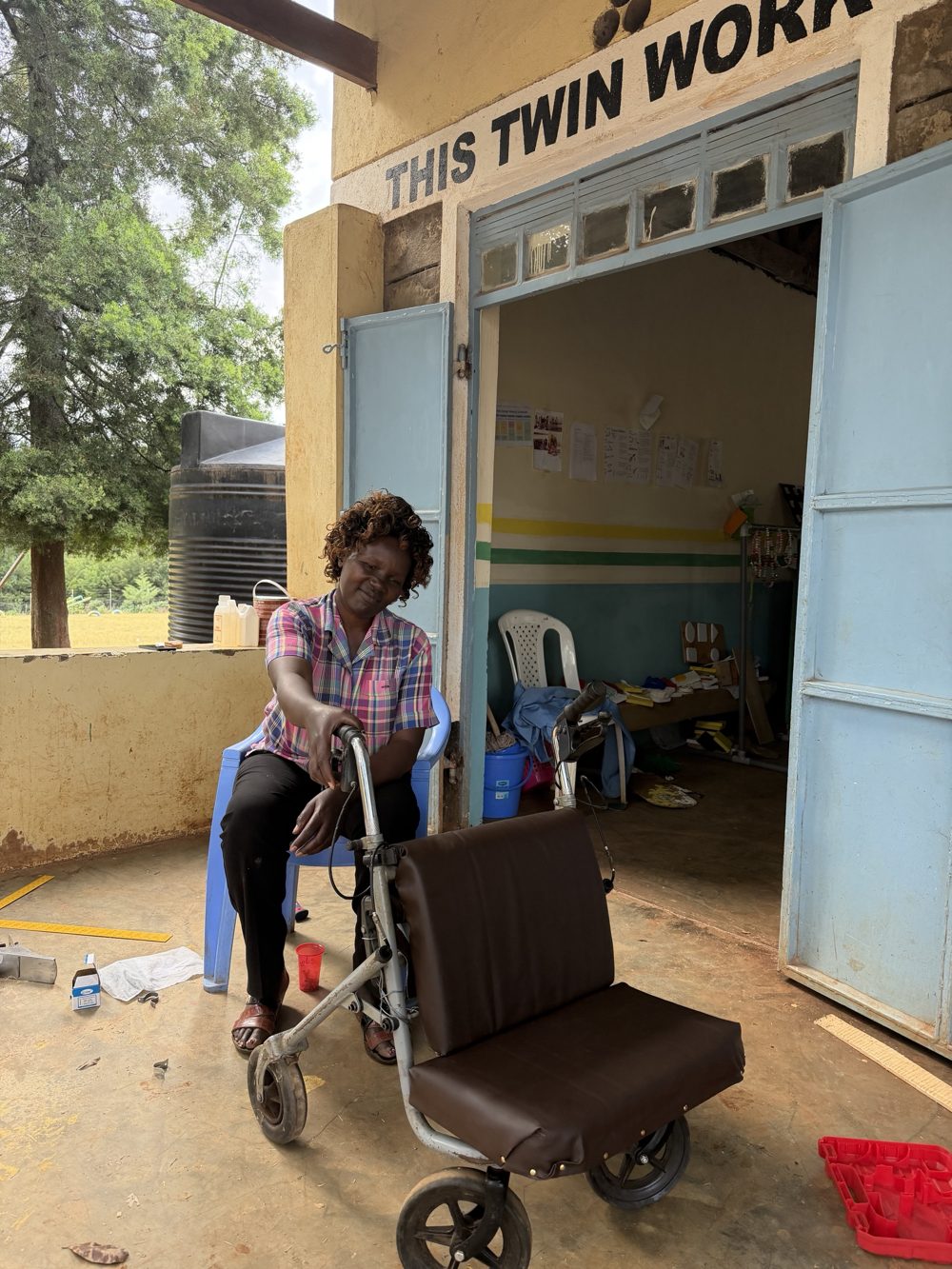
Walker scooter
A walker turned into a padded seat, so a boy with epilepsy who fears walking can sit securely and push along with his legs.
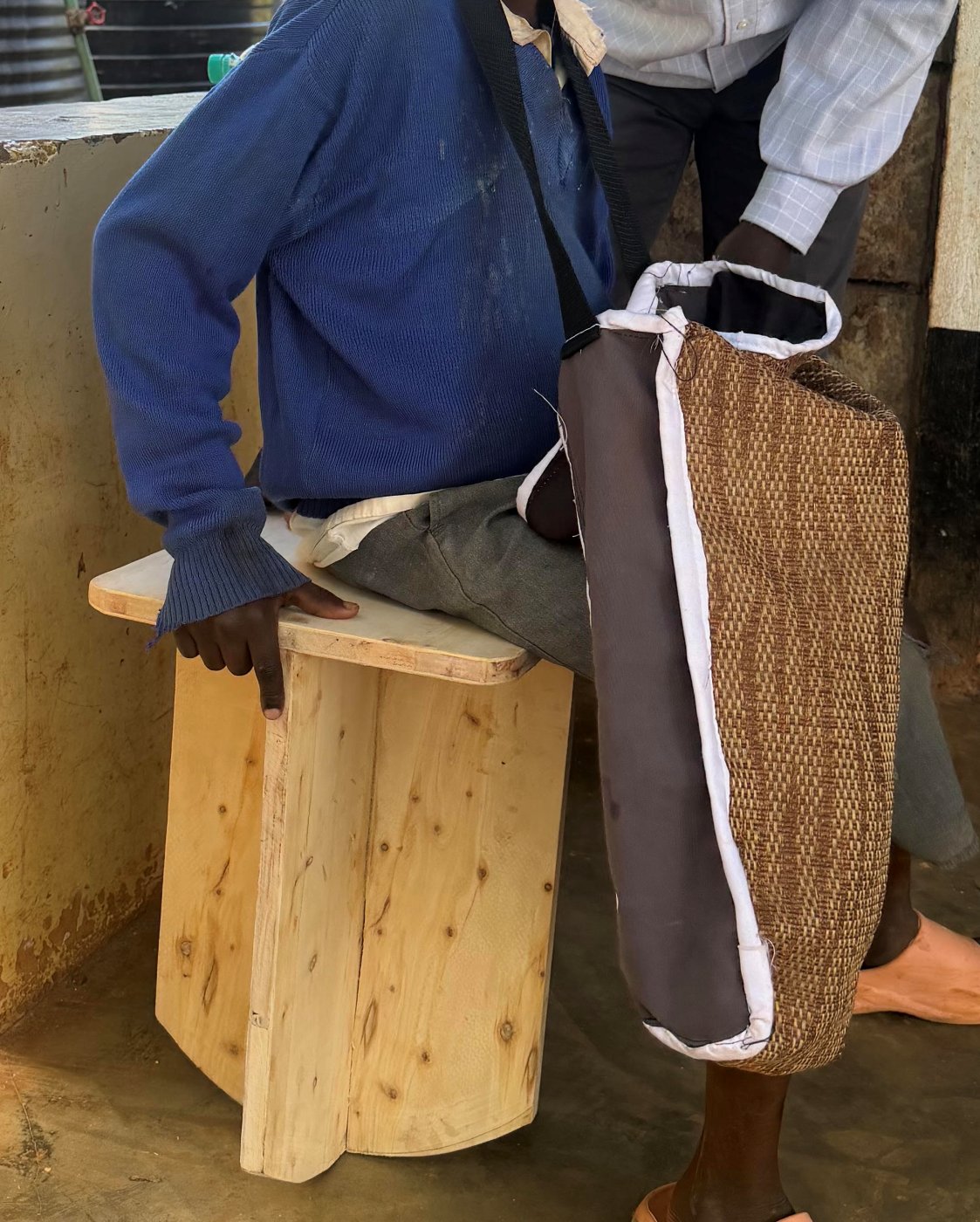
Tippy stool
Rocking chair
Two-person rocking chair
Back-to-back rocker, so a learner can rock alongside a teacher or friend.
Padded cypress chair
Alternative seating for learners who use wheelchairs.
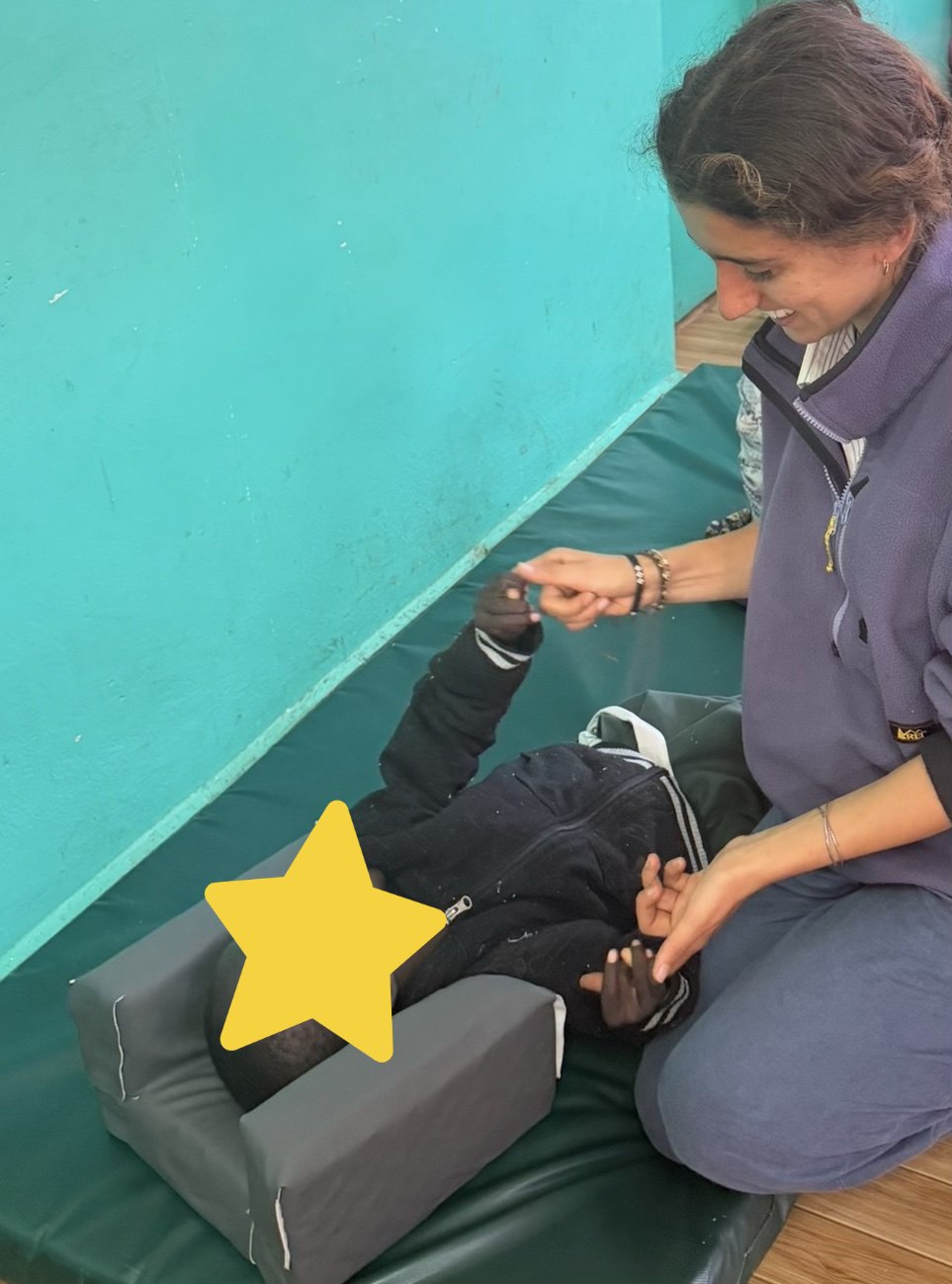
Neck alignment pillow
Keeps a learner's head aligned while lying down.
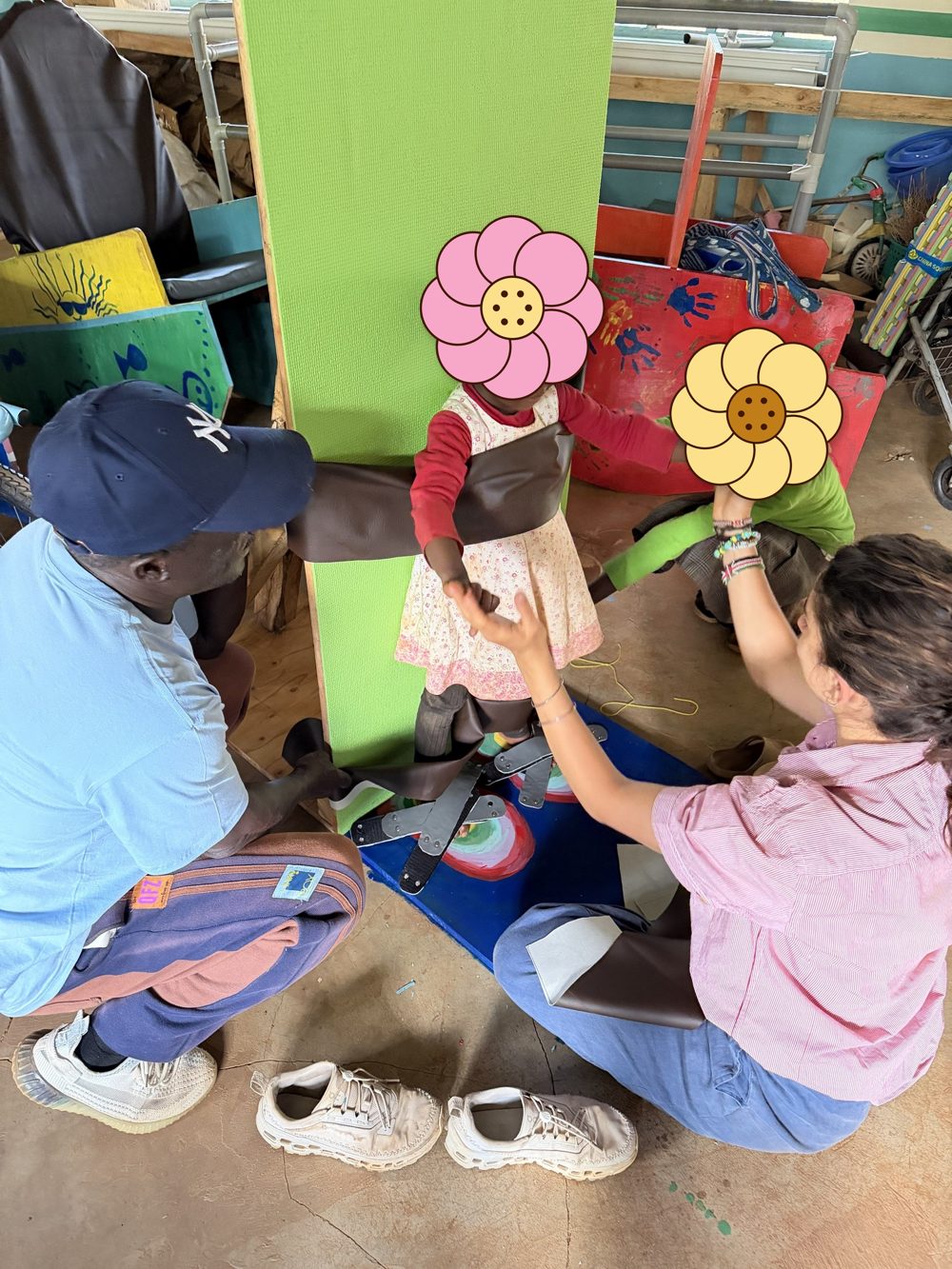
Standing board
Padded upright with chest, knee and foot straps, so learners who can't stand alone can spend time upright.
Elbow conformers & backslabs
Orthoplast wrist brace
For wrist drop caused by nerve palsy.
Dual elbow conformer & hand splint
For muscle contracture.
Clenched fist block
Mermaid brace
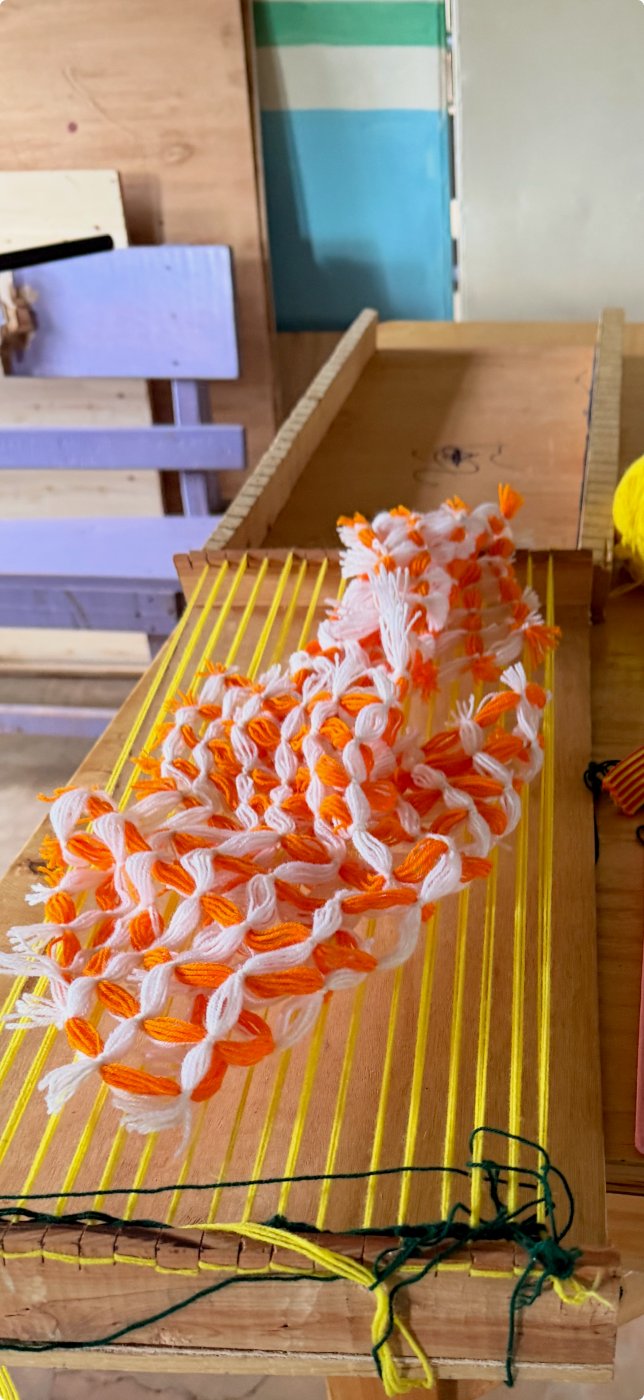
Loom
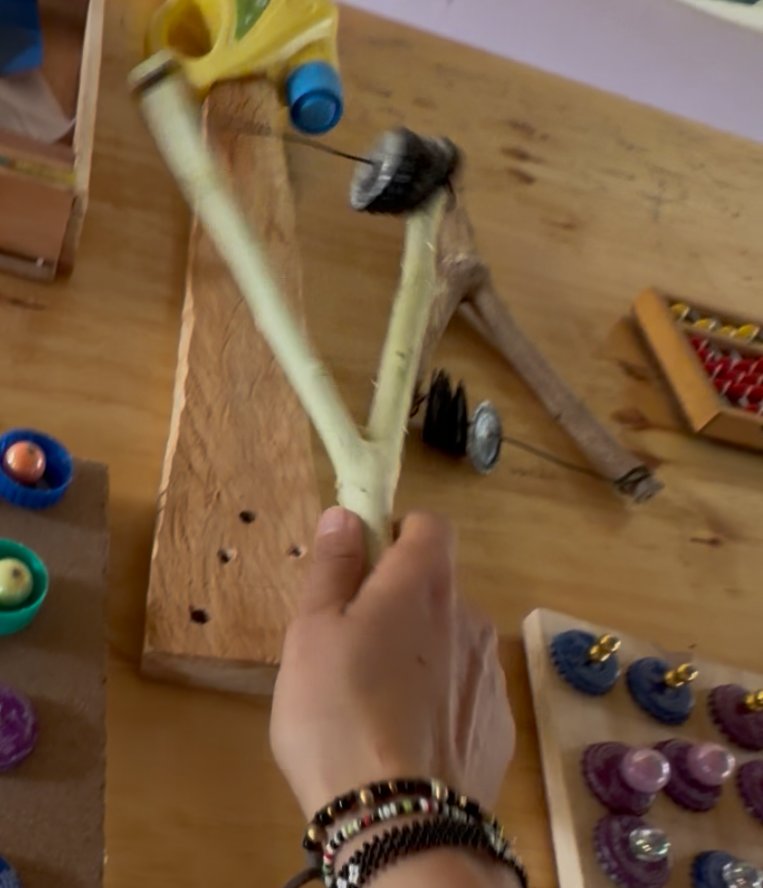
Shakers
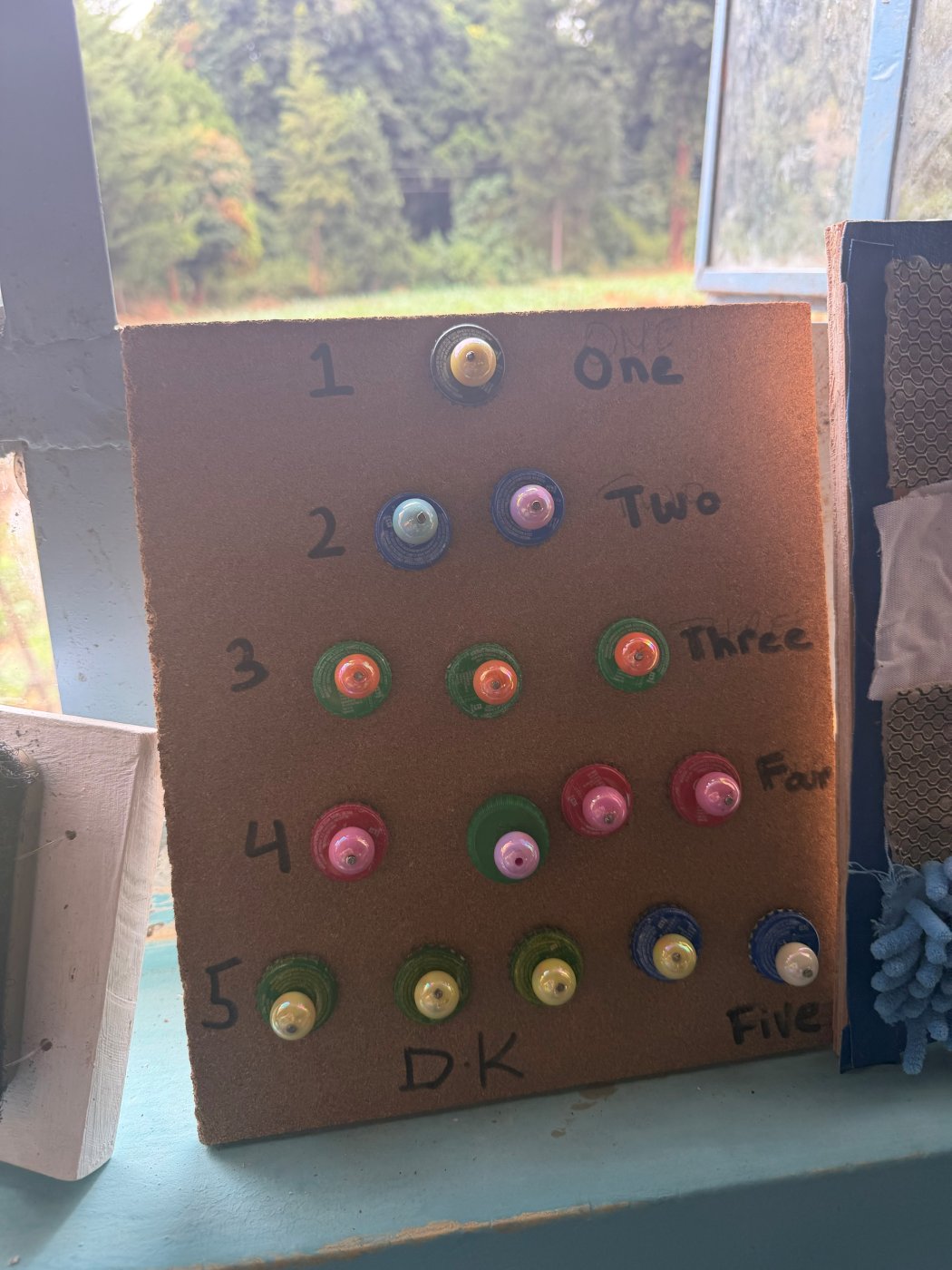
Learning numbers
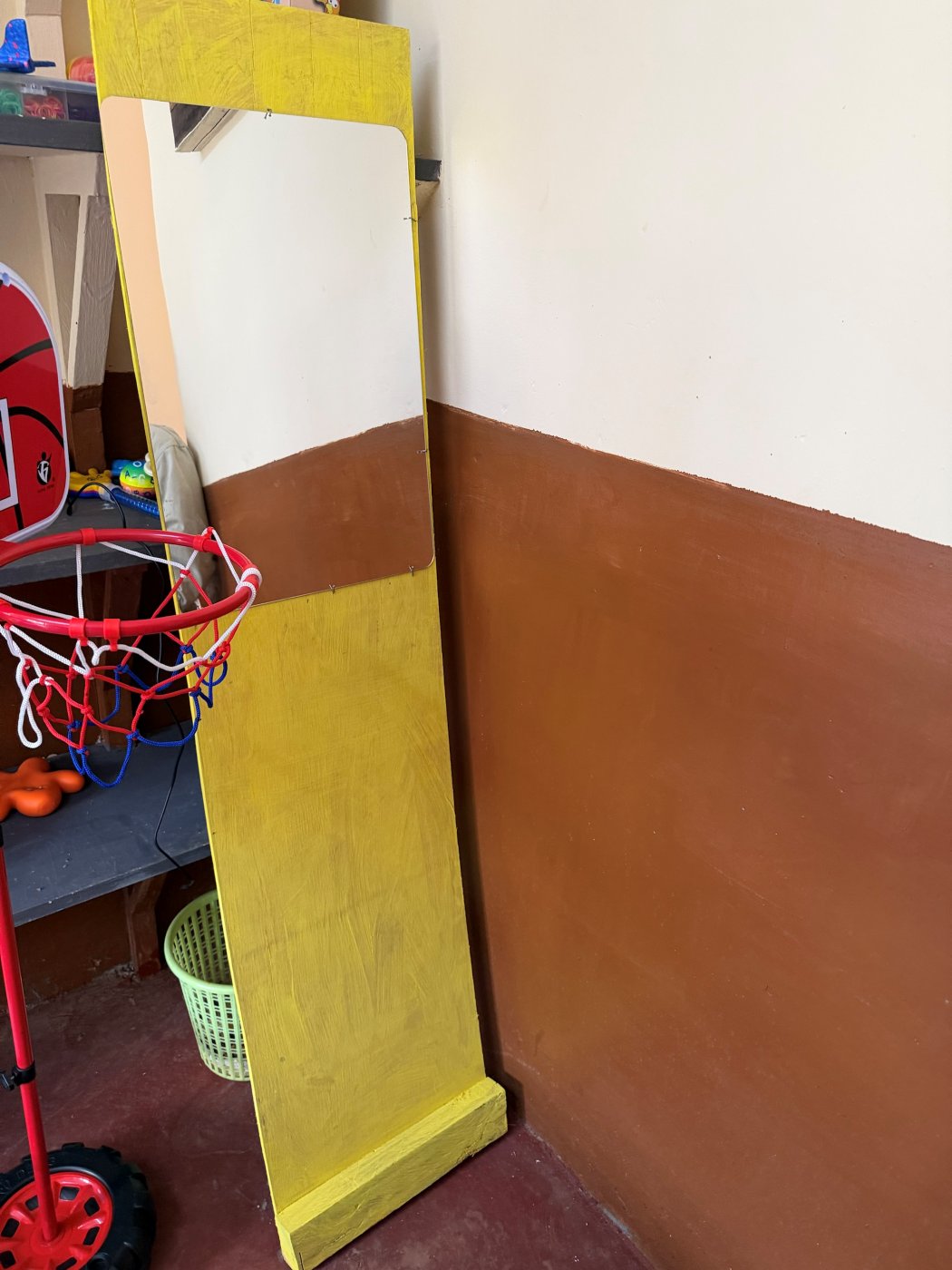
Speech mirror
Communication board
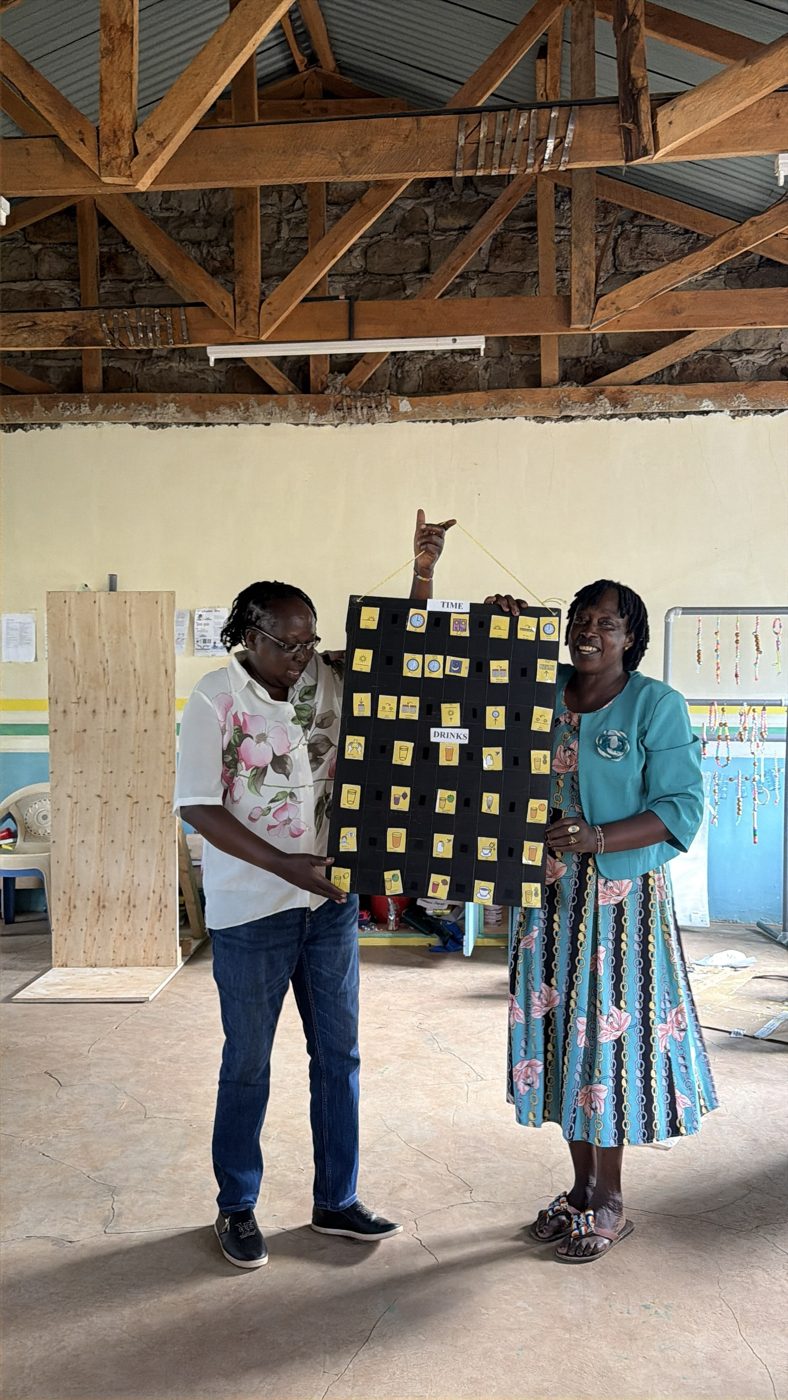
Picture symbol cards for time and drinks, so learners can point to make choices.
Fine motor fidget board
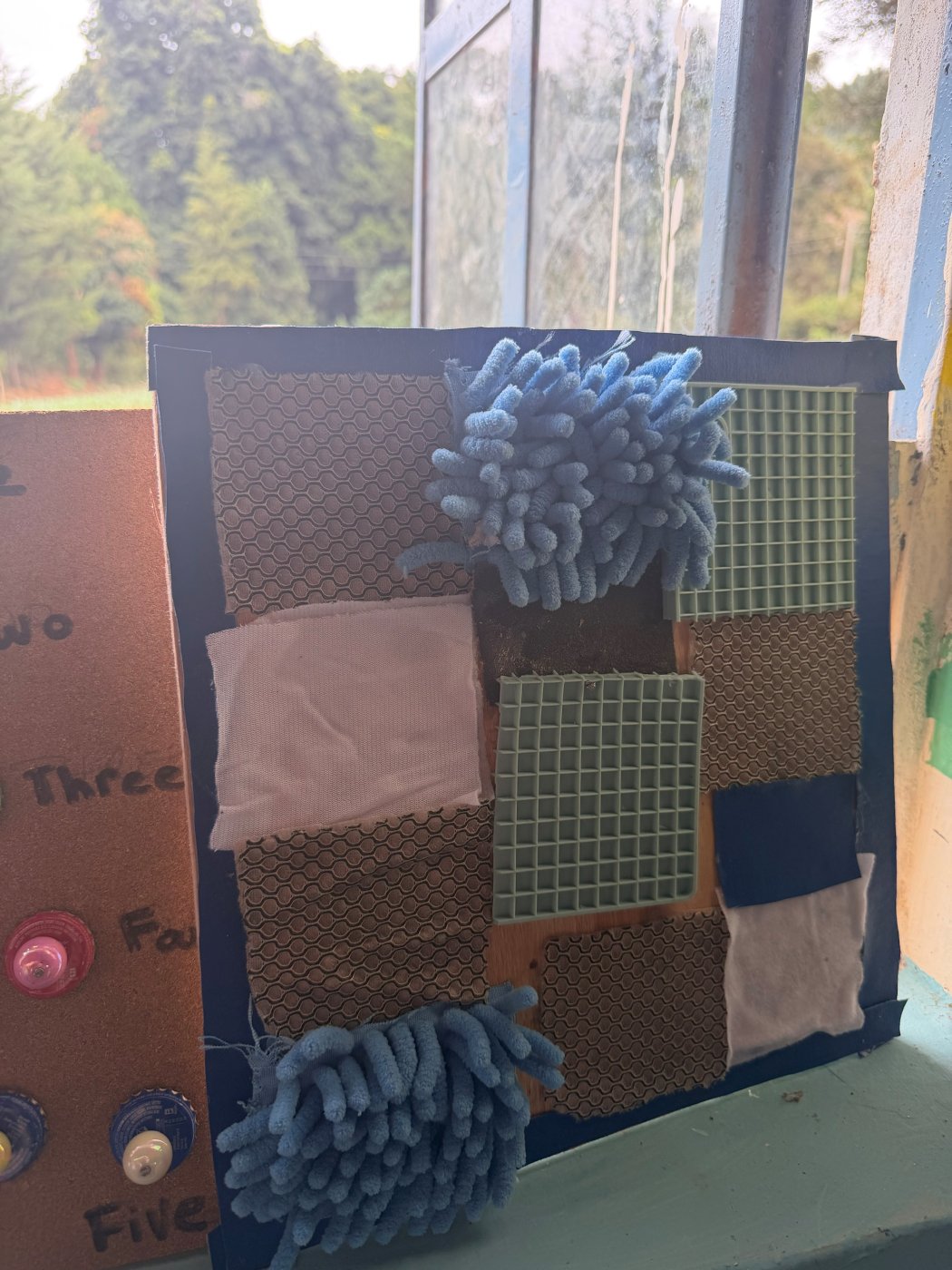
Texture board
Local Lessons
What I've learned from resourceful fabrication in Kabarnet.
Building with cypress branches
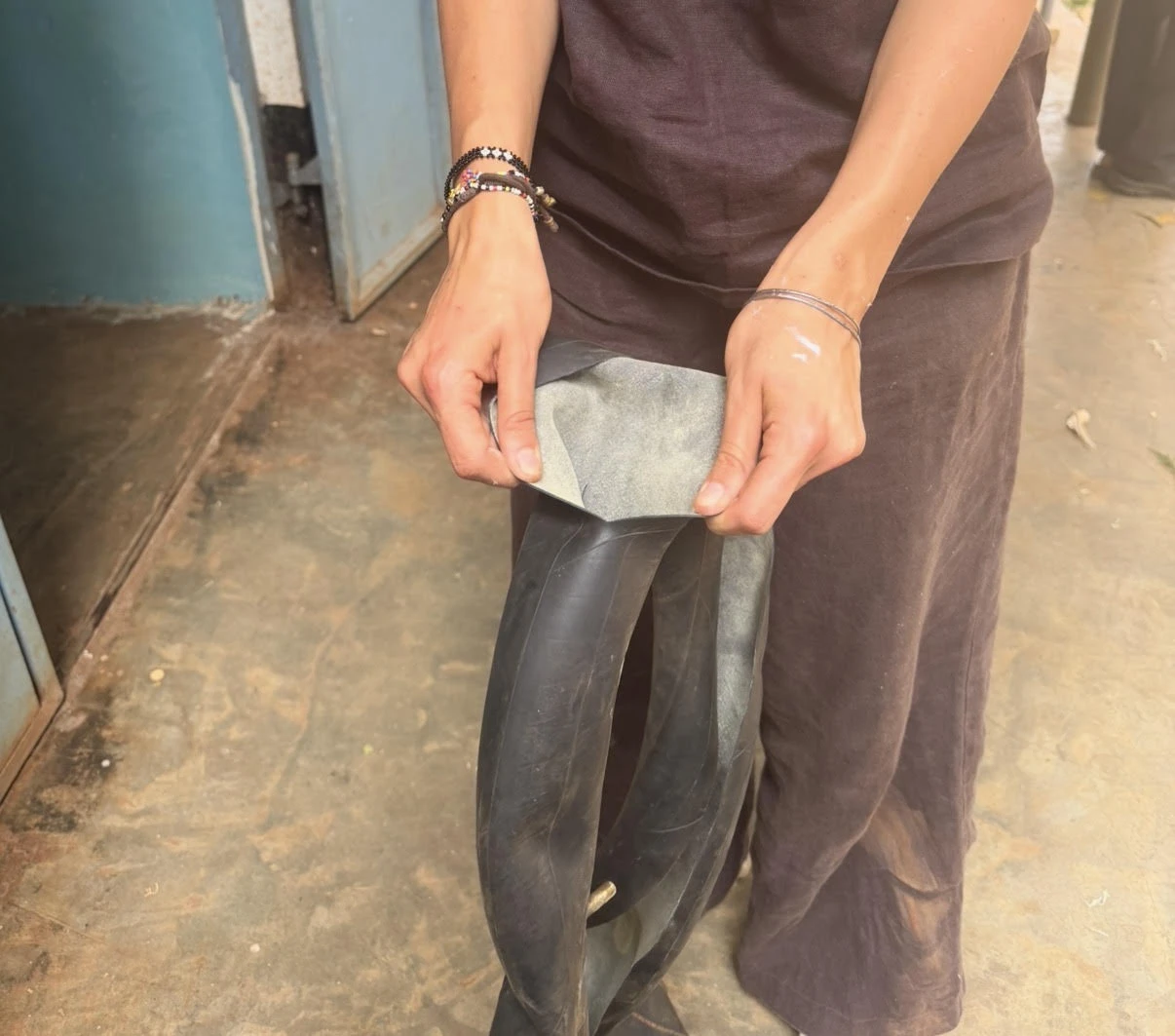
Cutting motorcycle inner tubes into elastic straps
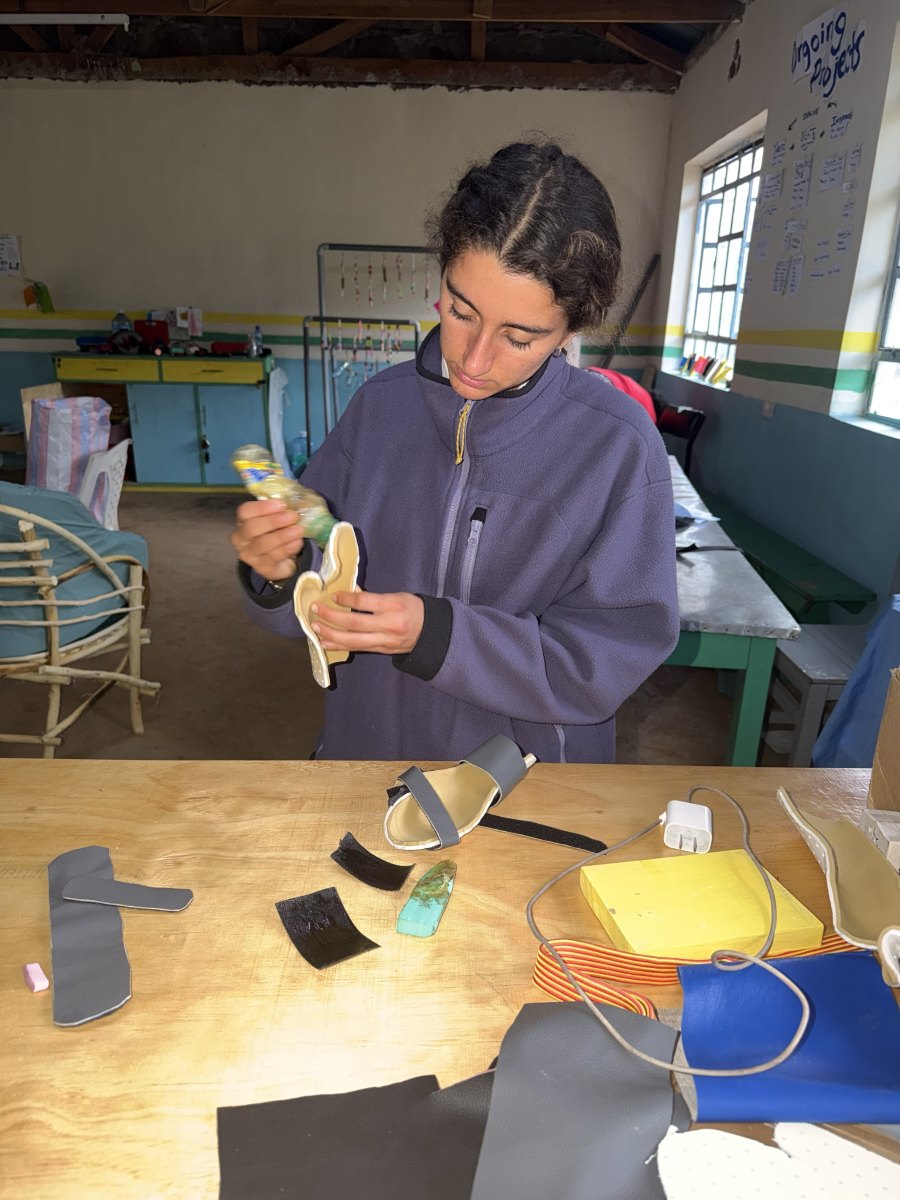
Using Orthoplast to make splints
Making backslabs and elbow conformers from PVC pipe
Multi-Axis Motion and Vibration System for Bioreactor Cell Seeding and Recovery
The challenge
Bioreactors are still rotated, tilted and shaken by hand, a bottleneck for scaling up life-saving biologics.
My role
Team Lead on an eight-person clinic team.
Partner
XDemics, a bioreactor company; advised by Prof. Angie Lee.
Outcome
A working proof-of-concept that automates wetting, seeding and cell recovery.
>95%of cells detached and recovered by vibration
~84%cell viability after recovery
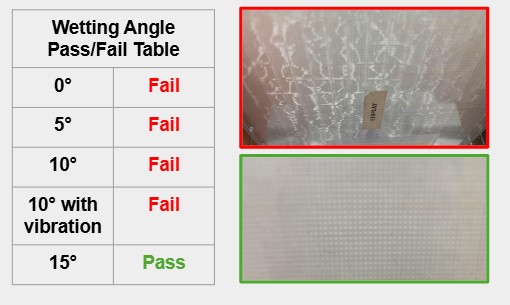
15°minimum tilt for bubble-free wetting
8students across two semesters
The Challenge
XDemics builds high-density bioreactors that grow cells for therapies. Every bioreactor has to be rotated, tilted and vibrated at precise moments to fill it with media, seed it with cells and later shake the cells free. Today that's done by hand, which limits how many can run at once, adds contamination risk and makes results vary from person to person. Our brief: design, build and test a robotic system to automate it.
What We Built
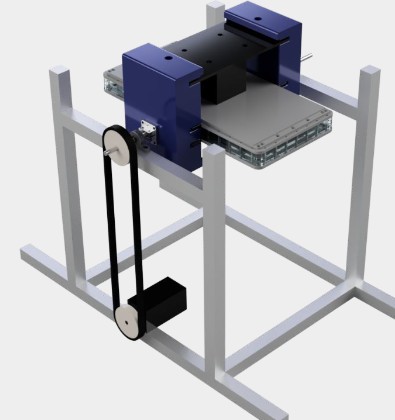
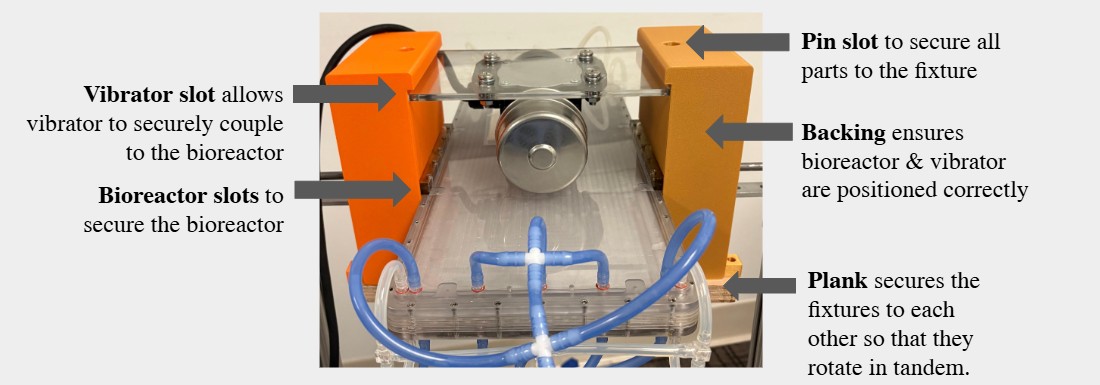
Rotation and tilt. A belt-driven "spinner" rotates the bioreactor 90° for seeding and 180° for transfection, sitting on a hinged tilt plate that a motorized pusher raises to tilt it for wetting. We chose this simple single-axis design over more complex alternatives for reliability.
Fixturing and agitation: slotted guides lock the bioreactor in place and couple a vibrator directly to it.
Testing
Wetting. We perfused a five-membrane bioreactor at increasing tilt angles to find the minimum angle that fills every well without trapping air. Everything below 15° failed, even with vibration; 15° passed.
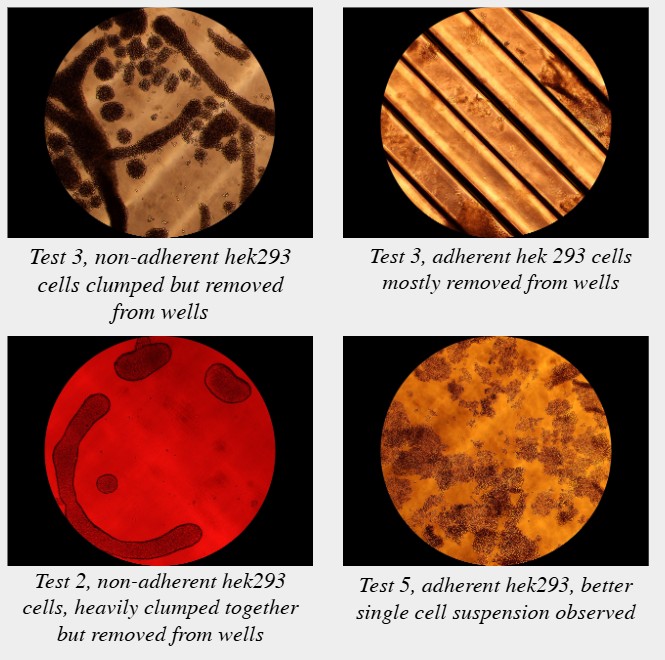
Cell recovery at XDemics. On a site visit to XDemics, we ran our vibration system with live HEK293 cells. Combined with an enzyme treatment, five minutes of vibration detached more than 95% of adherent cells, and an incubate-and-shake cycle kept about 84% of them alive.
What's Next
The system proved that a simple, mechanically driven approach can reliably handle the key bioreactor operations. Next steps for XDemics: tune the vibrator's distance for better energy transfer, add a motor control system for full automation, and design for cleanroom standards.
E185B · Harvey Mudd College × Audio-Technica · Spring 2025 · with Max Plush, Juni Cleary & Gaven Jesse
Folding the Future of Packaging
Audio-Technica ships its turntables in expanded polystyrene (EPS) foam: cheap and protective, but not recyclable or compostable, and it breaks down into microplastics. Our brief was to replace it with a paper-based, affordable alternative that could survive the company's drop-test standard and be mass produced.
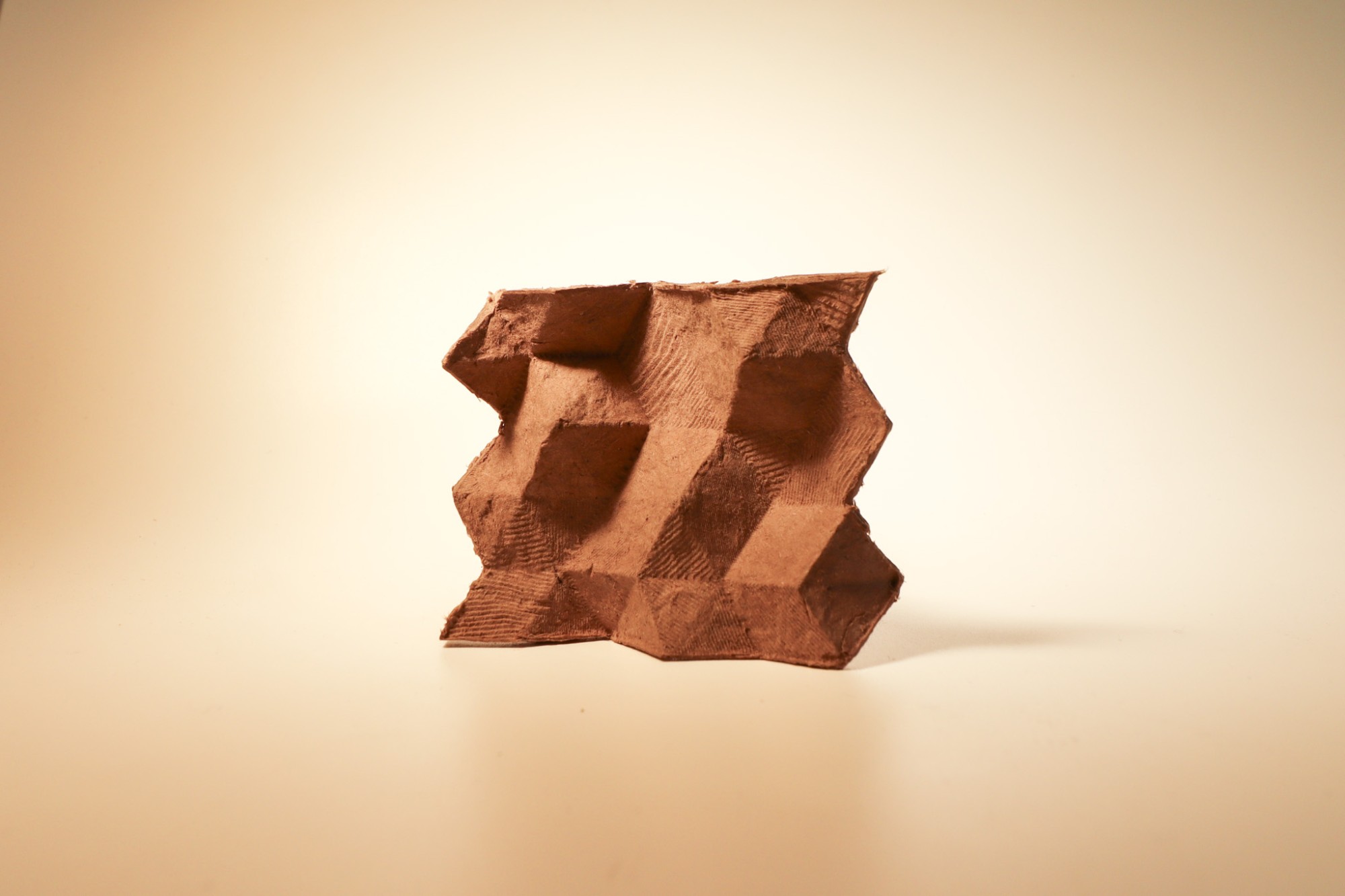
Our first prototype: molded cardboard pulp, formed in a 3D-printed geometric mold.Packaging becomes product: the folded corners double as record stands, next to the tenugui cloth that replaced the plastic cover.
The Challenge
Paper only: fully paper-based materials, including cardboard, that are recyclable and/or biodegradable.
Protective: meet Audio-Technica's standard of a 20 lb product surviving six drops from 70 cm.
Practical: cost-competitive with EPS and mass producible.
Design Process
We explored corrugation manipulation, kirigami, molded cardboard pulp, and woven cardboard. Molded pulp came first: we 3D-printed a mold and tuned the recipe, finding that cornstarch worked as a binder where tapioca didn't, and that a finer, longer-blended pulp was stronger. When client feedback made clear pulp wasn't practical to manufacture at scale, we pivoted to engineering standard cardboard. The final system combined four elements:
Kirigami-inspired corners that fold to fit a range of box sizes, with slits so they can be reused as record display stands.
Firm cross-sections of stacked, glued corrugated cardboard along the sides for lateral protection.
Woven cardboard mesh above and below the turntable to spread and absorb impact.
Gap-filling barriers to stop the turntable from shifting in the box.
We also swapped the plastic dust cover wrap for a Japanese tenugui towel, inspired by furoshiki wrapping, to celebrate Audio-Technica's heritage and give customers something worth keeping.
Testing & What We Learned
Using conservation of energy, we matched the 20 lb / 70 cm standard by dropping our 5.73 lb AT-LP60X turntable from 8 ft. One round at 70 cm only chipped a plastic hinge; after two rounds at 8 ft, the damage was severe enough that we stopped short of the full protocol.
The sides protected by woven mesh took little to no damage, making it the most promising material.
The sides relying on the firm cross-sections and corners cracked, especially near the back hinges, and the turntable had too much room to move.
Next iteration: wrap the whole turntable in woven mesh, tighten the fit, and reinforce the hinge side.
The biggest lesson was about sustainability itself: packaging is most sustainable when people want to keep it instead of throwing it away.
Adaptive Design Association · Adaptive Design at Mudd · Kabarnet School for the DeafBlind
Adaptive Design Assistive Devices
43 assistive devices I have designed and built at the Adaptive Design Association, with Adaptive Design at Mudd, and in my workshop at Kabarnet School for the DeafBlind in Kenya, grouped by what they help with.
Seating & Positioning
Seats and supports that hold a body well when a standard chair or the floor can't.
Tippy stool
Simple wooden stool for supported sitting.
Kabarnet, Kenya
Rocking chair
Plywood rocking chair.
Kabarnet, Kenya
Two-person rocking chair
Back-to-back rocker for a learner and a teacher or friend.
Kabarnet, Kenya
Padded cypress chair
Alternative seating for learners who use wheelchairs.
Kabarnet, Kenya
Neck alignment pillow
Keeps a learner's head aligned while lying down.
Kabarnet, Kenya
Standing board
Supported standing with chest, knee and foot straps.
Kabarnet, Kenya
Freestanding cardboard chair
Removable footplates.
Adaptive Design Association
Modified school chair
Adapted for a little person.
Adaptive Design Association
Floor seater
With an attachable table.
Adaptive Design Association
Rocking perch seat
A perch seat that rocks.
Adaptive Design Association
Wheelchair Fit & Support
Add-ons that make a wheelchair fit and support its rider. Before these, learners were tied in with bed sheets.
Wheelchair straps
Padded chest harness that holds a learner upright.
Kabarnet, Kenya
Foot straps
Keep feet on the footrests.
Kabarnet, Kenya
Soft footrest
Padded footrest.
Kabarnet, Kenya
Pommel / abductor
Block between the knees for better hip position.
Kabarnet, Kenya
Wheelchair table
Tray table that fits over the wheelchair.
Kabarnet, Kenya
Mobility
Tools that help someone move on their own.
Parallel bars
PVC walking bars on a wooden base.
Kabarnet, Kenya
Scooter board
For a learner who fears walking but has use of his legs.
Kabarnet, Kenya
Walker scooter
A walker turned into a padded seat, so a learner who fears walking can sit securely and push along with his legs.
Kabarnet, Kenya
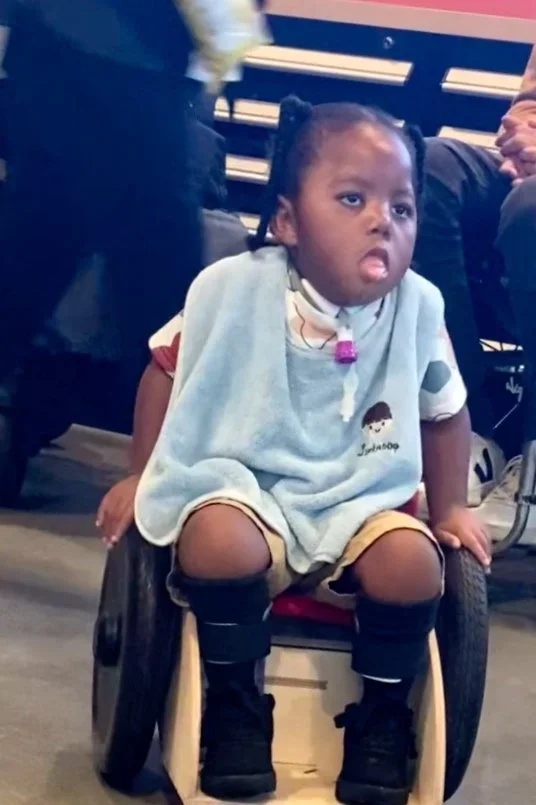
Toddler mobility trainer
The first time CJ moved on his own.
Adaptive Design Association
Orthotics & Bracing
Braces and splints made from PVC pipe and Orthoplast, with the county's occupational therapists.
Elbow conformers & backslabs
For contractures in the knees and elbows, worn while sleeping.
Kabarnet, Kenya
Orthoplast wrist brace
For wrist drop caused by nerve palsy.
Kabarnet, Kenya
Dual elbow conformer & hand splint
For muscle contracture.
Kabarnet, Kenya
Clenched fist block
Keeps a fist from clenching closed.
Kabarnet, Kenya
Mermaid brace
Padded brace with two leg channels.
Kabarnet, Kenya
Daily Living
Adaptations for everyday tasks like eating, washing and gardening.
Spoon & toothbrush handles
Three learners now feed themselves.
Kabarnet, Kenya
Washing table
Brings washing, once done on the ground, up to wheelchair height.
Kabarnet, Kenya
Accessible garden bed
Made from a reclaimed rain gutter.
Kabarnet, Kenya
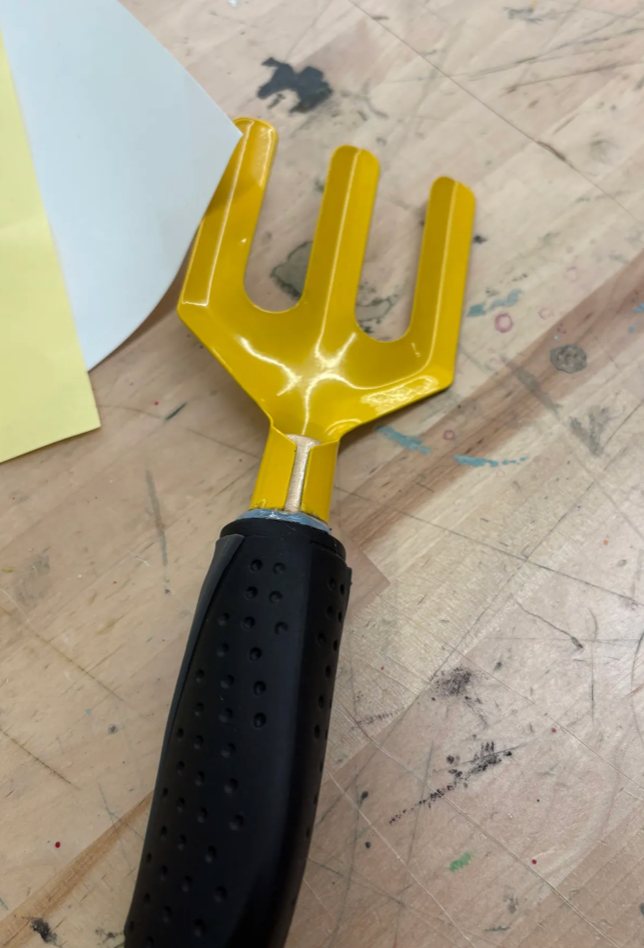
Gardening tool handle
Better grip for reduced fine motor skills.
Adaptive Design at Mudd
Weighted gardening tools
Proprioceptive feedback while gardening.
Adaptive Design at Mudd
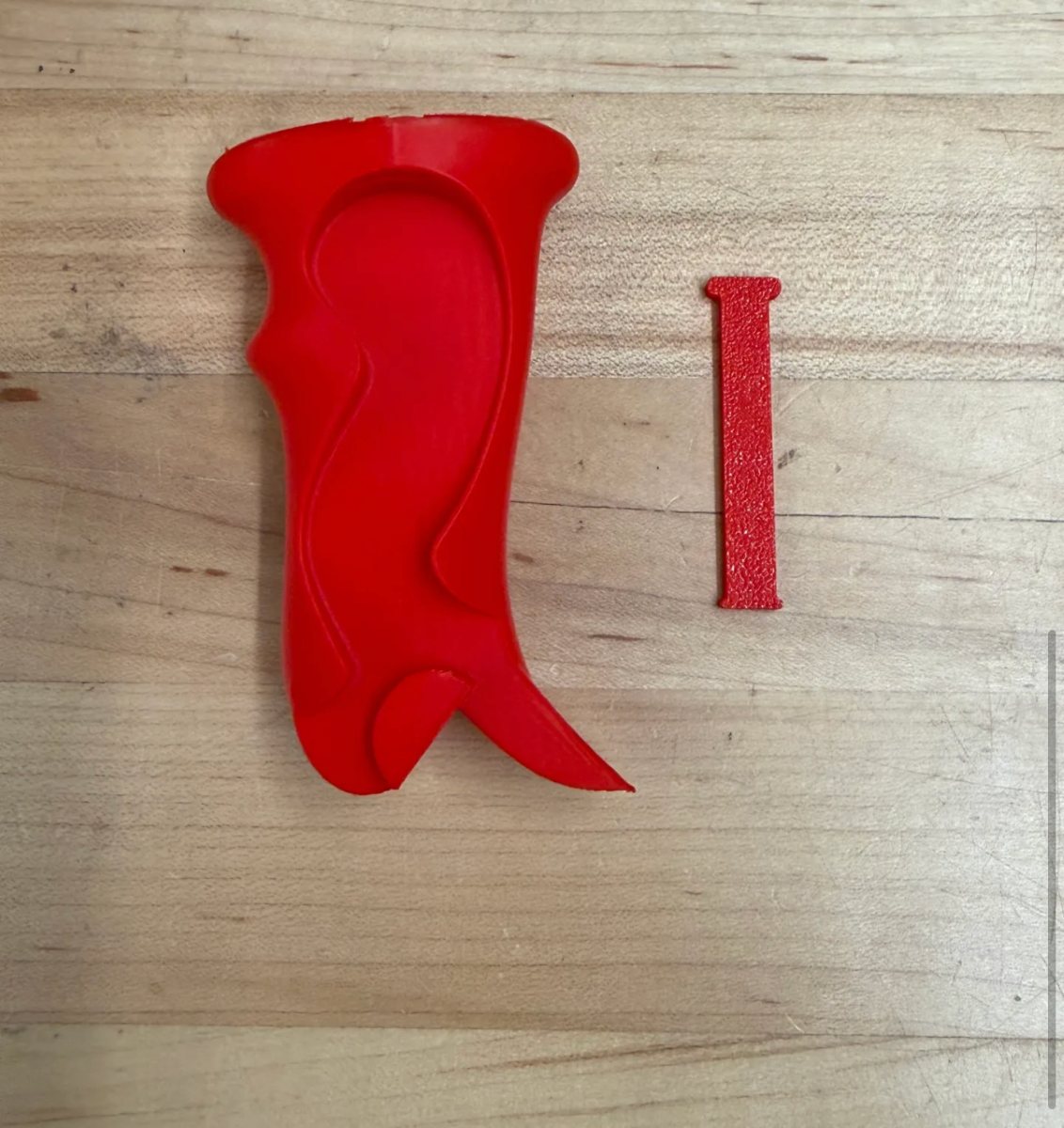
Jar seal opener
3D-printed; no sharp object needed.
Adaptive Design Association
Communication & Learning
Tools for learners who don't communicate verbally, and for hands-on learning.
Tactile cue cards
Touchable objects that stand for daily activities.
Kabarnet, Kenya
Learning numbers
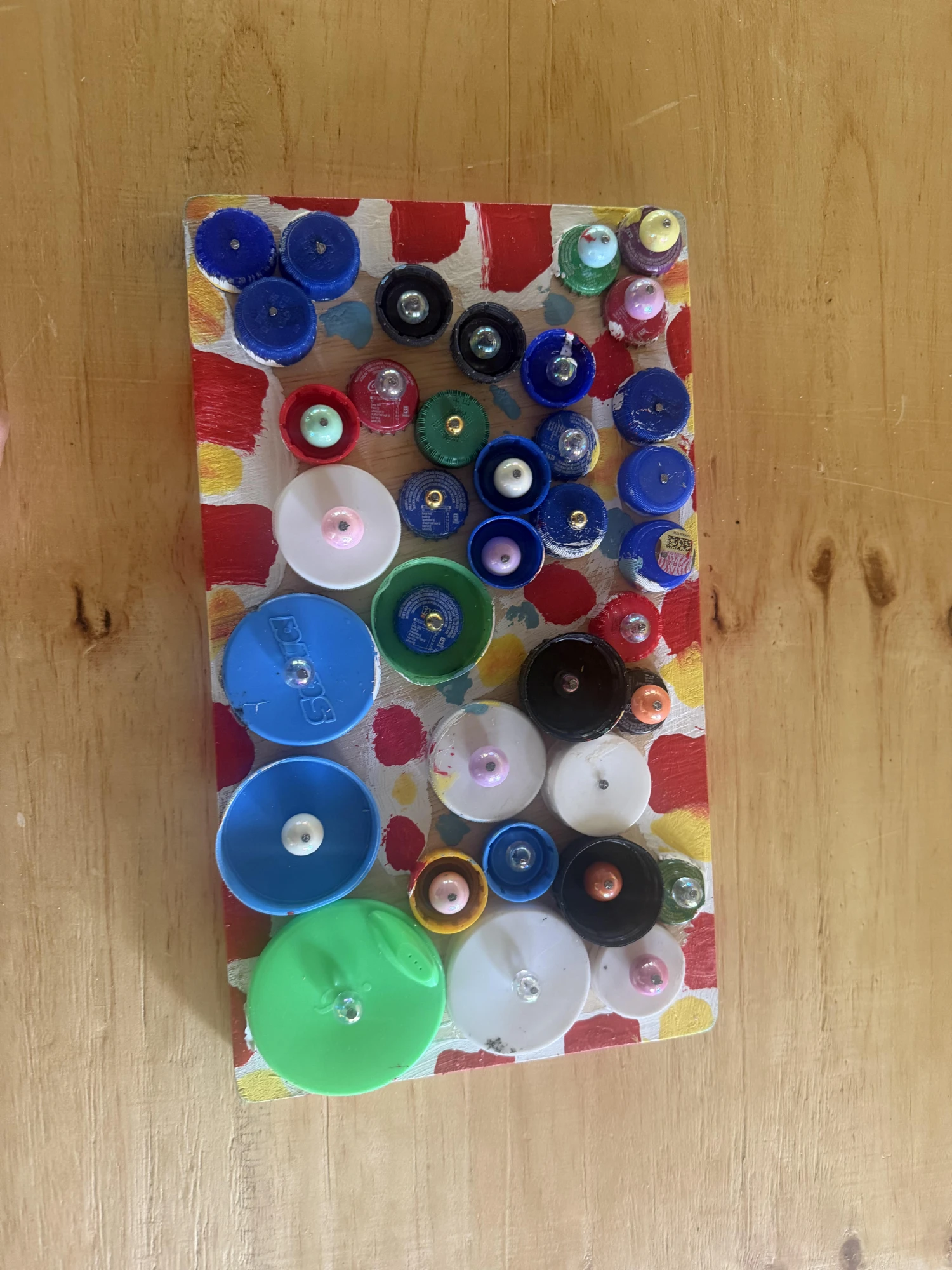
Count to five by touch with bottle caps and beads.
Kabarnet, Kenya
Speech mirror
Standing mirror for speech practice.
Kabarnet, Kenya
Communication board
Picture symbol cards learners point to for choices.
Adaptive Design Association · Adaptive Design at Mudd · Tikkun Olam Makers
Adaptive Design
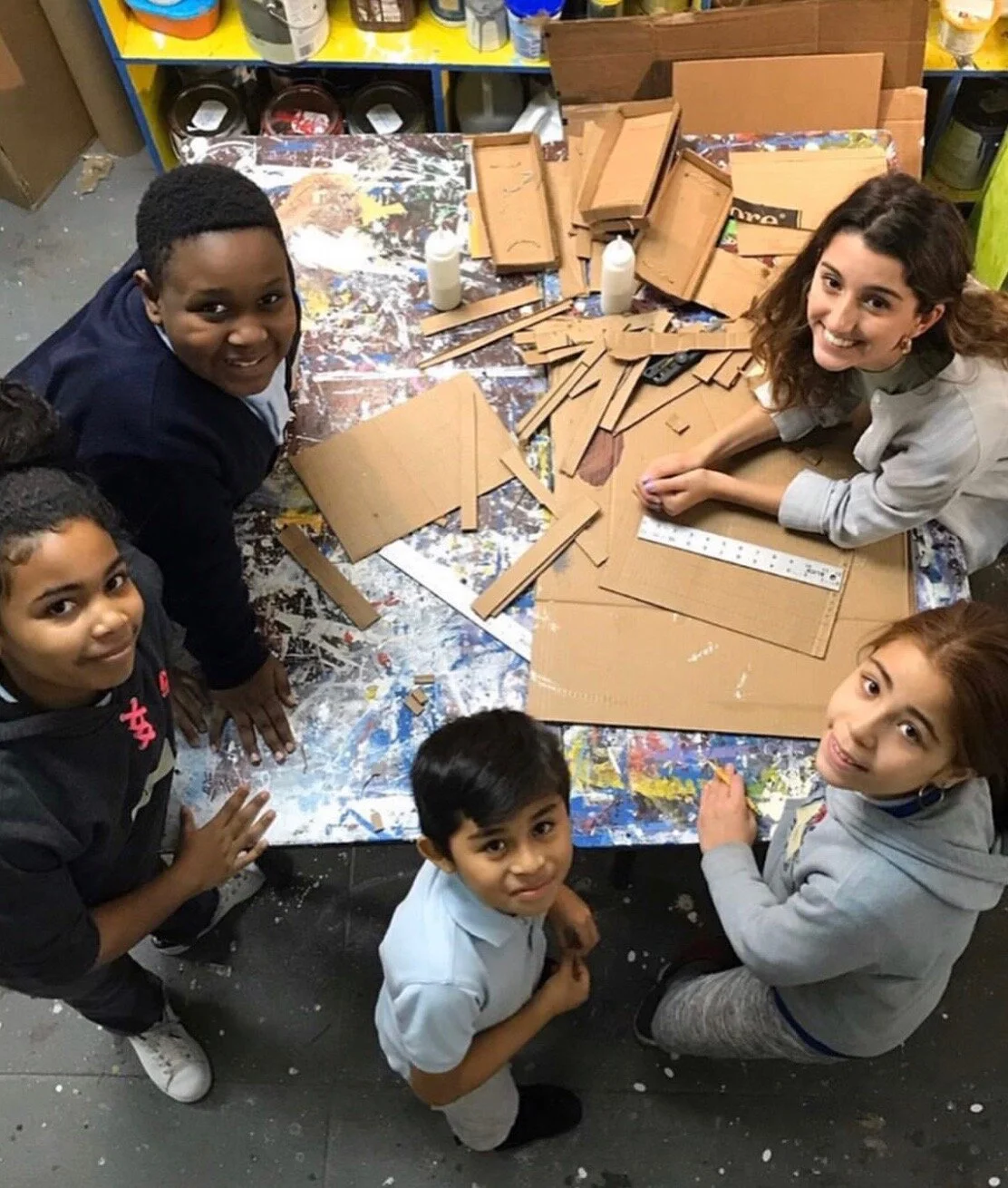
For the last 12 years, I've interned for the Adaptive Design Association, an organization that builds adaptive technologies for people with intellectual and physical disabilities. During my time with the organization, I've learned just how impactful design can be.
Adaptive Design Association
I've worked on the fabrication team building adaptations.I've also helped train interns and young adults with autism in ADA fabrication, part of a program that prepares them for the workforce.I've since become an Adaptive Design Fellow, helping further ADA's mission through outreach, fundraising and education.
Adaptive Design at Mudd
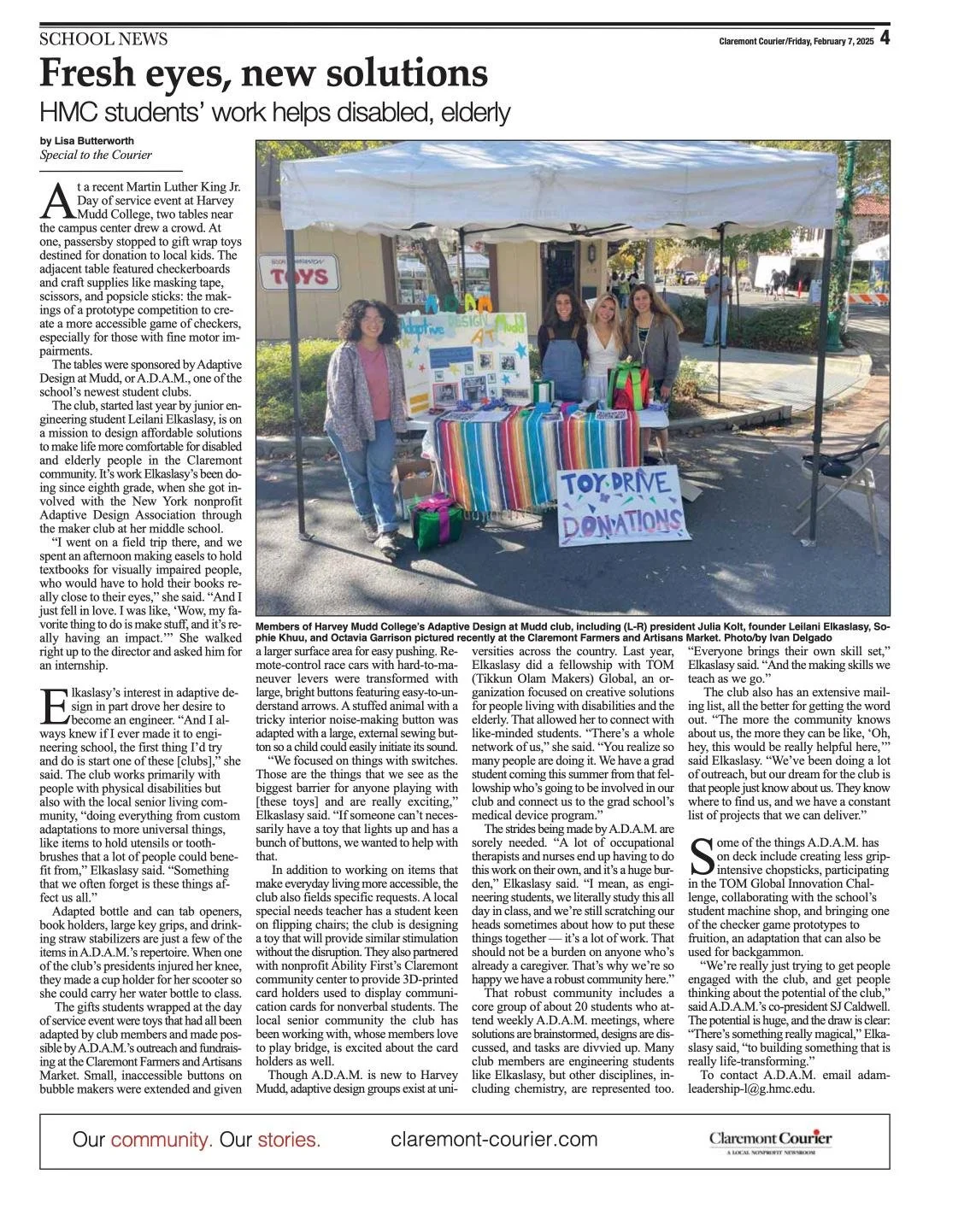
Over the last three years, I started an organization on campus that trains my peers to build adaptations for the surrounding community. We were even featured in the local paper for our work!
Accepted into the TOM Fellowship 2023 class for my work on my college campus with Adaptive Design at Mudd.
Selected Adaptations
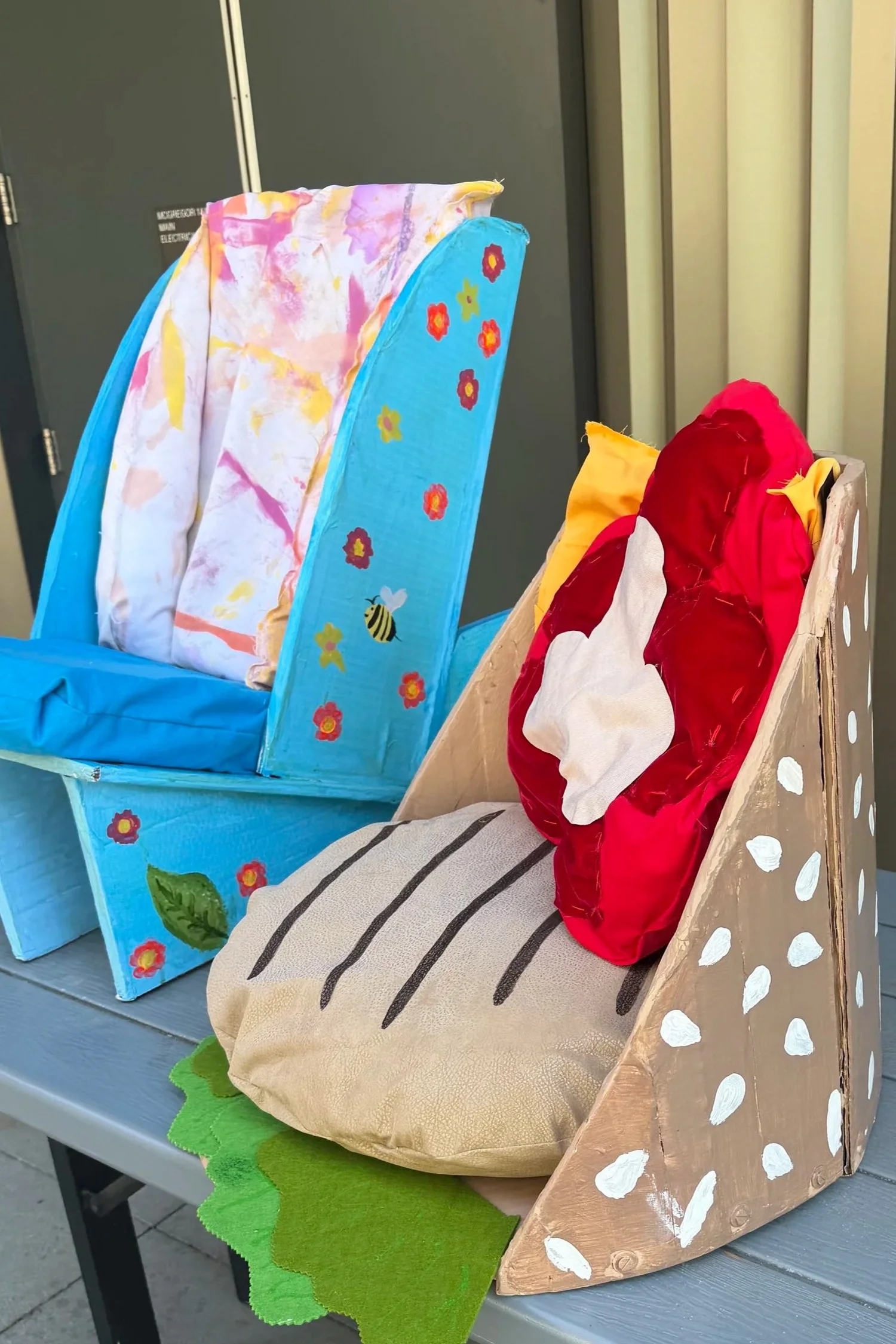
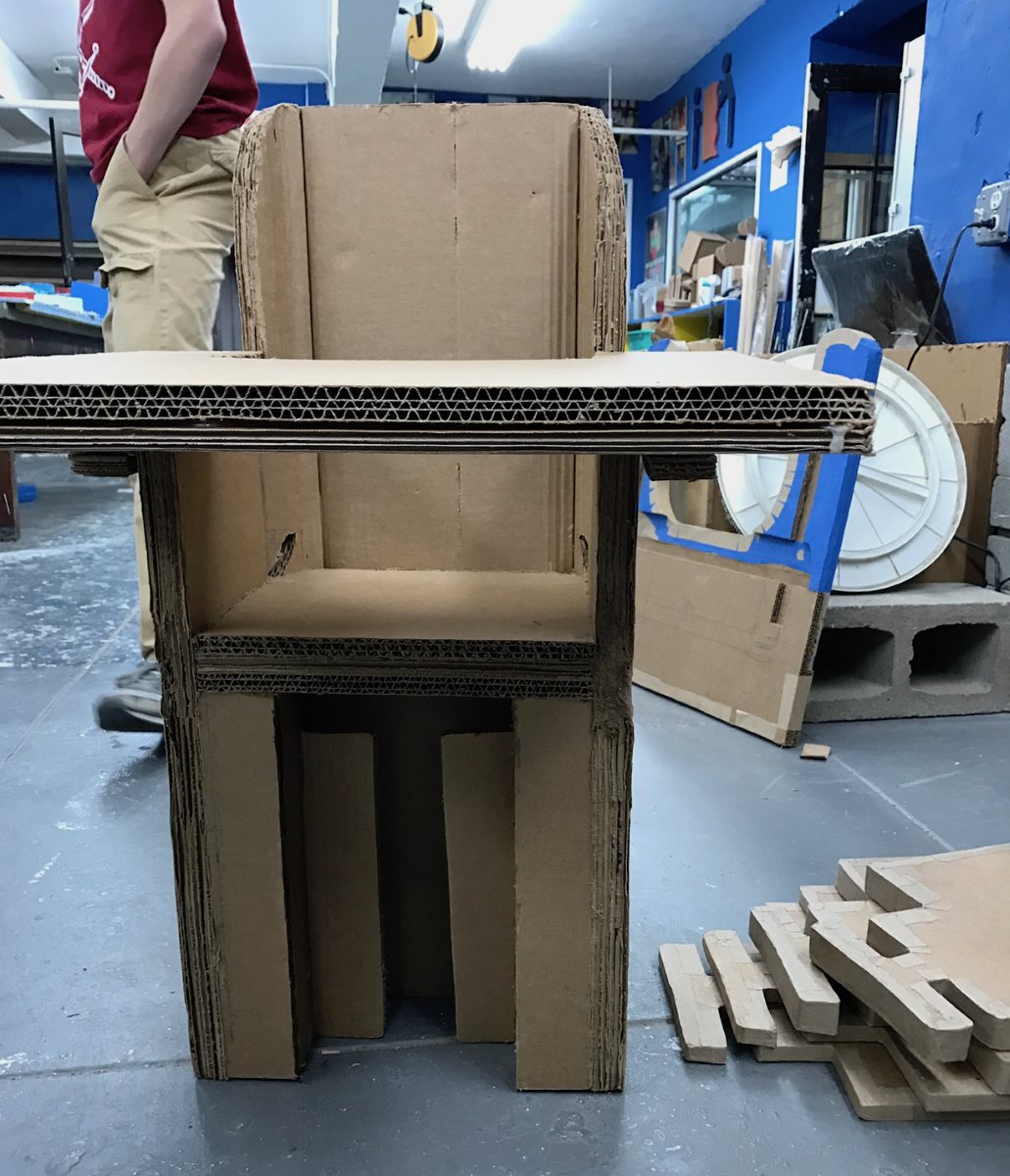
Freestanding chair for Nicky with removable footplates to accommodate growth. Cardboard, recycled yoga mat, foam & webbingToddler Mobility Trainer for CJ: the first time CJ got to move on his own. Before this, he was either cradled in a caregiver's arms, sitting or lying down.Little person school chair modification. Cardboard, PVC & recycled yoga matDrawing easel for a one-armed inmate, with a lazy Susan embedded in the bottom. Cardboard, lazy Susan & grippy matFloor seater with an attachable table for circle time in class. Cardboard & recycled yoga matRocking perch for ADHD and anxiety. Cardboard & yoga matMemory foam garden and hamburger sensory chairs for soothing students with autism.Gardening tool handle for better grip for users with reduced fine motor skills.Weighted gardening tools for improved proprioceptive feedback: awareness of the body's movement and position.Ergonomic 3D-printed tool for opening jar seals without needing a sharp object.
I conducted underwater diving surveys of local giant kelp forests, continuing the longest running kelp dataset (30 years). I co-created an open-source database of benthic and ocean floor survey videos for national research efforts, and designed and conducted an original research project investigating nudibranch and sea sponge interdependence.
Harvey Mudd College · Desalination and Water Reuse Lab · First Cohort
Bahena Water Research Lab
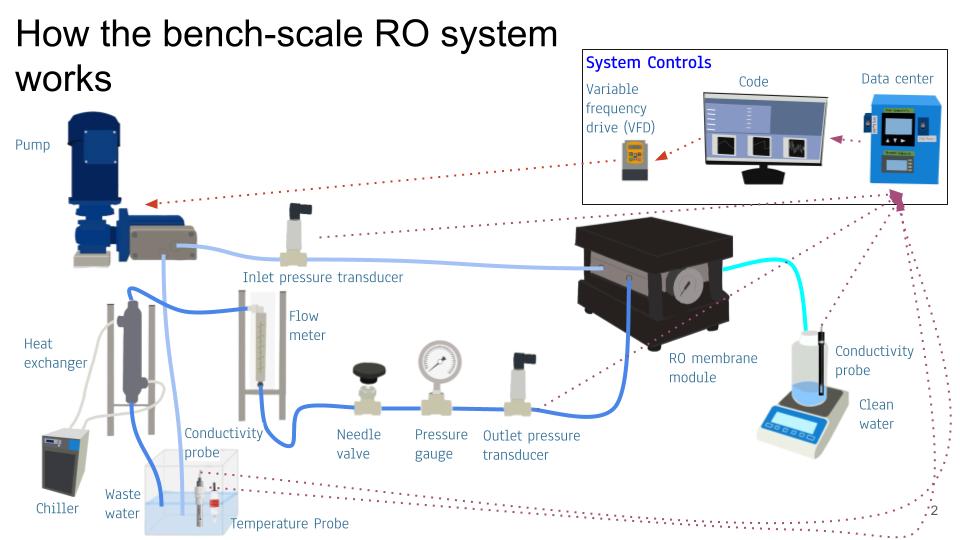
I built a fully automated bench-scale reverse osmosis (RO) system using LabVIEW, cutting manual testing time by 90% and enabling multi-day continuous operation. The research supports optimizing water reuse in power plants.
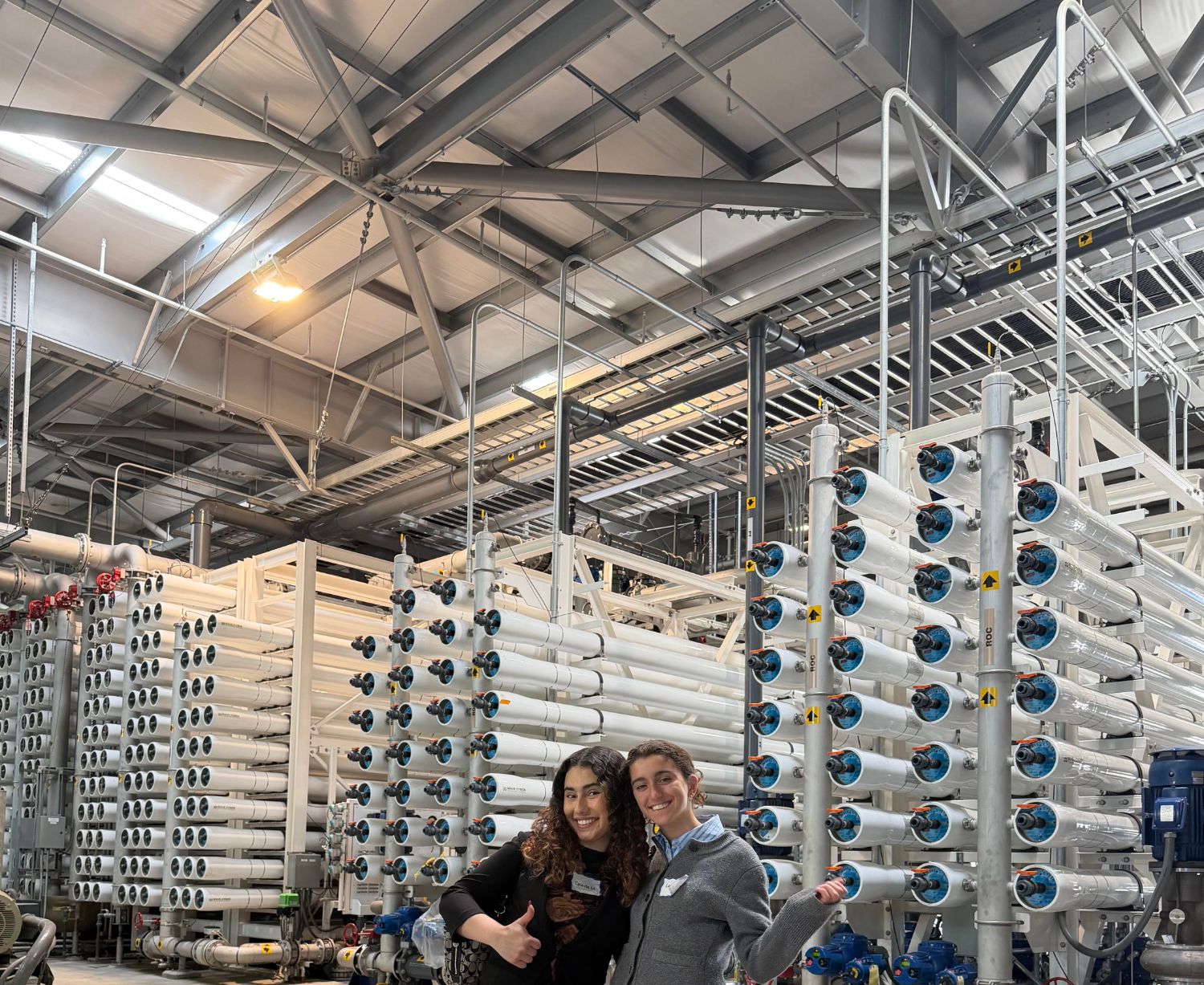
Reverse osmosis at full scale: touring the Albert Robles Center for Water Recycling & Environmental Learning.
My Role
As part of the first cohort of Harvey Mudd's Desalination and Water Reuse Lab, I was tasked with completing the setup of the physical bench-scale system, including:
System design
Component selection
Setup and assembly
Debugging
The control system
I learned a lot about what it takes to create a robust testing setup, and about the challenging reality of putting together a complex system.
Three years later, this very system is still in use, facilitating cutting-edge water research at Harvey Mudd.
The Physical System
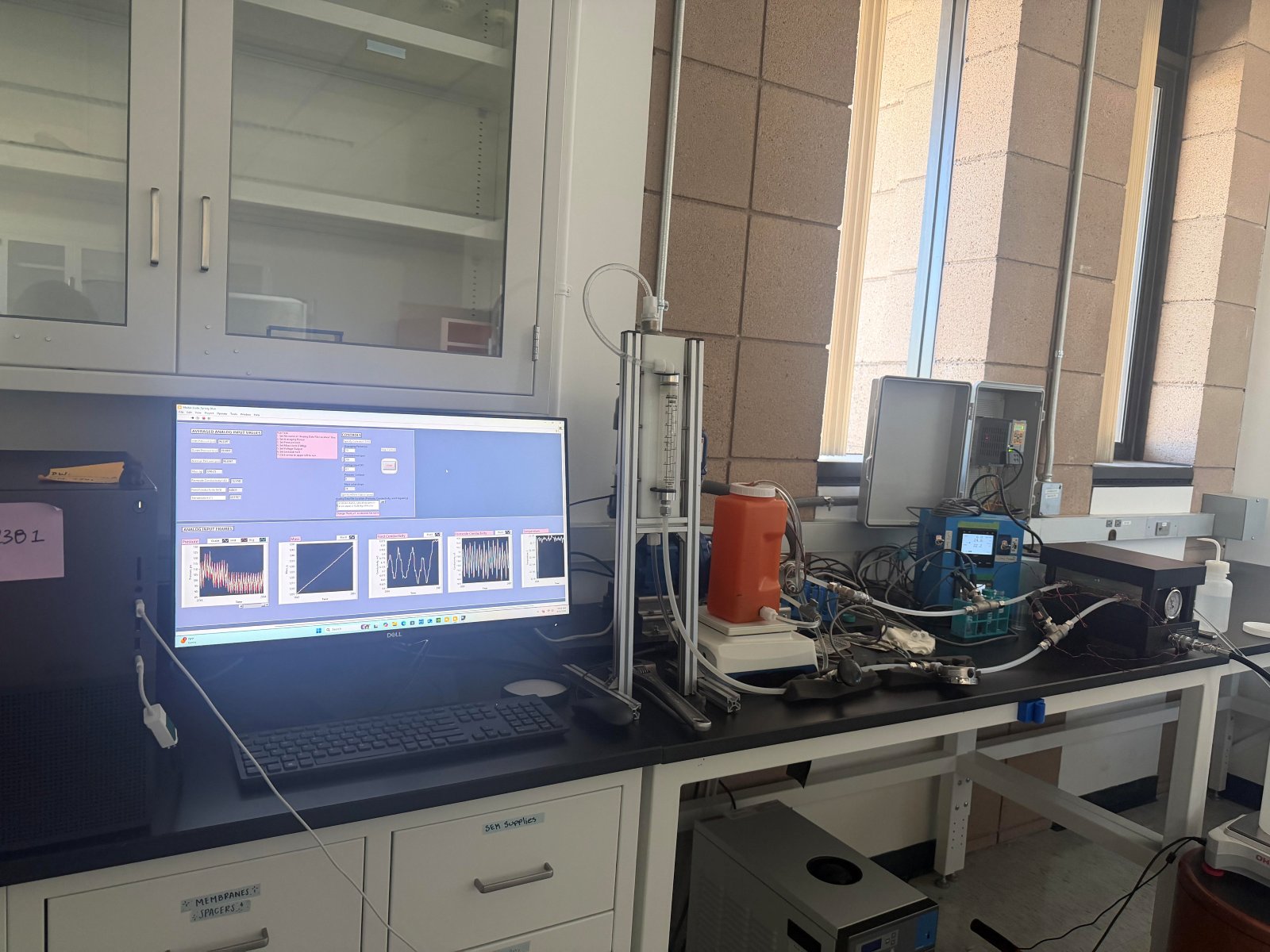
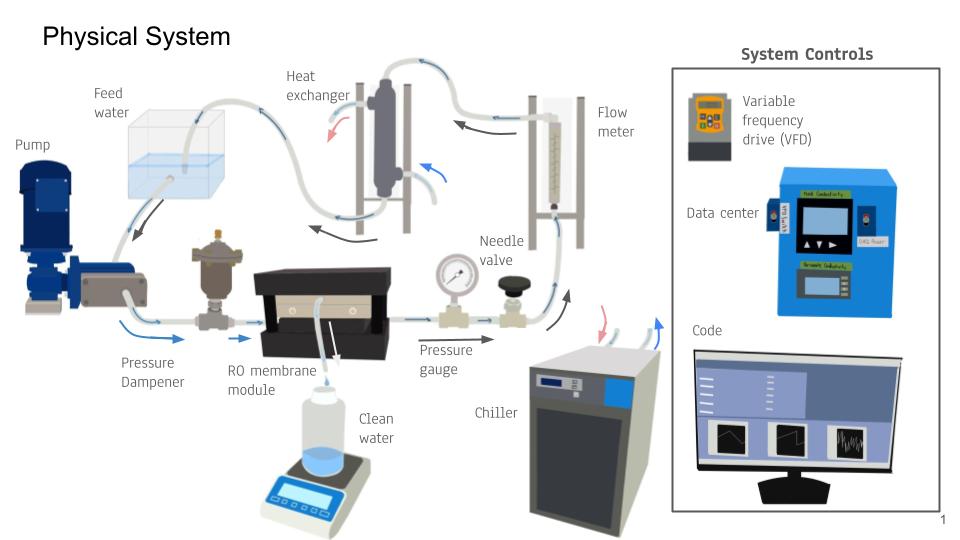
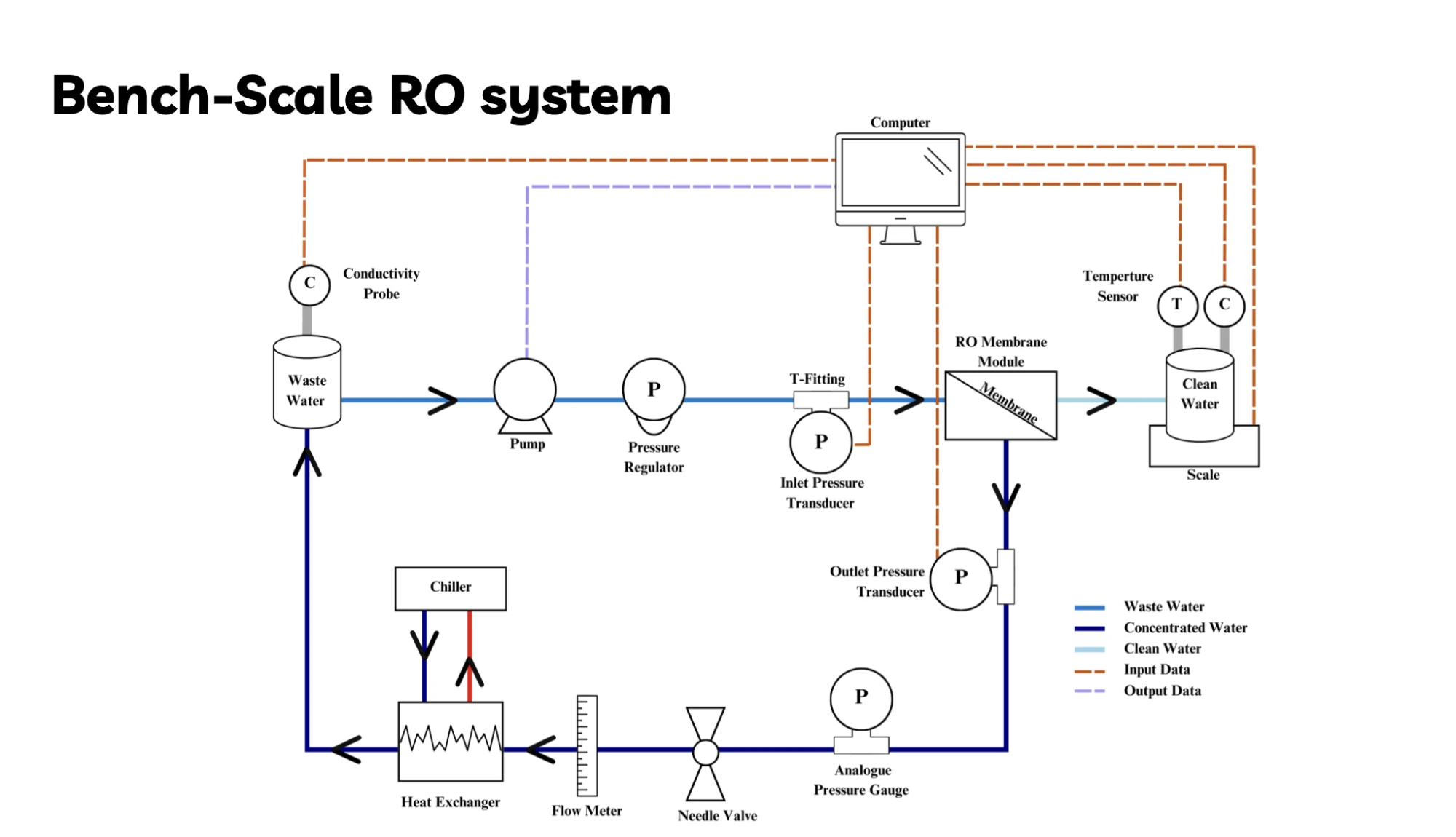
The system in the lab, with the LabVIEW control panel logging pressure, mass, conductivity and temperature in real time.Pump, pressure dampener, RO membrane module, pressure gauge, needle valve, flow meter, heat exchanger and chiller, with the system controls: a variable frequency drive, data center and code.Full process schematic: water, sensor data and control signals through the system.
How the System Works
Pressure transducers, conductivity probes and a temperature probe report to the data center; the code reads them and drives the pump through the variable frequency drive.
Harvey Mudd College · Department of Engineering · with Prof. Gordon Krauss
Tribology Lab
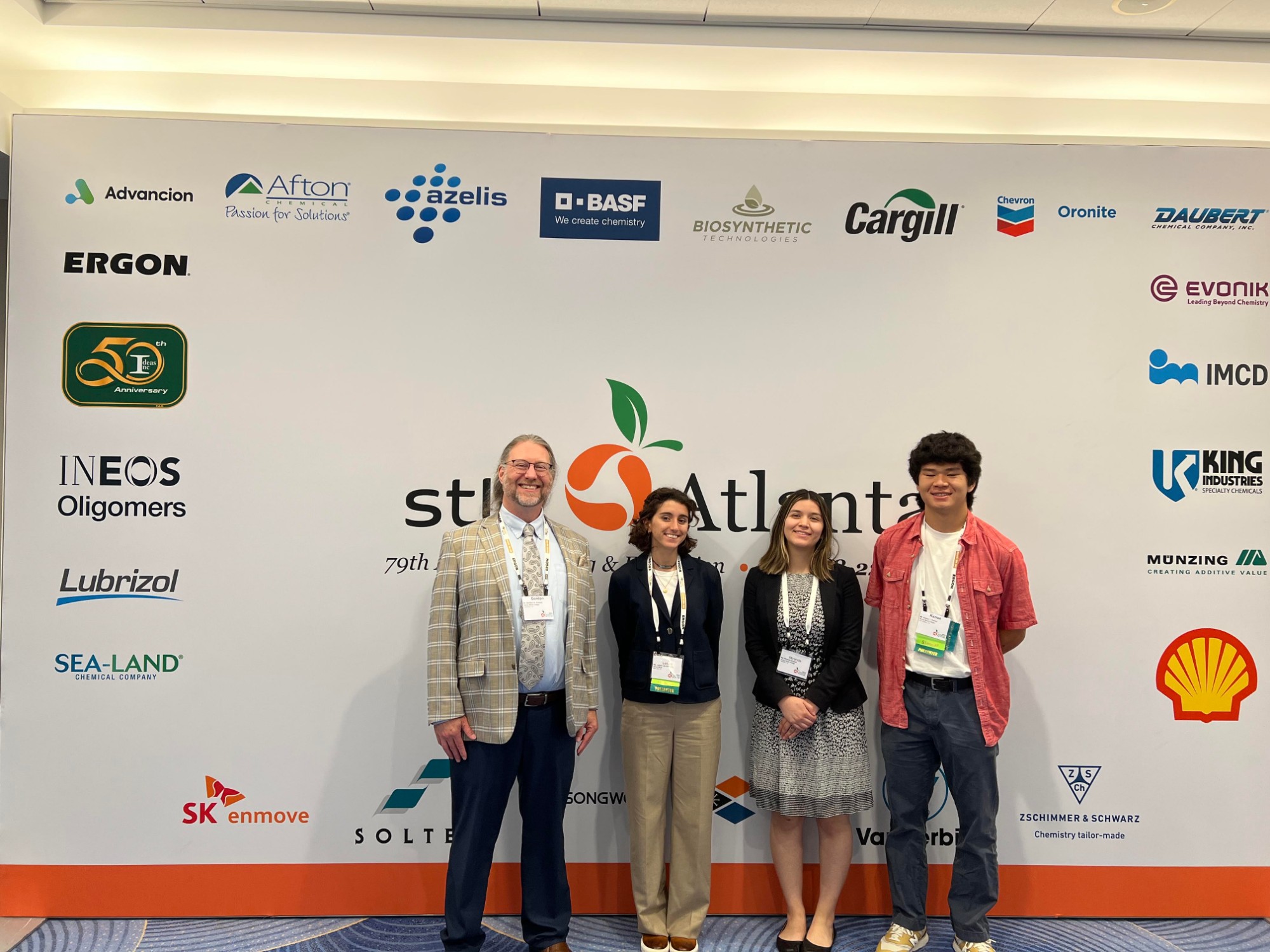
Presenting at STLE's 79th Annual Meeting in Atlanta with Prof. Gordon Krauss, Miranda Brandt and Kanoa Parker.
Tribology is the study of friction and wear between surfaces in motion. Our lab studied how abrasive stereolithography (SLA) 3D-printed parts are, and how to tune that abrasiveness through the resin itself and through metal and ceramic additives. The work was presented at the Society of Tribologists and Lubrication Engineers (STLE) 2025 conference.
A pin-on-disk wear test in the Universal Mechanical Tester, wearing a track into a 3D-printed disk.
The question
Can cheap, accessible 3D printing and unconventional materials, like patterned dental resin or novel ceramic formulations, let us tune a part's abrasiveness to extend its lifespan?
My role
Research team member; lead author and presenter of one of our three STLE 2025 talks.
Team
Miranda Brandt, Kanoa Parker and me, advised by Prof. Gordon Krauss.
Outcome
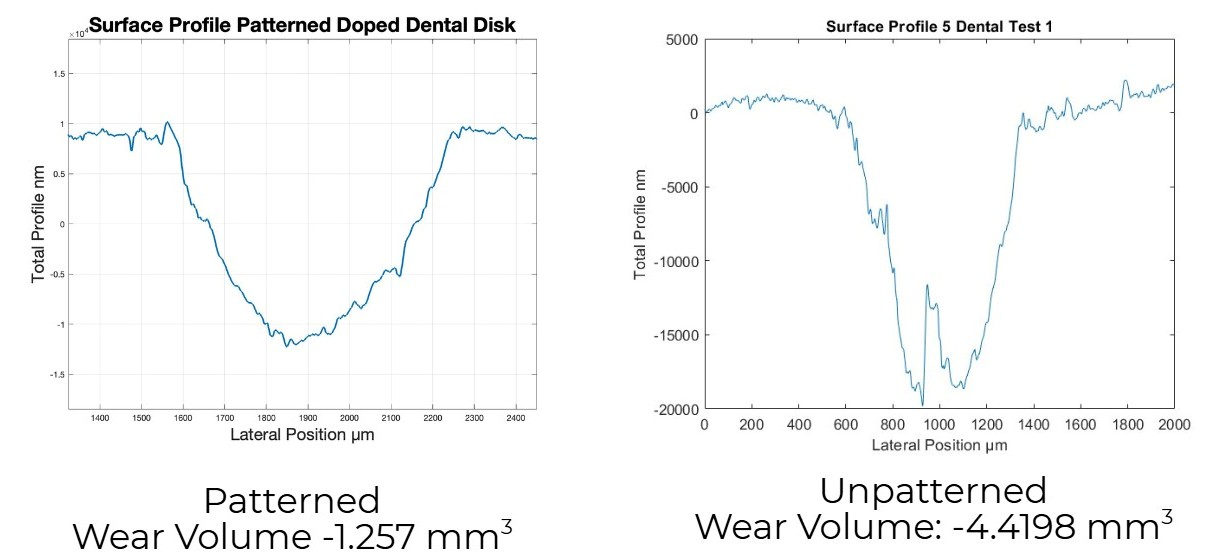
Patterning seemed to make the porcelain surface less abrasive and left a smoother, shallower wear track, confirming that accessible 3D printing can effectively examine materials for additive manufacturing.
The Question
Can cheap, accessible 3D printing and unconventional materials, like patterned dental resin or novel ceramic formulations, let us tune a part's abrasiveness so that its lifespan is extended?
My study tackled one piece of that question: patterning a porcelain-doped, 3D-printed dental resin surface with small indentations, which was expected to reduce wear by trapping wear debris, and measuring its effect on the metal sliding against it.
How We Made and Tested It
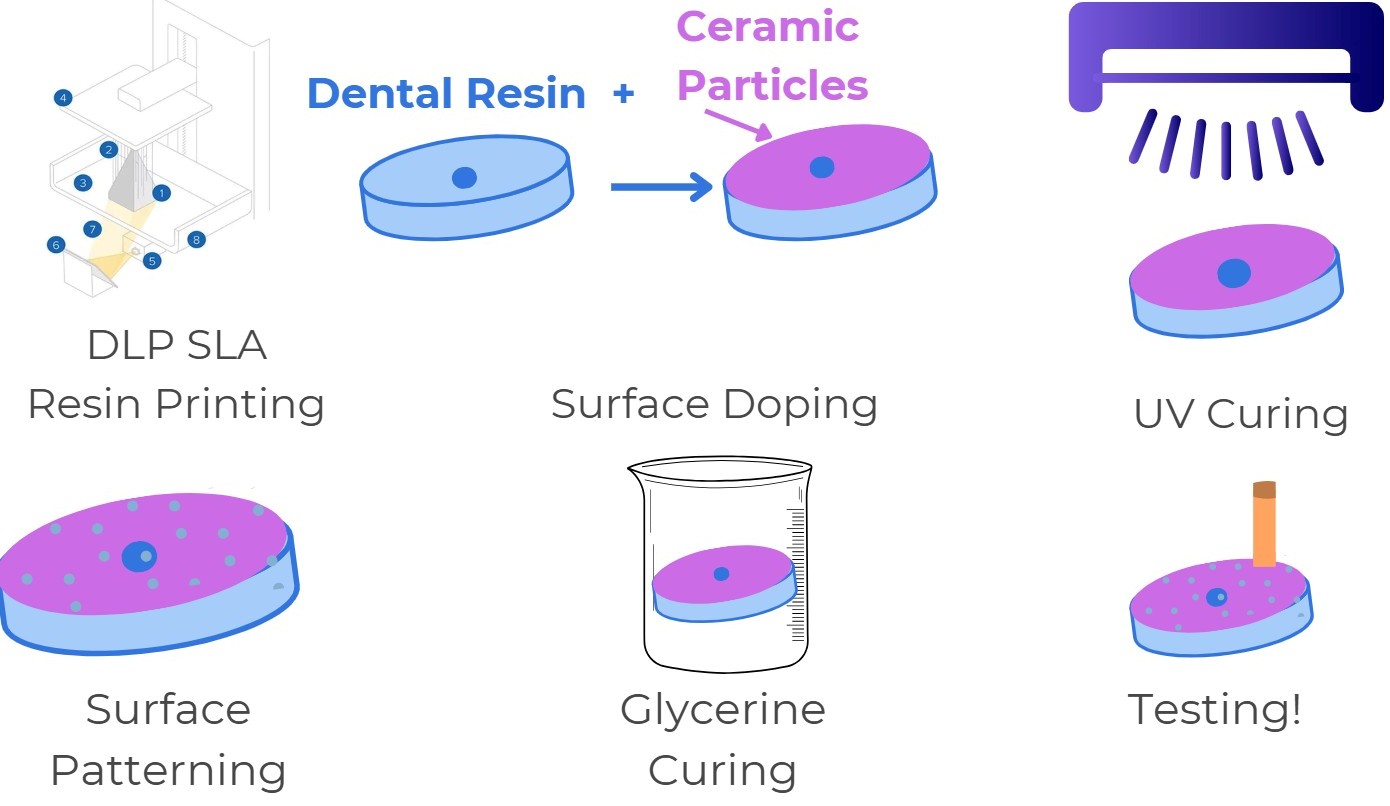
Print the disk in dental resin, dope the surface with porcelain, UV cure it, pattern it, cure it in glycerine, then test it.
Each disk was tested in a Bruker Universal Mechanical Tester using the pin-on-disk method: a 3.2 mm hardened steel ball slid on the disk at 1 N and 75 mm/s for up to 50,000 cycles. We measured the wear scars on the ball under the microscope and profiled the wear track on the disk.
What We Found
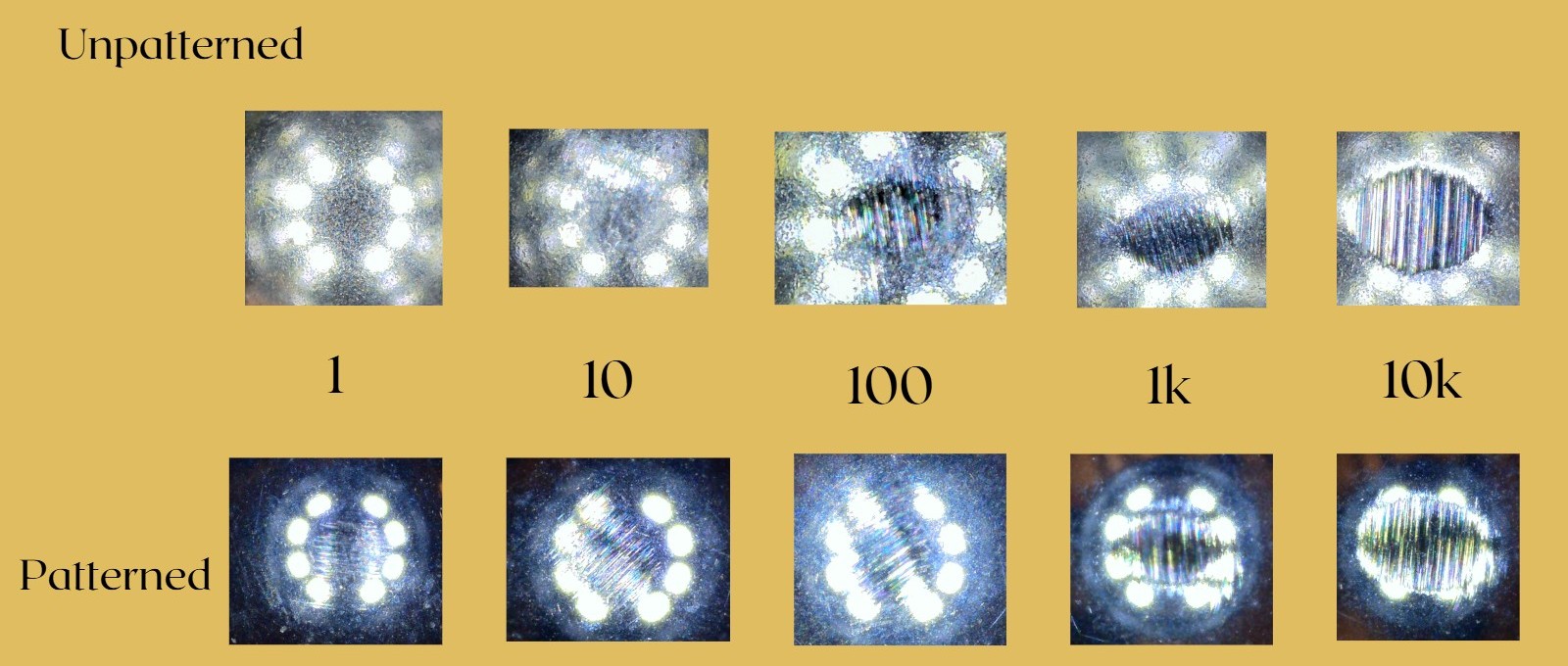
Wear scars on the steel ball after 1 to 10,000 cycles: unpatterned (top) vs. patterned (bottom).
Patterning seemed to reduce the abrasiveness of the porcelain-coated disks, and the wear track on the patterned disk was smoother and much shallower: 1.26 mm³ of wear vs. 4.42 mm³ unpatterned. Wear on the steel countersurface changed little until 50,000 cycles.
The differences were small, so more testing, a higher-resolution printer and lubricated tests are the next steps before drawing firm conclusions.
Side quest
A Slice of Material Science for Fun
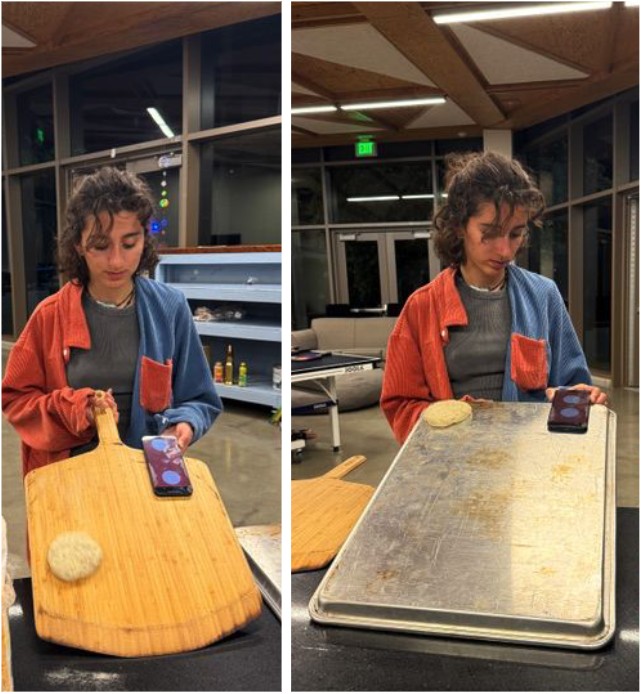
Measuring the angle where the dough starts to slide.
Every pizza maker faces the same dilemma: too little flour and the dough sticks to the peel, too much and it burns in the oven. So we brought tribology to the kitchen.
We dusted identical rounds of dough with measured amounts of fine and coarse semolina, set them on wooden and metal peels, and tilted until they slid, using the slide angle to calculate the friction.
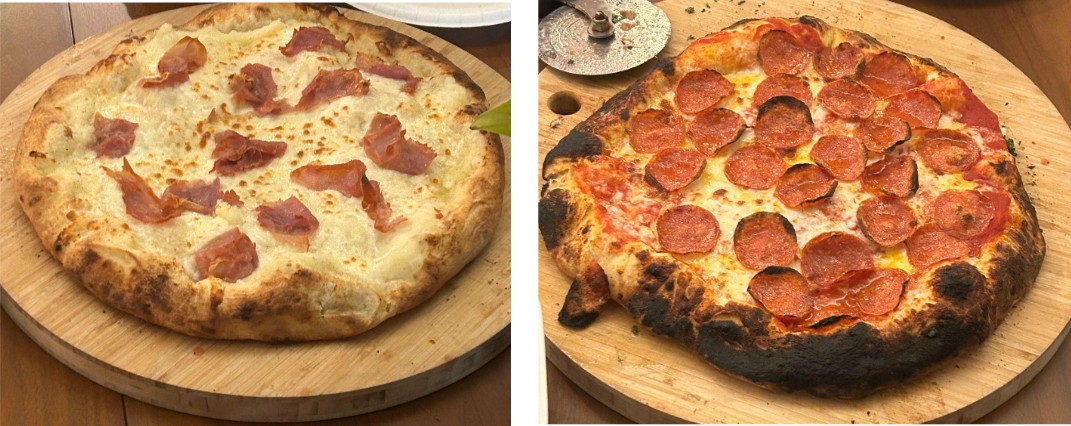
The sweet spot: about 0.4–0.5% semolina by weight. Past that, the dough slides just as easily, and the extra flour only burns.
Just right (left) vs. too much semolina (right).
We presented this research at STLE, where it drew more engagement than any other research at the poster session. Apparently, we even settled some long-standing family disputes!
Dig Deeper: Talks and Posters
STLE 2025 Presentations
Lead author
Influence of SLA Additive Manufacturing Patterning Techniques on the Wear of Metal Countersurfaces for 3D Printed Ceramics
Leilani Elkaslasy, Miranda Brandt, Kanoa Parker, Gordon G. Krauss
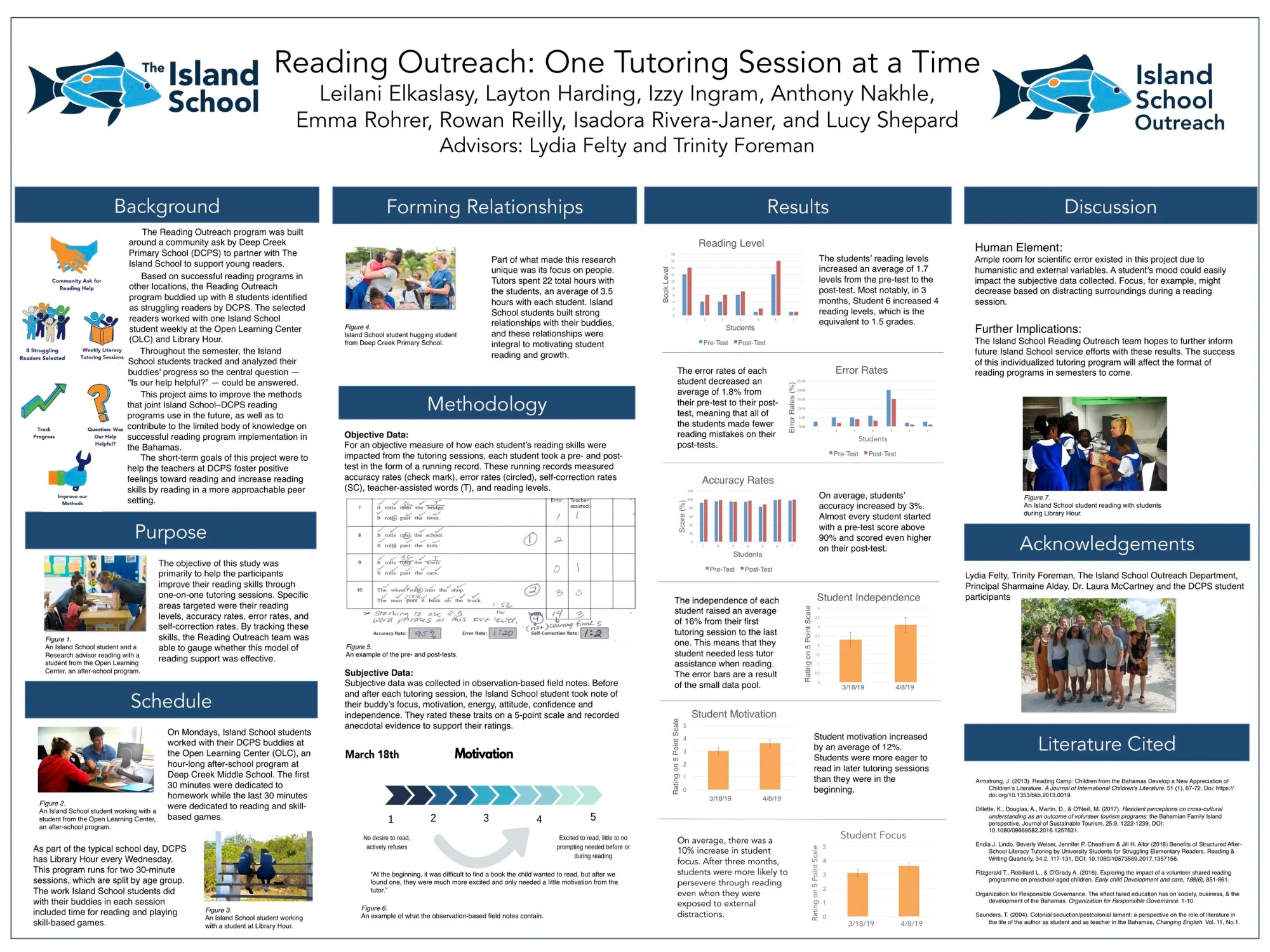
The Island School × Deep Creek Primary School · Eleuthera, Bahamas
Reading Outreach: One Tutoring Session at a Time
Deep Creek Primary School asked The Island School for help supporting its young readers. Our team of eight paired each Island School student with a struggling reader for weekly one-on-one tutoring, then tracked their progress to answer one question: is our help helpful?
Results
+1.7reading levels on average, pre- to post-test
+16%reading independence
+12%motivation to read
+10%focus during reading
Tutors spent 22 total hours with their buddies, about 3.5 hours per student, and the relationships they built were key to motivating reading growth.
Progress was measured objectively with pre- and post-test running records (accuracy, errors, self-corrections and reading level) and subjectively with field notes rating each buddy's focus, motivation, confidence and independence.
One student rose 4 reading levels in 3 months, the equivalent of 1.5 grades.
NYU Langone Medical Center · Lab of Dr. Bruce Cronstein
Effect of the Activation of A2A Receptors on the Modulation of NURR1
Summer research intern for Principal Investigator Dr. Bruce Cronstein, a leader in the field of rheumatology.
Independently managed active cell cultures, completed protein assays, ran western blots, and stained and imaged slides.
Given permission to test novel drugs, I designed my own time-course trial on live cell cultures to test the effectiveness of a novel drug being developed. I wrote a paper on my trial and presented my findings at a symposium at my high school.
Attenuator plus four stages: emitter follower → common emitter → common emitter with degeneration → emitter follower.The finished circuit on the breadboard.
Harvey Mudd College · E80 Experimental Engineering · Spring 2024
Autonomous Surface Vehicle Design
The question
Which nose shape is more hydrodynamic, a cone or a dome, and how well does simulation predict the real ocean?
Team
Four students: Kala Romanowski, Kanoa Parker, Leilani Elkaslasy and Wilson Zambrano.
Approach
A sensor-laden robot measured drag in the ocean at Dana Point; COMSOL simulated the same shapes.
Finding
The cone beat the dome in both, but the real ocean ran 20–30% slower than simulation predicted.
0.96measured drag coefficient, cone nose
1.44measured drag coefficient, dome nose
20–30%slower in the ocean than simulation predicted
5onboard sensors read by a Teensy microcontroller
What We Built
Deployed at Dana Point, followed by kayak.
A PVC-framed surface robot with three motors and pool-noodle outriggers for stability. An arm below the waterline held swappable 3D-printed nose cones in front of a force sensor, so the drag on each nose could be measured directly.
Onboard sensors, all designed and calibrated by our team: two pressure sensors working as a pitot tube for speed, the force sensor for drag, and an anemometer and weather vane to account for wind.
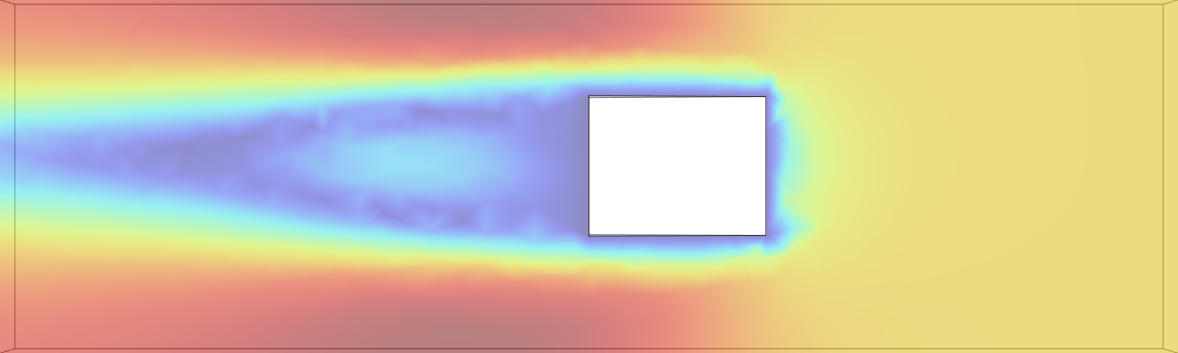
Cone noseDome nose
Simulation
We modeled each nose shape in COMSOL with a laminar flow simulation to predict its drag coefficient.
Results & What We Learned
Both methods agreed the cone is more hydrodynamic than the dome. But the measured drag was well above the simulation, because the real ocean isn't laminar: currents, motor vibration, surface texture and the robot's own frame all add drag the model leaves out.
Launch day brought countless setbacks, from a broken sensor to a borrowed microcontroller. The lesson stuck: test sensors and code early and often, and bring backups.
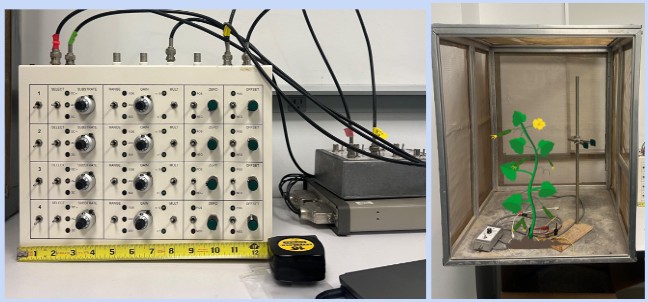
The instrument used to study how disease-spreading insects feed fills an 8×4-foot bench and needs wall power.
My role
Hardware Engineer on an eight-person clinic team.
Partners
Auburn University and the USDA, with EPG Technologies; funded by NSF and USDA.
Outcome
A hand-held, battery-powered, Bluetooth EPG whose traces matched the legacy monitor.
7000×maximum amplification of the insect's signal
46 ftreliable Bluetooth range, through lab walls
10 GΩselectable resistance for different insects
100 Hzlive feeding data streamed to the app
The Challenge
Insects like the Asian citrus psyllid and mosquitoes spread diseases that threaten crops, livestock and people. An electropenetrograph (EPG) lets researchers study how these insects feed by making the insect part of an electrical circuit: its feeding shows up as changes in the measured voltage.
But the existing AC-DC EPG is bulky and wired to wall power, which makes it nearly impossible to use in the field, especially for blood-feeding insects studied on large livestock. Our goal: shrink it, cut the wires, and improve its signal.
The legacy system: a control box of knobs plus a Faraday cage.
What We Built
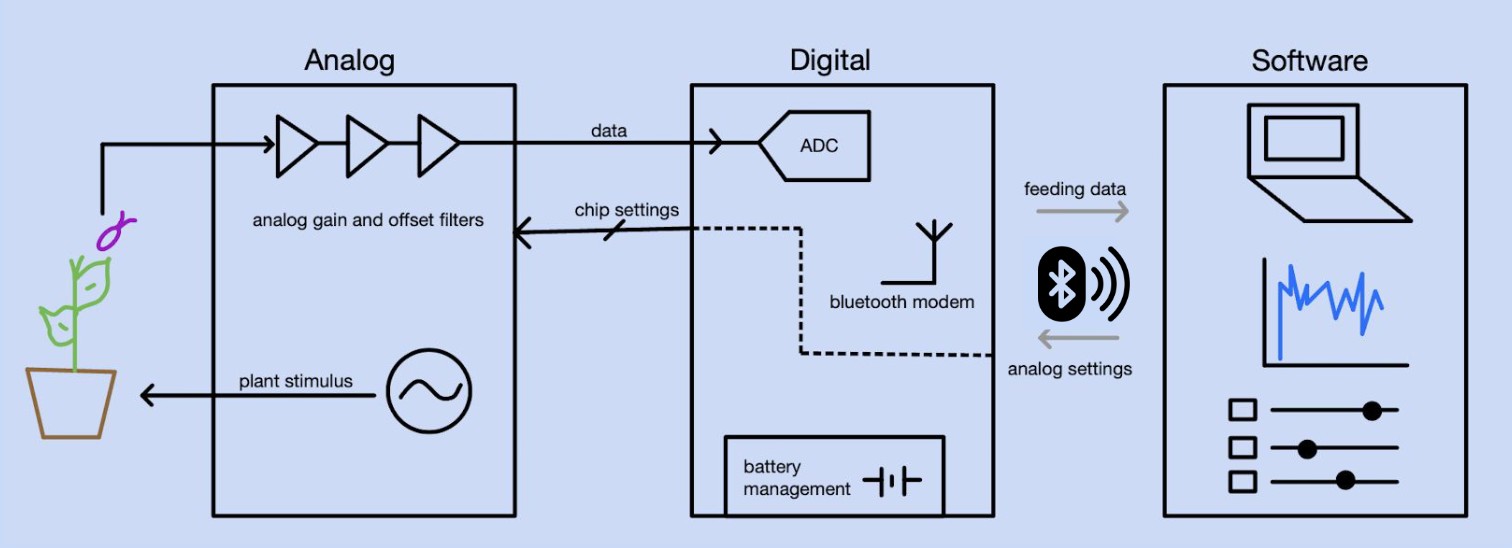
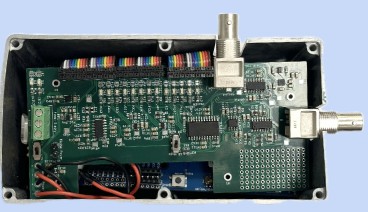
A custom analog board conditions the insect's signal, a digital board digitizes it and streams it over Bluetooth, and an app shows it live.
Analog board. Applies a 1000 Hz (AC) or DC excitation voltage, selects a resistance up to 10 GΩ for the insect under test, amplifies its waveform up to 7000×, shifts it into the converter's range and filters it to prevent aliasing.
Digital board and software. Firmware on an nRF5340 board configures the analog chips and relays data over Bluetooth to an app where researchers adjust settings and watch feeding in real time.
The new EPG, small enough to hold in one hand.
Results
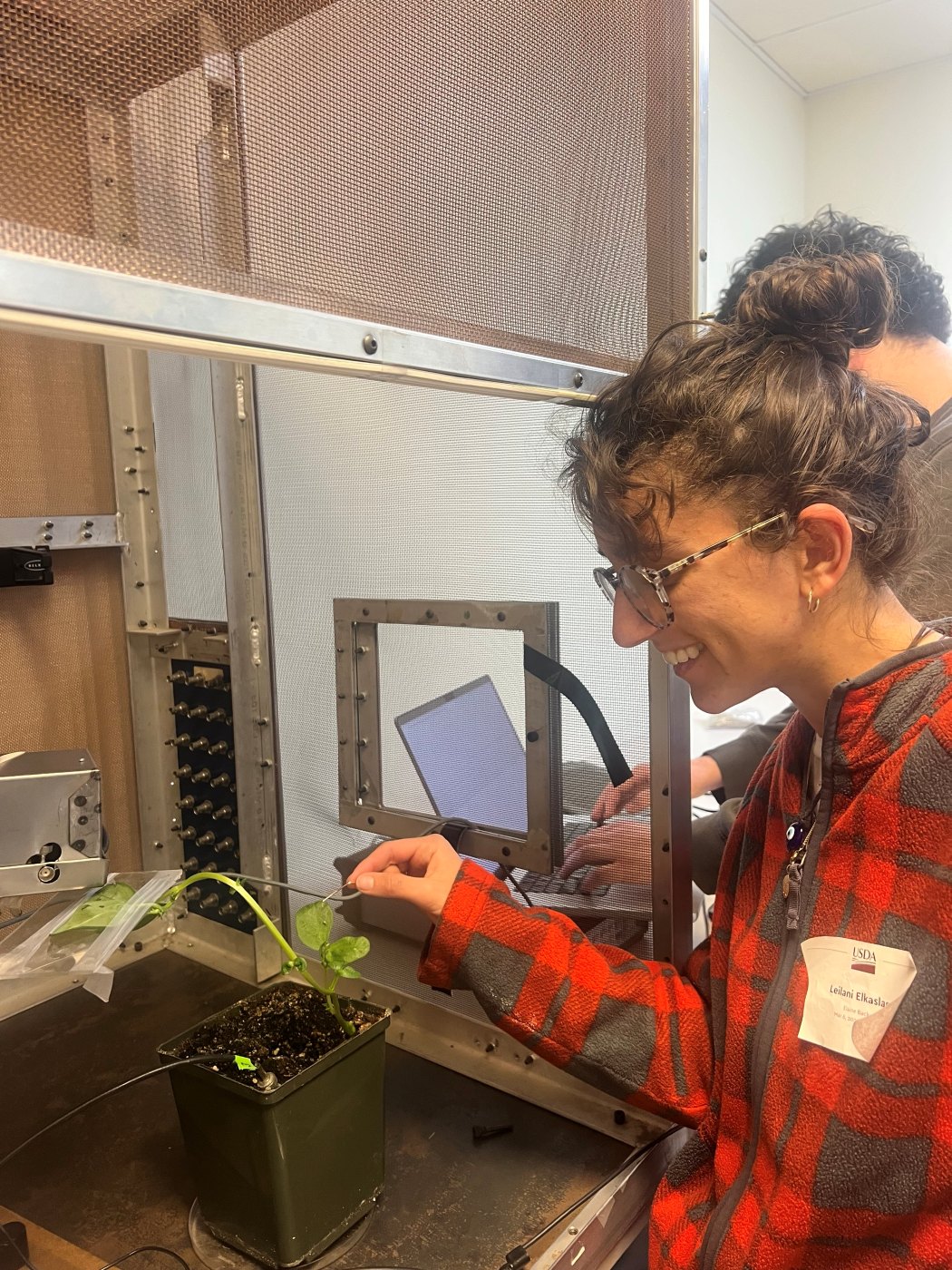
Testing at the USDA research center in Parlier, CA.
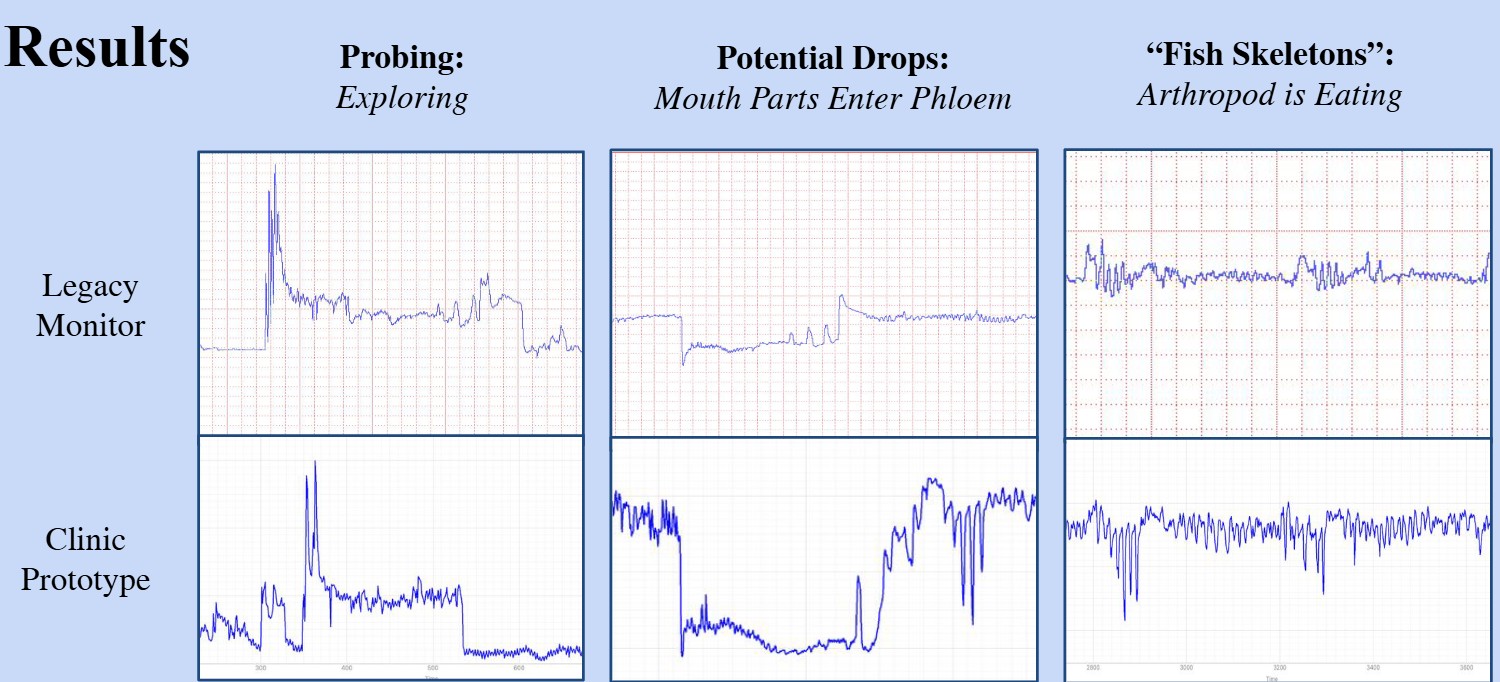
On site visits to the USDA research center in Parlier, California, our prototype recorded pea aphids feeding, and its traces matched the legacy monitor through each phase: probing, the potential drops as mouthparts reach the phloem, and the "fish skeleton" pattern of active feeding.
Bluetooth held up to 46 feet through lab walls, and entomologists could run experiments through our interface.
Legacy monitor (top) vs. our prototype (bottom) across three feeding phases.
I'm someone who isn't afraid to try new things. Not every idea will be fruitful, but it could turn out to be a stepping stone or lesson that paves the way for the next project, job, or experience. I invite you to participate in the joy of the crumpled-up pieces of paper that never made it to this site but got us where we are.